Table of Contents
- What Professional Portrait Photography Can Do for Your Career
- Professional Portrait Photography for Different Industries
- How to Prepare for a Professional Headshot Session
- Personal Branding Photography Tips for Authentic Results
- Professional Portrait Session Duration and What to Expect
- Business Headshot Examples for Entrepreneurs and Professionals
- Studio vs. On-Location Sessions: Choosing Your Setting
- Retouching and Post-Production: Enhancing Your Images
Last Updated: August 17, 2026
What Professional Portrait Photography Can Do for Your Career
Professional portrait photography creates images that tell the world who you are before you speak. Whether you’re an actor auditioning, an entrepreneur building your brand, or a corporate professional advancing your career, the right portrait becomes your visual handshake, and it matters far more than most people realise.
A genuine, well-crafted image signals competence, approachability, and intentionality. At Neil Taylor Photography, we’ve seen firsthand how the right portrait transforms how people perceive you online and offline. When your LinkedIn headshot reflects who you actually are, confident, capable, authentic, you attract better opportunities.
Professional Portrait Photography for Different Industries
Professional portrait photography serves different purposes depending on your industry. A casting headshot for an actor looks nothing like a corporate LinkedIn portrait, and that’s by design.
Corporate Headshots for LinkedIn and Company Websites
Corporate headshots live on LinkedIn, company websites, email signatures, and internal directories. They prioritise trust, competence, and approachability. You want to look like someone people want to work with.
The best corporate headshots use neutral backgrounds with professional lighting that flatters without being obvious. Clothing matters: business formal or smart casual, depending on your industry. A solicitor’s headshot differs from a tech founder’s, and both are correct for their contexts. Many businesses now use professional headshots for entire teams, creating visual cohesion across their online presence.
Actor and Performer Headshots for Casting
Casting directors see thousands of headshots. Yours needs to look like you, genuinely, authentically you, whilst being commercially viable for the roles you’re right for. Many actors chase a version of themselves that looks "better" in a photo but doesn’t match their real appearance in an audition room.
The best casting headshots capture your natural expression, actual hair and eye colour, and the energy you bring to a room. They’re shot closer to the camera than corporate headshots, with warmer, more intimate lighting. Wardrobe is minimal: a simple, solid-coloured top that doesn’t distract. Casting directors want to know what you look like now. A headshot more than two years old already works against you.
Personal Branding Photography for Entrepreneurs
Entrepreneurs and small business owners need portraits that communicate both professionalism and personality. Your personal brand portrait should reflect your business vision and approachability. Unlike corporate headshots, personal branding photography often includes environmental context: your workspace, products, or settings that tell your story.
The best personal branding portraits feel authentic. They show you as you actually are: confident, engaged, and genuinely interested in your work. Personal branding photography often includes multiple looks and settings within a single session, giving you flexibility for different uses.
How to Prepare for a Professional Headshot Session
Preparation is where most people stumble. You can’t fake authenticity in front of a camera, but you can set yourself up for success by managing controllable factors: what you wear, how you feel, and what you bring mentally to the session.
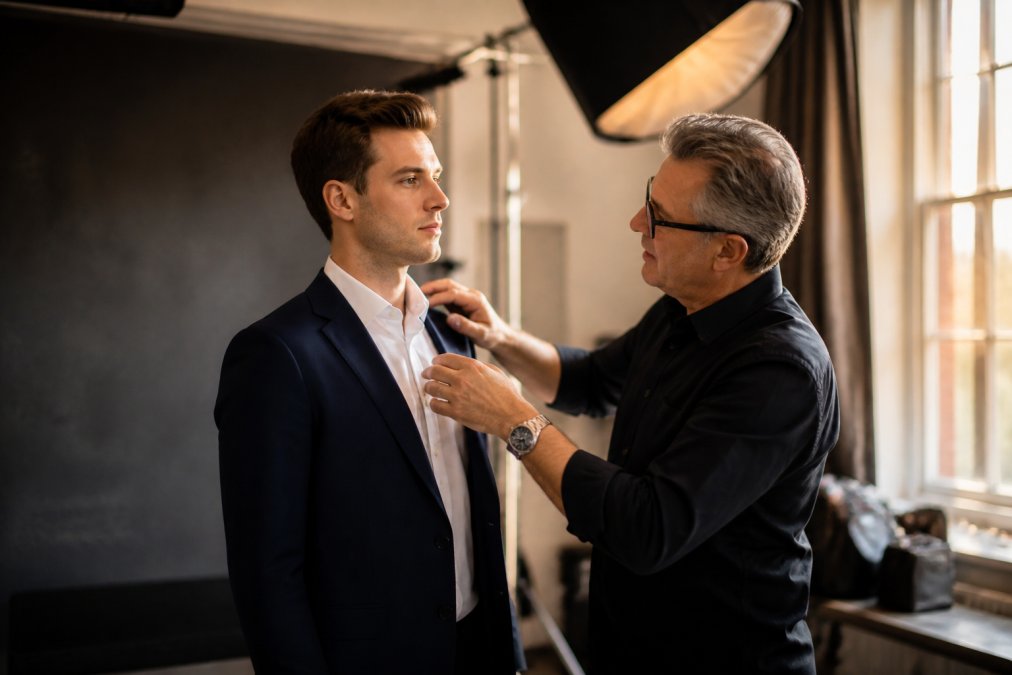
Wardrobe and Styling Guidance
Your wardrobe choice is one of the most important decisions before a headshot session. The wrong outfit can undermine an otherwise excellent image; the right one amplifies your presence.
For corporate headshots, choose solid colours that complement your skin tone. Avoid busy patterns, logos, or anything that draws attention from your face. Jewel tones, deep blues, emerald greens, and rich purples photograph beautifully and convey confidence. Fit matters enormously: clothes should be tailored to your body, not loose or overly tight.
For casting headshots, wear something that represents your type. Wear something you’d actually wear in real life, not a costume. For personal branding portraits, consider your industry and brand voice.
Universal rules: avoid white (it can blow out in lighting), avoid reflective fabrics or excessive jewellery (which creates glare), and avoid anything that makes you feel uncomfortable. You’ll be in front of a camera for an hour or more; wear something that feels like you.
Mental Preparation and Posing Tips
The camera picks up tension. If you’re nervous, stiff, or overthinking your expression, it shows. Before your session, get adequate sleep and drink plenty of water in the days leading up to your shoot. On the day itself, eat something substantial but not heavy. Arrive early to settle and understand the space.
During the session, think about something that makes you feel confident or happy. Don’t force a smile; let your natural expression emerge from genuine ease.
Personal Branding Photography Tips for Authentic Results
Authenticity is the currency of personal branding. People connect with real humans, not polished versions. A common mistake is trying to look like someone else. Your personal brand works precisely because it’s yours.
Another mistake is over-retouching. A little retouching is normal, removing temporary blemishes, evening skin tone, enhancing clarity. But when retouching becomes so heavy that you don’t recognise yourself, you’ve lost the authenticity that makes the image powerful.
Think about your environment. If you’re a personal trainer, being photographed in a gym conveys expertise. If you’re a writer, a home office or library setting tells your story. Environmental portraits show people not just what you look like, but what you do and who you are.
Book your headshot session today →
When preparing for a personal branding session, bring 2-3 outfit changes. Different looks work for different contexts: a formal portrait for your website homepage, a casual look for social media, a styled shot for promotional materials. This gives you flexibility without needing multiple sessions.
Professional Portrait Session Duration and What to Expect
A focused headshot session, one look, one background, one purpose, typically runs 45 minutes to an hour. You’ll likely take 50-100 shots, with the photographer selecting the best 10-15 for editing.
A personal branding session with multiple looks and settings usually takes 2-3 hours. You might end up with 200-300 frames across all looks, narrowed down to 30-50 final images after editing.
Team or corporate sessions are organised differently. A photographer shooting headshots for a 20-person team might spend 3-4 hours on-site, spending 10-15 minutes per person. Most photographers deliver a digital gallery within 48-72 hours.
Business Headshot Examples for Entrepreneurs and Professionals
Real examples matter more than abstract advice. A tech founder’s headshot might show them in a casual blazer against a neutral background, with natural, approachable expression. A solicitor’s corporate headshot is more formally structured: traditional business wear, classic lighting, neutral background. An entrepreneur’s personal branding portrait might include environmental context: photographed in their studio or workspace, with natural light and genuine expression.
The common thread across all these examples is authenticity. The best headshots look like the person you’d actually meet in a meeting or video call.
The most effective business headshots capture you as you actually are: competent, approachable, and genuinely engaged. Technical perfection matters less than authentic presence.
Studio vs. On-Location Sessions: Choosing Your Setting
One of the first decisions is where to shoot: in a professional studio or on-location in a setting that matters to your brand.
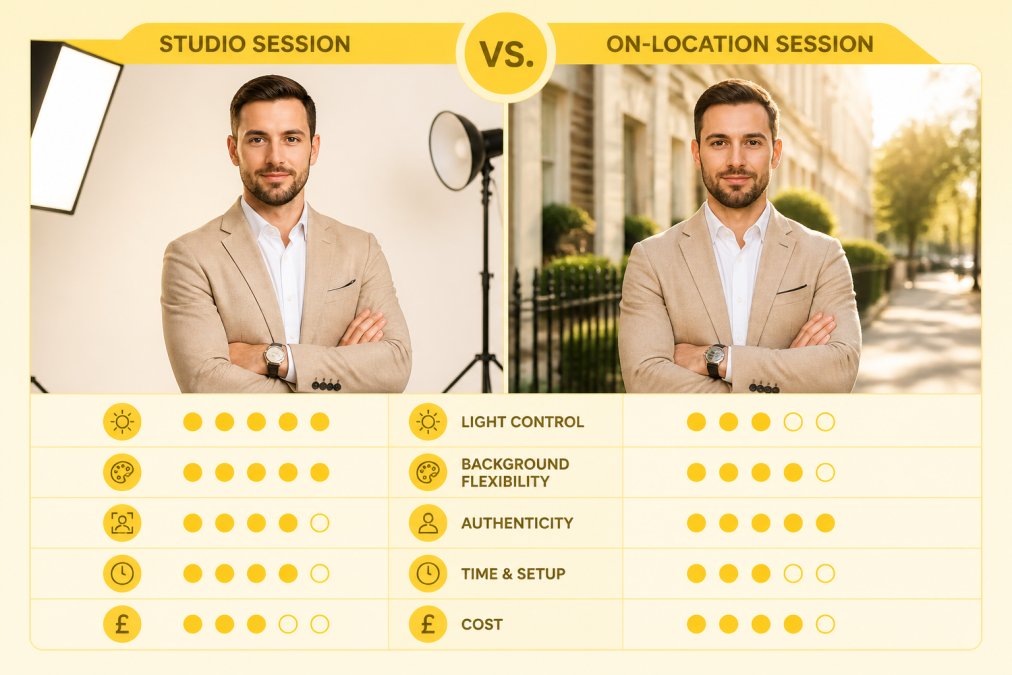
Studio sessions offer control. Lighting is predictable, backgrounds are clean and professional, and there are no environmental distractions. For corporate headshots and casting photos, studios are ideal. They deliver consistent, polished results.
On-location sessions create context. Photographing you in your workspace or a setting that reflects your brand tells a richer story. An entrepreneur photographed in their studio, a personal trainer in a gym, a creative professional in an inspiring space, these environmental portraits feel more authentic and memorable.
For most professionals, the choice depends on purpose. Need a LinkedIn headshot that works across every industry? Studio. Building personal brand imagery that tells your story? On-location or hybrid approach. Many photographers, including Neil Taylor Photography, offer both options.
Studio sessions work best for corporate headshots, casting photos, and formal professional portraits where consistency and polish matter most. On-location sessions excel for personal branding and imagery that reflects your specific industry or workspace.
Retouching and Post-Production: Enhancing Your Images
Retouching is where good headshots become great ones. The goal isn’t to create an unrecognisable version of you; it’s to present you at your absolute best.
Professional retouching includes: evening skin tone, removing temporary blemishes, enhancing eye clarity, adjusting colour grading for consistency, and subtle sharpening. It does not include: dramatically altering your face shape, removing natural features, or making you look like someone else.
The best retouching is invisible. When someone sees your headshot, they think "that’s a great photo of you," not "that’s been heavily edited." Colour grading is where personal branding portraits shine. Consistent colour across all your images creates a cohesive visual brand. Expect 5-7 days for standard retouching on a session with multiple images.
Choosing the Right Photographer for Your Needs
Not every photographer is right for every purpose. An excellent wedding photographer might not excel at corporate headshots. Understanding what to look for matters.
For corporate and casting headshots, look for a photographer with specific experience in those areas. Ask to see portfolios of actual headshots. Do the images look like real people? For casting headshots specifically, check that the photographer understands the industry and has shot working actors.
For personal branding work, look for a photographer who understands your industry or business type. Ask about the process: How long is a typical session? What’s included in retouching? How many final images will you receive? When will you see them?
Check client reviews and testimonials. What do past clients say about the experience? Did they feel comfortable? Were they happy with the results?
Neil Taylor Photography specialises in actor, entrepreneur, and corporate headshots. With experience across all three categories, the team understands the specific expectations of each industry. Both studio and on-location sessions are available, giving you flexibility in how you want your portraits created.
According to professional photography industry standards, the quality of your headshot directly impacts how you’re perceived professionally. Investing in professional portraiture is a strategic decision that affects your career prospects.
What Makes a Professional Portrait Actually Work
The difference between a good headshot and a great one often comes down to intangibles: the photographer’s ability to make you feel comfortable, their understanding of lighting and composition, and their genuine interest in capturing who you are.
Book your headshot session today →
A great professional portrait looks technically excellent: sharp, well-lit, properly exposed, with good composition. It looks like you: authentic, recognisable, genuinely you. It serves its purpose: whether that’s casting, corporate, or personal branding. And it feels alive: there’s presence, engagement, and a sense that this is a real person.
Research from LinkedIn’s professional imagery guidelines shows that profiles with professional headshots receive significantly more engagement and connection requests than those with casual photos. Your portrait isn’t just about looking good; it’s about being taken seriously.
Common Mistakes to Avoid
Using an outdated photo is the most common error. If your headshot is more than two years old, it’s working against you. Casting directors expect current images. Clients want to know what you look like now. Update regularly, at least every two years.
Wearing the wrong colours or styles is another frequent misstep. Choosing an outfit that doesn’t suit you, doesn’t fit properly, or doesn’t align with your industry undermines an otherwise excellent session.
Over-retouching is increasingly common. When you don’t quite recognise yourself in your retouched headshot, that’s a sign the retouching has gone too far. Trying to look like someone else is a subtle but damaging mistake. Your unique presence is your strength.
Using a headshot that doesn’t look like you in person is the fastest way to damage your credibility. When someone meets you after seeing your headshot and you look noticeably different, trust erodes immediately. Authenticity matters more than perfection.
Making the Most of Your Professional Portraits
Once you have professional portraits, use them strategically across every platform where they matter.
Update your LinkedIn immediately. A professional headshot increases profile views and connection requests. Use the same image across your email signature, website, and professional directories. Consistency builds recognition.
For casting actors, use your headshot on all casting platforms and in your agent materials. Ensure it’s current and represents your actual type. Update it regularly, every 1-2 years is standard in the industry.
For entrepreneurs and business owners, use your personal branding portraits across your website, social media, and promotional materials. If you shot multiple looks or settings, use different images for different purposes: a formal portrait for your website homepage, a casual look for Instagram, a lifestyle shot for your about page.
Your professional portrait is one of the most important investments in your personal brand. It’s the image people see first, the one that creates your initial impression, the one that can open doors. Getting it right matters.
Neil Taylor Photography specialises in creating professional portraits that work: casting headshots that get you auditions, corporate headshots that build credibility, personal branding portraits that tell your story. Whether you need a studio session or on-location photography, the focus is always on capturing authentic, polished images that help you stand out with confidence.
According to professional branding research from the Institute of Professional Photographers, investing in professional portraiture yields measurable returns in professional opportunities and client perception.
Check Availability or email hello@neiltaylorphotography.com to book your professional portrait session.
Frequently Asked Questions
How do I prepare for a professional portrait session?
Start by choosing clothing that reflects your professional identity and feels comfortable. Avoid busy patterns and stick to solid colours that complement your skin tone. Get adequate sleep the night before and arrive with minimal makeup if you prefer a natural look, or fully styled if that's your preference. Discuss your goals with your photographer beforehand, whether you need casting-ready images, LinkedIn headshots, or personal branding portraits, so they can guide posing and direction. Most photographers offer wardrobe consultation as part of their service, helping you make choices that work best for your industry and the session's purpose.
What is the difference between a headshot and a professional portrait?
A headshot typically frames the head and shoulders, designed for casting calls, LinkedIn profiles, or professional directories. A professional portrait is broader in scope, often including the torso and sometimes the full body, and may incorporate environmental elements or storytelling. Headshots emphasise facial expression and clarity, while portraits can convey personality, profession, and brand identity through composition, clothing, and setting. For actors, headshots are essential for auditions. For entrepreneurs and business professionals, a professional portrait often communicates credibility and personal brand more effectively than a tight headshot alone.
How long does a professional portrait session usually take?
Most professional portrait sessions last between 60 and 90 minutes. A typical session includes setup time, wardrobe changes if needed, posing direction, and multiple shots to capture different expressions and angles. Studio sessions often take the full duration because lighting and backdrop adjustments are necessary. On-location sessions may be shorter if the environment is already prepared. Your photographer will discuss session length when booking, and it depends on how many outfit changes you want, the complexity of the location, and the number of final images you expect to receive.
Why is professional portrait photography important for entrepreneurs?
Professional portraits build trust and credibility with potential clients and partners. A high-quality image on your website, LinkedIn, and marketing materials communicates that you take your business seriously. Authentic, polished imagery helps you stand out in a crowded market and gives your personal brand a consistent, professional presence across all platforms. Studies show that businesses with professional team photos are perceived as more trustworthy and established. For entrepreneurs, a strong personal brand is often the business itself, making professional portrait photography a worthwhile investment in your company's reputation and growth.
What should I wear for a professional portrait session?
Choose clothing that reflects your industry and personal style while remaining professional. Solid colours, subtle patterns, and well-fitted garments photograph best. For corporate roles, business attire or smart casual works well. For creative professionals, you have more flexibility to show personality. Avoid logos, busy prints, and overly casual clothing unless that aligns with your brand. Bring 2-3 outfit options if possible to give yourself variety in the final gallery. Your photographer can advise on colour choices based on your skin tone and the session's setting. Comfort is essential, wear something that makes you feel confident and allows you to move naturally.
This article was written using GrandRanker