Table of Contents
- What Personal Branding Photography Achieves for Your Business
- Define Your Brand Identity Before You Shoot
- What to Wear for Your Personal Branding Shoot
- Building Your Personal Branding Photography Shot List
- Branding Photography Prop Ideas That Strengthen Your Message
- Prepare Your Location and Technical Setup
- Maximise Your Personal Branding Photography Investment
- Conclusion
Last Updated: August 13, 2026
What Personal Branding Photography Achieves for Your Business
Personal branding photography is the strategic use of professional portraits and lifestyle images to communicate who you are, what you stand for, and why your audience should trust you. Unlike generic headshots, authentic personal branding photography tells a visual story about your business values, personality, and professional credibility.
For entrepreneurs and business professionals, this distinction matters enormously. Your images appear across LinkedIn, your website, marketing materials, and social media, often forming the first impression potential clients or collaborators have of you. When those images feel authentic and intentional, they signal professionalism and build trust before anyone reads a single word about your business.
The real power lies in consistency. A cohesive set of images with matching aesthetic, colour palette, and styling creates visual recognition. People remember faces and visual patterns far more readily than text. When your audience sees your branded imagery across multiple platforms, it reinforces your professional identity and makes you more memorable in a crowded market.
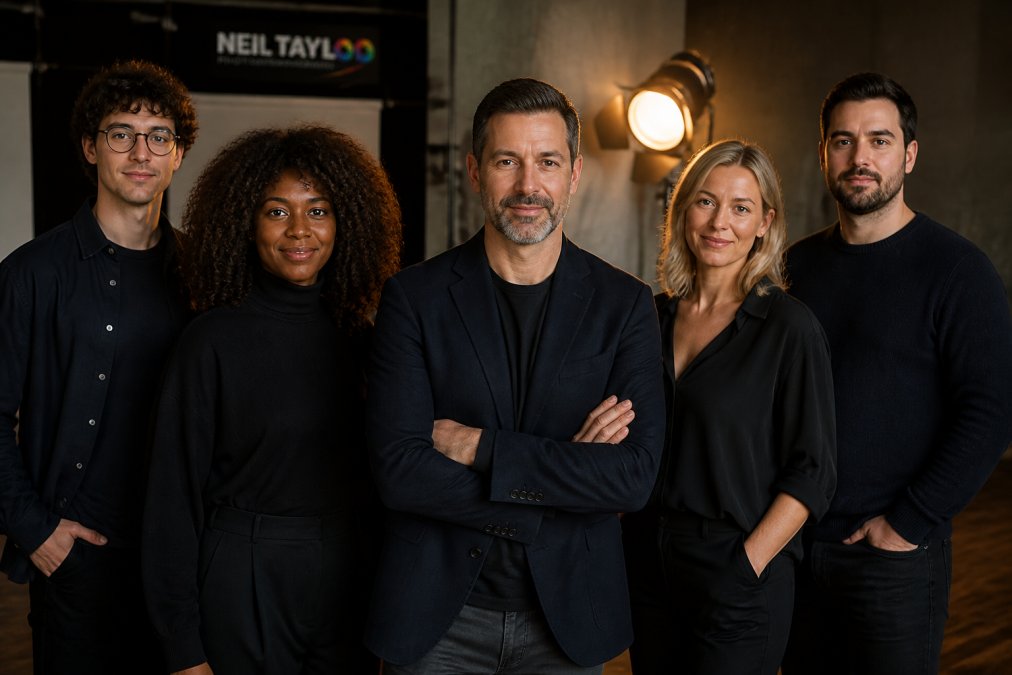
Neil Taylor Photography specialises in capturing this kind of authentic imagery for entrepreneurs, business owners, and professionals who need their visual presence to reflect their actual brand values.
The best personal branding photography sessions begin months before the shoot, not days before. Your wardrobe choices, location selection, and visual direction should all align with the brand identity you’re trying to communicate. Rushed preparation shows in the final images.
Define Your Brand Identity Before You Shoot
Before you schedule your personal branding photography session, you need absolute clarity on what your brand actually is. What problem do you solve? Who is your target audience? What values drive your business decisions? What emotional response do you want people to feel when they encounter your brand?
These questions directly shape visual choices. An executive in financial services communicates authority and stability through different visual language than a creative entrepreneur. A business coach needs to project approachability and energy, whereas a consultant might emphasise precision and expertise.
Start by identifying your brand pillars, the three to five core attributes that define your business. Are you innovative? Trustworthy? Accessible? Bold? Practical? Write these down, then think about how each one translates visually. Trustworthy might mean solid colours, natural lighting, and composed posture. Innovative might mean dynamic angles, modern styling, and unexpected locations.
Your target audience shapes this too. If you’re selling to corporate clients, your visual brand needs to speak their language. If you’re building a personal brand as a thought leader on social media, you have more room for personality and authenticity.
Define your brand identity in writing before your shoot. List your core values, target audience, and the specific emotions you want your imagery to evoke. Share this with your photographer, it becomes your creative brief and ensures the final images align with your actual business.
What to Wear for Your Personal Branding Shoot
Your wardrobe choices during personal branding photography communicate something about your professionalism, your industry, and your personal brand values.
The fundamental rule: wear what you’d actually wear to work. If you show up in formal attire you never wear in real life, the images will feel inauthentic. Your audience can sense when someone is performing rather than being themselves.
That said, polish matters. Your everyday work clothes should be elevated slightly, better fitting, higher quality, and more intentional than casual wear. Small details compound: a well-fitted blazer, quality fabrics, clean lines, and colours that complement your skin tone all contribute to the impression of professionalism and credibility.
Colour strategy is underrated. Neutral tones, blacks, greys, navy, white, cream, photograph well and won’t distract from your face. But they need to suit your skin tone. Bring three to four options and test them in natural light before your shoot.
Avoid patterns, busy designs, and graphic prints unless they’re genuinely part of your brand identity. Solid colours and subtle textures keep focus on your face and expression rather than competing with fabric.
Fit is non-negotiable. Clothes that are too loose look sloppy; clothes that are too tight create visible tension in your posture and expression. Get pieces tailored if necessary.
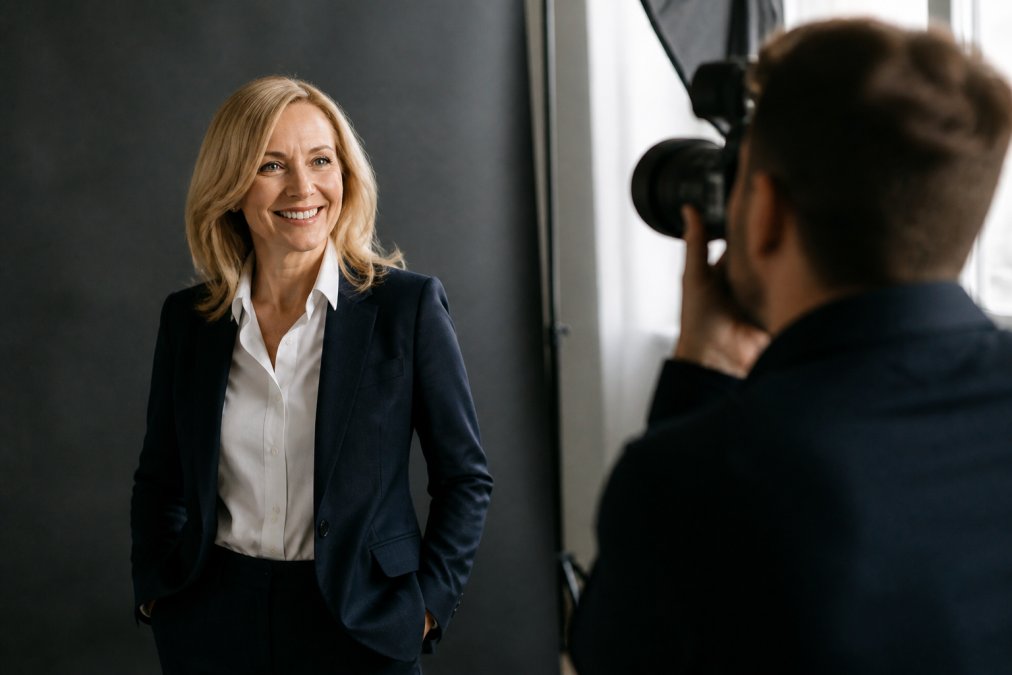
Consider bringing a change of outfit, perhaps one more formal and one slightly more casual. This gives you flexibility in how you use the images across different platforms. Accessories should enhance, not dominate. Simple, quality pieces work better than statement jewellery for most professional contexts.
Building Your Personal Branding Photography Shot List
A shot list is your roadmap for the session. It prevents wasted time, ensures you capture the images you actually need, and gives your photographer clear direction about what matters most to your brand.
Start by thinking about where these images will live. LinkedIn profile photos need different framing than website hero images. Social media content benefits from varied poses and expressions. Marketing materials might require more formal, composed shots. Write down every platform and format you need to cover.
Then map out different expressions and energy levels: professional and composed, warm and approachable, thoughtful and contemplative, engaged and energetic. This variety gives you flexibility when choosing images for different contexts.
Include both tighter headshots and wider shots that show more of your body and posture. Headshots work for LinkedIn and email signatures; wider shots work for website headers and marketing materials.
Consider your industry norms. If you’re in a creative field, more experimental angles might work. If you’re in law, finance, or corporate consulting, more traditional composition usually serves you better.
Include at least one shot that feels distinctly "you", something that captures your personality beyond the professional uniform. These images often become the most memorable and shareable.
Work with your photographer on this. Experienced professionals know which compositions translate well across different uses.
Branding Photography Prop Ideas That Strengthen Your Message
Props in personal branding photography walk a fine line. Used thoughtfully, they reinforce your brand message and add visual interest. Used carelessly, they distract and feel gimmicky.
The strongest props are those directly connected to your work. A consultant might hold a notebook or tablet. A coach might have their arms open or hands gesturing. A business owner might be photographed at their desk or in their actual workspace. These props feel natural because they’re part of your real professional life.
Location acts as a prop too. Your office, studio, or workspace tells a story about your business that a generic studio backdrop cannot.
Avoid props that feel forced or decorative. Holding a coffee cup or leaning against a wall only works if it feels authentic to how you actually work. Consider your colour palette when selecting props, they should blend into the composition rather than pull focus.
The best prop is often no prop at all. Your posture, expression, and presence carry far more weight than objects.
Avoid trendy props or anything that dates quickly. Your personal branding photography should feel relevant for at least two to three years. Props that are fashionable now will look dated in six months.
Prepare Your Location and Technical Setup
Where you shoot shapes everything about the final images. The location influences lighting quality, background visual interest, and the overall mood of your personal branding photography.
Studio settings offer complete control. Neutral backdrops, professional lighting equipment, and a consistent environment mean predictable results. This works well if your brand is polished, corporate, or formal. The downside is that studio images can feel generic.
On-location shoots capture your real workspace or an environment connected to your brand. This approach feels more authentic and tells a richer story about who you are and what you do. The challenge is managing variables: natural light changes throughout the day, backgrounds can be cluttered, and reflective surfaces create technical complications.
If you choose an on-location shoot, scout the space beforehand with your photographer. Identify the best natural light sources, typically north-facing windows or shaded outdoor areas that provide soft, even light. Avoid harsh direct sunlight, which creates unflattering shadows. Late morning or late afternoon usually offers better light quality than midday.
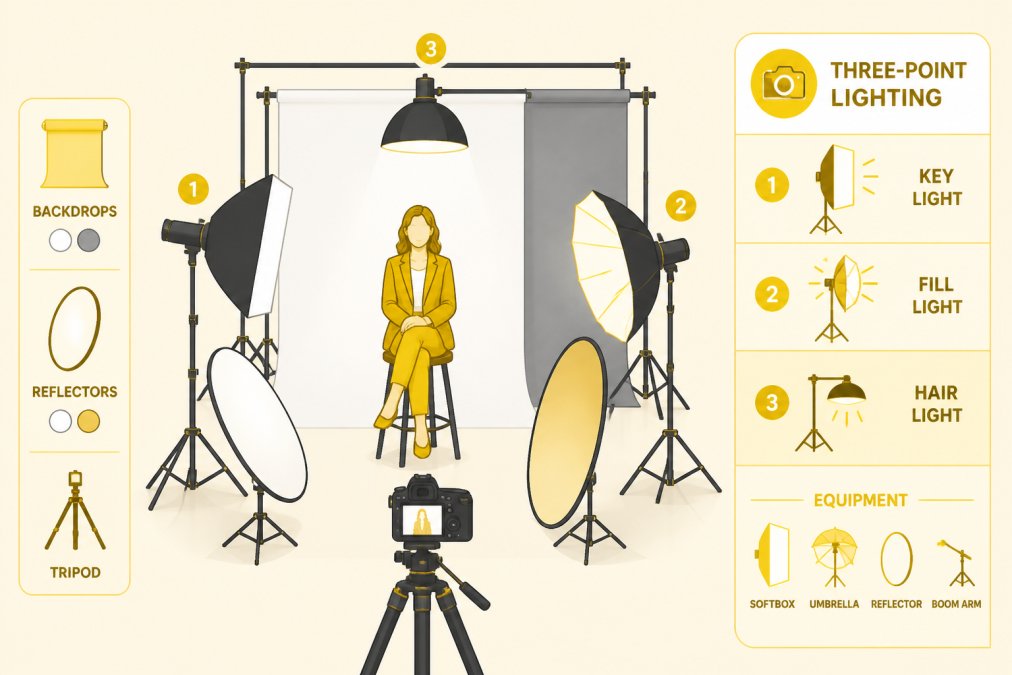
Professional personal branding photography requires proper lighting to ensure your face is evenly lit and your skin tone looks natural. Your photographer should use quality equipment: a professional-grade camera, proper lenses (typically 50mm to 85mm for portrait work), and either professional lighting or the ability to work skillfully with natural light.
Background selection deserves attention. A cluttered or distracting background pulls focus away from your face. Neutral walls, blurred outdoor scenery, or clean office environments work well. The photographer should frame shots to include enough context without cluttering the composition.
Your final images should have consistent colour temperature and skin tone across the entire set. This consistency reinforces your brand identity across all platforms.
Maximise Your Personal Branding Photography Investment
Personal branding photography is an investment, and maximising that investment means thinking strategically about how you use the images long after the shoot ends.
Start with organisation. Create a folder system for your images so you can quickly find the right shot for different uses. Categorise by format (headshot, full-body, lifestyle), mood (professional, approachable, energetic), and platform (LinkedIn, website, email).
Repurposing is where the real value emerges. A single professional portrait can become your LinkedIn profile photo, a website headshot, a speaker bio image, email signature, and social media profile picture. One shoot generates dozens of usable assets.
Create variation through cropping and framing. A full-body shot can be cropped to a headshot. Different crops serve different purposes without requiring additional shooting.
Use your images consistently across all platforms. This visual consistency builds brand recognition. When your audience sees the same professional imagery across your website, LinkedIn, email, and social media, it reinforces your professional identity.
Plan for refreshes. Personal branding photography typically remains relevant for two to three years. After that, schedule periodic refresh shoots rather than waiting until your images look dated.
Consider the strategic use of behind-the-scenes or lifestyle images alongside formal portraits. These humanise your brand and show your personality beyond the professional headshot. They work particularly well on social media and in email marketing.
Your photographer can advise on which images work best for different purposes. Neil Taylor Photography understands how to frame images for LinkedIn optimisation, website use, and social media distribution.
Conclusion
Personal branding photography isn’t about vanity. It’s about strategic visual communication. The images you present to the world shape how people perceive your professionalism, credibility, and trustworthiness before they ever speak with you.
The entrepreneurs who see the strongest return on personal branding photography approach it strategically: defining their brand identity first, making intentional wardrobe choices, planning their shoot with a detailed shot list, and then maximising the investment through consistent use and repurposing across platforms.
Your visual brand matters. It’s one of the first things potential clients, collaborators, and opportunities encounter. Making sure those images authentically represent who you are and what your business stands for is worth the time and investment.
For professional personal branding photography that captures your authentic brand identity, Check Availability or contact hello@neiltaylorphotography.com.
Frequently Asked Questions
How do I prepare for a personal branding photo shoot?
Start by clarifying your brand identity, values, and the message you want to communicate. Plan your wardrobe weeks in advance, choosing colours and styles that align with your brand aesthetic. Prepare a shot list covering different poses, expressions, and contexts (professional, approachable, action-oriented). Arrange your location or studio space, test lighting conditions, and consider props that reinforce your brand story. Sleep well the night before, arrive early to settle nerves, and bring water and snacks to stay comfortable during the session.
What should an entrepreneur wear for professional headshots and personal branding photography?
Choose well-fitted clothing in solid colours or subtle patterns that complement your skin tone and reflect your industry. Business professionals typically wear blazers, structured tops, or quality shirts; creative entrepreneurs might opt for more personality within professional boundaries. Avoid busy logos, distracting jewellery, or clothing that feels uncomfortable. Stick to your brand colour palette to build consistency across your marketing materials. Bring 2-3 outfit changes to show variety without confusing your brand message. Ensure fabrics are wrinkle-free and fit properly, as poor fit reads as unprofessional in photographs.
What is the difference between a headshot and personal branding photography?
Headshots are tightly framed portraits focusing on your face and shoulders, typically used for casting, LinkedIn, or corporate directories. Personal branding photography is broader and more strategic, capturing you in multiple contexts (at your desk, with props, in different settings) to tell your brand story visually. Branding photography shows personality, lifestyle, and the values behind your business, while headshots emphasise professionalism and recognition. For entrepreneurs, personal branding photography creates a fuller picture of who you are and what you stand for, making it more powerful for building trust and brand recognition across social media and marketing materials.
How many outfit changes do I need for a personal branding photography session?
Plan for 2-3 outfit changes depending on your session length and brand diversity. If you're targeting multiple platforms (LinkedIn, website, social media), different outfits create visual variety while maintaining brand consistency through colour palette and styling. Each outfit should reflect different facets of your professional identity without diluting your core message. Fewer changes risk repetitive imagery; too many can confuse your brand identity. Coordinate outfits in advance with your photographer so they can plan complementary backgrounds and lighting for each look.
Check Availability at https://neiltaylorphotography/index.php/contact or email hello@neiltaylorphotography.com to discuss your personal branding photography needs. Neil Taylor Photography specialises in capturing authentic imagery for entrepreneurs and business professionals who want their visual presence to reflect their actual brand values and professional credibility.