Table of Contents
- What to Expect During a Photoshoot: The Complete Timeline
- Photoshoot Preparation Tips: Getting Ready Before the Session
- What to Wear for a Photoshoot: Styling and Wardrobe Guidance
- The First Few Minutes: Creating a Relaxed Atmosphere
- How Long Does a Photoshoot Take: Session Duration and Pacing
- Photoshoot Poses Ideas and Posing Guidance During the Session
- Post-Production: What Happens After Your Photoshoot
- Conclusion
Last Updated: August 2, 2026
What to Expect During a Photoshoot: The Complete Timeline
Understanding what to expect during photoshoot sessions helps you prepare mentally and practically, making the entire experience smoother and more enjoyable. At Neil Taylor Photography, we work with actors, entrepreneurs, and business professionals across London and Kent who often feel uncertain about the process. This guide walks you through everything from the initial consultation to receiving your final gallery, so you arrive confident and ready to create images that truly represent you.
A well-structured photoshoot is collaborative, paced to your comfort level, and designed to capture authentic moments that work for your specific needs, whether that’s casting-ready headshots, LinkedIn profiles, or corporate team photography.
The key difference between a frustrating photoshoot and a successful one comes down to preparation, clear communication, and understanding the workflow. When you know what happens at each stage, you can focus on being yourself rather than worrying about the unknowns.
Photoshoot Preparation Tips: Getting Ready Before the Session
Preparation directly impacts how comfortable you’ll feel on the day and how your images turn out.
Mental Preparation and Managing Camera Anxiety
Camera anxiety is common and manageable. Start by reframing what a photoshoot actually is: a collaborative process where a professional photographer works with you to capture your best self, not an exam where you’ll be judged.
Visualisation helps significantly. Spend a few minutes the night before imagining yourself in the studio feeling relaxed and confident. This mental rehearsal activates the same neural pathways as actual experience, helping your body feel more at ease.
On the morning of your shoot, avoid excessive caffeine, which can amplify nervousness. Eat a light, balanced meal for energy without sluggishness. Get enough sleep the night before; your face looks fresher and your energy is noticeably higher when well-rested.
Many professionals find it helpful to bring a playlist of songs that make them feel confident and energised. Listening to music whilst getting ready can shift your emotional state and carry that confidence into the studio.
Practical Logistics and Consultation
Before your session, you’ll have a consultation to discuss what you need from the shoot. Be specific about your objectives. Are you an actor preparing for auditions? An entrepreneur building your personal brand? A corporate professional updating your LinkedIn? Each requires slightly different styling, posing, and editing approaches.
Ask about technical details: session length, location, what’s included in the package, how many edited images you’ll receive, and turnaround time. Discuss any specific concerns. If you’ve felt uncomfortable in previous photos or are self-conscious about particular features, mention it; your photographer knows how to pose and light in ways that make everyone look their best.
What to Wear for a Photoshoot: Styling and Wardrobe Guidance
What you wear has an enormous impact on how you feel during the shoot and how your images look.
For professional headshots and corporate photography, wear something that reflects your industry and personal brand whilst feeling authentically like you. Avoid anything too trendy; headshots are often used for several years, so timeless choices work better.
Solid colours typically work better than busy patterns, keeping focus on your face. Jewel tones, neutrals, and pastels photograph beautifully. Avoid pure white or pure black unless you specifically want high contrast.
Fit matters enormously. Wear something that fits your body well and makes you feel confident. Ill-fitting clothes create visible tension in your shoulders and face, which reads in photographs. Consider your neckline carefully; crew necks, v-necks, and scoop necks all photograph differently and suit different face shapes.
Jewellery should be minimal and intentional. A few simple pieces add polish; too much creates visual clutter and distracting reflections under studio lighting.
Avoid wearing anything you’ll need to adjust frequently during the shoot, loose straps, rides-up tops, or uncomfortable trousers. Physical discomfort shows in your face and body language, and you’ll spend mental energy managing your clothing instead of focusing on the camera.
The First Few Minutes: Creating a Relaxed Atmosphere
The opening minutes of your photoshoot set the tone for the entire session. A skilled photographer intentionally structures these moments to help you settle in and feel comfortable.
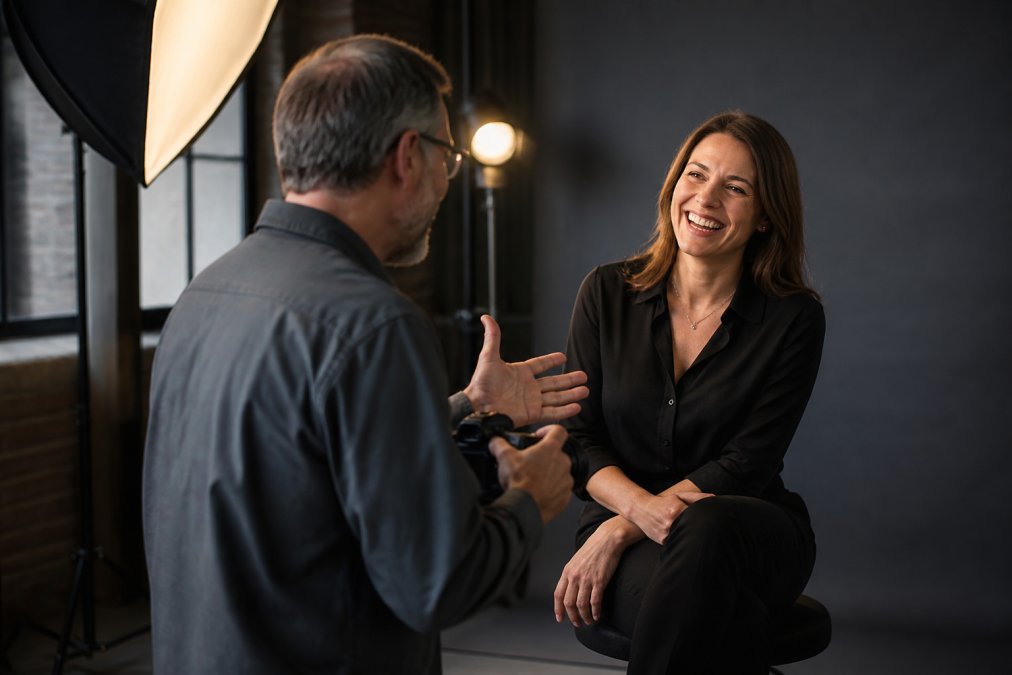
When you arrive, your photographer will chat with you, ask about your day and goals, and address any concerns. This builds rapport and helps you relax. You’re more likely to look natural and confident when talking with someone you feel comfortable with.
Expect your photographer to show you around the space, explain the lighting setup, and demonstrate how they’ll direct you. Some photographers do test shots and show you results on the camera, demystifying the process and building your confidence.
Your photographer will typically start with easier, simpler poses before moving to more complex ones. This gradual progression helps you warm up and build momentum. By several minutes in, most people stop thinking about the camera and start being themselves, which is when the best images happen.
Pay attention to feedback. Small tweaks in posture, angle, or expression create noticeably better images.
How Long Does a Photoshoot Take: Session Duration and Pacing
A typical professional headshot session for an actor or entrepreneur runs 60-90 minutes. Corporate team photography might be shorter for individual headshots or longer if including group shots and candid moments.
Your photographer will pace the session to maintain your energy and keep you looking fresh. You won’t shoot continuously; there will be natural breaks for posing adjustments, outfit changes, water, or resetting your energy.
Most photographers work in focused blocks of 15-20 minutes, then review results and adjust if needed. This rhythm prevents fatigue and gives you moments to breathe and refocus.
By the end of a well-paced session, you should feel energised rather than drained.
Photoshoot Poses Ideas and Posing Guidance During the Session
Posing is where professional photographers add enormous value. Your photographer’s job is to position you in ways that are flattering, feel natural, and work for your specific needs.
Different industries require different posing approaches. For casting headshots, poses tend to be direct and frontal so casting directors see your face clearly. For corporate headshots, poses might be slightly angled with softer eye contact. For personal branding portraits, poses can be more dynamic, showing different facets of your personality.
Your photographer will guide you through poses verbally and sometimes by demonstration. They might say “weight on your back foot,” “angle your shoulders toward the camera,” or “tilt your chin down slightly.” These instructions are based on what photographs well and flatters your specific features.
Expect to try multiple variations of similar poses. Your photographer might shoot you looking directly at the camera, then slightly left, then right. They might adjust your arm position, hand placement, or head tilt. This variation gives you options in your final gallery and helps you find the angles that feel most comfortable and look best.
Baby-Led and Photographer-Directed Approaches
Photographer-directed posing is more structured. Your photographer tells you exactly where to position your body, where to look, and how to hold your expression. This works well for headshots where consistency and specific framing are important.
Baby-led or client-led posing is more collaborative and spontaneous. Your photographer gives general direction and captures candid moments as they happen. This often produces more relaxed, authentic-looking images.
Most professional sessions use a blend of both, starting with structured poses to ensure essential shots, then shifting into more spontaneous, natural moments.
If you’re unsure whether you’re doing a pose “right,” ask your photographer to show you in the camera preview. Seeing how a pose actually looks removes doubt and helps you understand what adjustments make a difference.
Post-Production: What Happens After Your Photoshoot
Post-production, editing, retouching, and preparing your final gallery, is a significant part of what you’re paying for.
Editing, Retouching and Turnaround Time
After your shoot, your photographer begins the editing process. Culling is the first step: reviewing every image and selecting the strongest ones, typically 20-30% of total shots taken. They’re looking for sharp focus, good expression, flattering angles, and images meeting your specific needs.
Editing involves adjusting exposure, colour balance, contrast, and other technical elements. Your photographer ensures consistent colour grading across all images so your gallery looks cohesive.
Retouching includes subtle enhancements like skin smoothing, blemish removal, eye brightening, or sharpening details. Professional retouching is subtle, making you look like the best version of yourself, not a different person.
Turnaround time varies. Many photographers deliver edited galleries within 7-14 days. Ask about turnaround time during your consultation.
Understanding Your Gallery and Digital Files
When your photographer delivers your final gallery, you’ll typically receive edited, high-resolution digital files for the purposes discussed during your consultation.
Understand what’s included in your package. Some photographers include unlimited downloads; others limit the number of final images. Some include print rights; others require purchasing a print release separately.
Your gallery will be organised and easy to navigate, typically delivered through an online gallery link where you can view, download, and sometimes order prints directly.
The digital files you receive are typically high-resolution (300 DPI or higher), suitable for printing at large sizes, uploading to websites, or submitting to professional casting services. You own the right to use these images for the agreed-upon purposes.
Many photographers also offer optional services like prints, albums, or additional retouching, available after you’ve received your gallery.
Understanding what to expect during photoshoot sessions removes anxiety and helps you show up prepared and confident. From the initial consultation through final delivery, a professional photographer like Neil Taylor Photography structures the entire experience to make you feel comfortable and produce images that genuinely represent you. The combination of clear communication, thoughtful preparation, and professional guidance transforms what many people fear into a collaborative, enjoyable process that delivers results you’ll be proud to use.
For more information or to discuss your specific needs, contact us at hello@neiltaylorphotography.com
Frequently Asked Questions
How long does a typical photoshoot last and what should I budget for time?
Most professional photoshoots run between 30 minutes and 2 hours, depending on your needs and the type of session. Actor headshot sessions typically take 45 minutes to an hour, whilst corporate team photography may extend longer if multiple people are involved. Factor in arrival time for setup and a brief consultation at the start. Your photographer will confirm the exact duration when you book, so you can plan your schedule accordingly.
What should I wear for a photoshoot to look professional and natural?
Choose solid colours that complement your skin tone and avoid busy patterns that distract from your face. For professional headshots, fitted clothing works best, avoid anything too loose or oversized. Bring 2-3 outfit options if possible, as variety gives you more gallery choices. For corporate settings, business attire is appropriate; for personal branding, wear something that reflects your industry and personality. Your photographer can provide specific styling guidance during your consultation.
How many edited photos will I receive from my photoshoot?
The number of final edited images varies depending on your session package and the photographer’s process. Typically, you’ll receive a curated gallery of high-resolution, professionally retouched images rather than every single shot taken. Your photographer will cull the best frames, apply colour correction and retouching, then deliver polished final files. Discuss gallery size and what’s included in your package when booking to manage expectations.
What happens if I feel uncomfortable or camera-shy during the photoshoot?
Feeling nervous in front of the camera is completely normal. A professional photographer creates a relaxed atmosphere and provides posing guidance to help you feel comfortable. They’ll give you clear direction on where to position yourself, how to angle your body, and where to look. Many photographers use conversation and breaks between shots to ease tension. If you’re camera-shy, mention this during your consultation so your photographer can tailor their approach to help you look natural and confident.