

Table of Contents
- Why Comfort Matters During a Headshot Session
- How to Prepare for Professional Headshots
- Best Clothing for Headshots and What to Avoid
- Practical Techniques to Manage Camera Anxiety
- How Long Does a Headshot Session Take and Why Pacing Matters
- Working with Your Photographer to Feel Natural
- Overcoming Specific Challenges During Your Shoot
- Conclusion
Last Updated: August 30, 2026
Why Comfort Matters During a Headshot Session
Feeling at ease in front of the camera directly affects how you appear in the final image. When you’re tense, your shoulders tighten, your smile becomes forced, and your eyes lose their natural spark. When you’re relaxed and confident, the camera captures authenticity that resonates with viewers.
Professional headshots shape how others perceive you before they meet you. Whether you’re an actor seeking casting-ready images, an entrepreneur building your personal brand, or a corporate professional updating your LinkedIn profile, a comfortable, natural-looking image builds trust and credibility far more effectively than a stiff, anxious one.
Camera anxiety is real, but it’s not insurmountable. At Neil Taylor Photography, we understand this tension and have developed practical strategies to help you move past it. Feeling comfortable during headshots isn’t about forcing yourself to relax, it’s about preparing your mind and body in advance, understanding what to expect, and working with your photographer as a collaborative partner.
How to Prepare for Professional Headshots
Preparation is where comfort begins. The more you know about what’s coming, the less anxiety you’ll carry into the session.
Pre-session communication with your photographer
Before you arrive, ask your photographer specific questions: What will the studio look like? How long will the session run? What should you bring? Will there be breaks? What’s the photographer’s approach to posing?
A good photographer welcomes these questions. When you contact Neil Taylor Photography to book a session, we provide detailed pre-session guidance tailored to your needs. We explain the studio setup, discuss the look you’re going for, and address any specific concerns.
Mention your industry too. If you’re an actor, entrepreneur, or updating corporate headshots, say so. A photographer who has worked with your type of client can offer targeted advice rather than generic tips.
Building rapport before the camera starts
Arrive 10 to 15 minutes early if possible. Use that time to walk around the studio and chat with your photographer about something other than the shoot itself. This conversation shifts your brain from "I’m being evaluated" to "I’m working with someone who knows what they’re doing."
When you see your photographer as a collaborator rather than a judge, your body language changes. Your shoulders drop, your jaw unclenches, and your breathing becomes natural. A skilled photographer creates this dynamic intentionally, making eye contact, listening actively, and demonstrating genuine interest in you as a person.
Best Clothing for Headshots and What to Avoid
What you wear directly affects how comfortable you feel. Restrictive clothing, tight collars, and stiff fabrics create physical tension that translates to your face and body language. Choose fabrics that move with you, cotton, linen, and soft blends work far better than rigid materials.
Neutral tones, navy, charcoal, soft grey, white, or cream, work well for most headshots because they don’t distract from your face. Avoid busy patterns, large logos, or anything that draws the eye away from your expression. Jewellery should be minimal and not noisy.
One often-overlooked detail: wear something you’ve worn before and felt confident in. Don’t buy new clothing specifically for the shoot. A familiar outfit that flatters you and feels comfortable is far better than something trendy but unfamiliar. You’ll feel more like yourself, and that authenticity shows in the images.
Practical Techniques to Manage Camera Anxiety
Camera shyness is common. Many successful professionals, actors, and entrepreneurs experience it. The difference is that they’ve learned techniques to move through the anxiety rather than let it control them.
Breathing and grounding exercises
Your nervous system responds directly to your breathing. When anxious, your breath becomes shallow and rapid, triggering physical tension. Breaking this cycle requires intentional breathing.
Book your headshot session today →
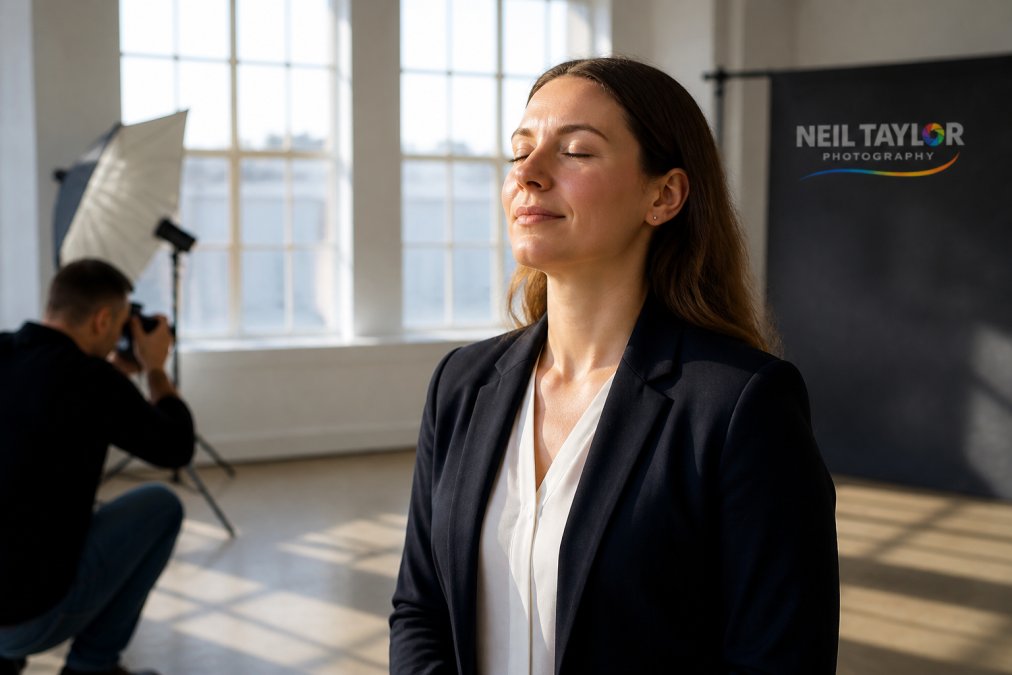
Before the session starts, practise box breathing: breathe in for a count of four, hold for four, exhale for four, hold for four. Repeat five to ten times. This signals to your nervous system that you’re safe, which relaxes your entire body.
Another effective technique is the 5-4-3-2-1 method. Notice five things you can see, four you can touch, three you can hear, two you can smell, and one you can taste. This shifts your mind from anxious thoughts to present-moment awareness.
Using movement and warm-up exercises
Static tension is the enemy of natural-looking headshots. When you hold your body rigid, every muscle in your face and neck tightens. Movement breaks this pattern.
Before the shoot begins, do simple warm-up exercises: roll your shoulders, gently rotate your neck, shake out your hands and arms, and march in place for 30 seconds. During the session, between shots, walk around the studio and stretch. This constant, gentle movement keeps your body from locking up and helps you feel more natural when the camera is rolling.
Many photographers, including those at Neil Taylor Photography, build in these movement breaks intentionally. They understand that a client who’s been standing still will look tense, whilst one who’s been moving looks relaxed and present.
Mirror practice before your session
Spend time in front of a mirror before your session and practise different facial expressions. Think of something that makes you happy and notice what your face does naturally. Think of something interesting and observe your expression shift. The goal isn’t to memorise a "perfect" expression, it’s to become familiar with your own face and how it moves.
Practise different angles too. Turn your head slightly left, then right. Tilt your chin up slightly, then down. This awareness helps you position yourself more comfortably during the actual session.
How Long Does a Headshot Session Take and Why Pacing Matters
A typical professional headshot session lasts between 30 and 60 minutes, depending on the number of looks you want. The first 10 to 15 minutes is usually setup and rapport-building. The actual shooting usually takes 20 to 40 minutes, during which your photographer will take dozens of images.
Pacing matters enormously. A rushed session creates tension and pressure to "get it right" on the first try. A relaxed pace, where your photographer is clearly taking their time and offering direction, produces far better results.
At Neil Taylor Photography, we structure sessions to give you plenty of time without feeling hurried. We know that comfort comes from having space to settle in and find your rhythm.
Working with Your Photographer to Feel Natural
Your photographer is your partner in creating an image that serves your goals. The more you collaborate with them, the more natural you’ll appear.
The role of test photos and feedback
Most photographers will show you test images during or shortly after the session. Use these images as data, not as judgement. If you see a shot where you look tense, you and your photographer can discuss what was happening and adjust for the next attempt.
This feedback loop is where real progress happens. By the end of the session, you’re both working from shared understanding rather than guessing.
Posing guidance for authentic expressions
One of the biggest mistakes people make is trying to hold a "pose." A skilled photographer doesn’t ask you to hold a pose. Instead, they give you gentle directions: "Shift your weight to your back foot." "Turn your shoulders slightly to the right." "Think of something that makes you laugh."
The best photographers understand that authentic expressions come from genuine feeling, not from holding your face in a particular shape. They might ask you to think about a specific moment or something you’re proud of. This mental direction creates a real expression that the camera captures.
Book your headshot session today →
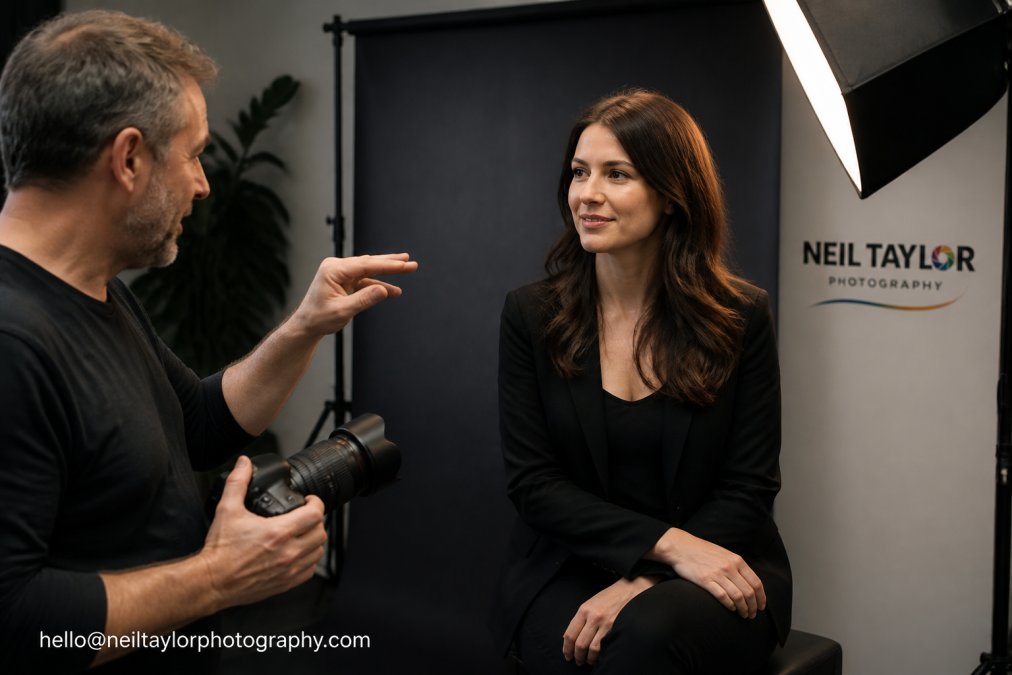
During your session, feel free to ask your photographer for guidance. These questions show that you’re engaged and collaborative, which helps you feel more comfortable.
Overcoming Specific Challenges During Your Shoot
Even with good preparation, specific challenges can arise during a session. Knowing how to handle them prevents them from derailing your confidence.
Managing restrictive clothing and physical discomfort
If your clothing is too tight or uncomfortable, say so immediately. Physical discomfort creates visible tension, and no photograph is worth that. If you’re struggling with a neckline or waistband, take a break. Step out of the studio, loosen the garment slightly, and stretch. Your photographer will appreciate the honesty, and you’ll return noticeably more relaxed.
Handling post-session review anxiety
After the session ends, you’ll wait for the photographer to deliver edited images. This waiting period can trigger anxiety, but it’s worth reframing. Your photographer took dozens of images and is now selecting and editing the best ones. Trust that process.
When you do see the final images, give yourself time to adjust. Your face looks different in photographs than in the mirror. That’s not a flaw, it’s how cameras work. If you genuinely dislike the images, discuss this with your photographer. A reputable photographer will work with you to address concerns. At Neil Taylor Photography, we stand behind our work and are committed to delivering images you’re genuinely happy with.
Feeling comfortable during headshots is a skill you can develop. It starts with preparation, understanding what to expect, communicating with your photographer, and choosing clothing that makes you feel confident. It continues with practical techniques like breathing exercises, movement, and mirror practice. It culminates in a collaborative session where you and your photographer work together to capture authentic images.
When you feel at ease, it shows. Your expression becomes genuine, your body language becomes natural, and the camera captures a version of you that you’re genuinely proud to share with the world.
If you’re ready to experience a headshot session designed with your comfort in mind, Neil Taylor Photography specialises in creating a relaxed, collaborative environment where actors, entrepreneurs, and professionals can feel confident and authentic.
For more information, contact us at hello@neiltaylorphotography.com
Frequently Asked Questions
Q: Why do I feel awkward when having my photo taken?
A: Camera shyness is common and rooted in self-awareness, you're suddenly conscious of how you look and move. This anxiety often stems from unfamiliar body language, fear of judgment, or past negative photo experiences. The key is recognising that discomfort decreases with preparation and rapport. Pre-session communication, mirror practice, and breathing exercises help normalise the experience. Professional photographers understand this and create a relaxed pace to help you feel comfortable during headshots. Most people feel noticeably more at ease by the end of their session.
Q: What should I avoid wearing for a headshot?
A: Avoid restrictive clothing that limits movement or causes physical tension, tight collars, stiff fabrics, or overly structured garments all translate to stiffness on camera. Skip busy patterns, logos, or clothing that draws attention away from your face. Avoid anything that makes you feel self-conscious or uncomfortable. Neutral, well-fitted clothing in colours that complement your skin tone works best. Choose fabrics that allow you to breathe and move naturally. When selecting best clothing for headshots, prioritise comfort and authenticity over trends.
Q: How can I prepare mentally for a photography session?
A: Mental preparation starts days before your shoot. Practise posing in front of a mirror to build confidence in your facial expressions and body language. Use grounding techniques like controlled breathing or brief meditation the morning of your session. Visualise yourself feeling relaxed and looking natural. Get adequate sleep the night before. Communicate with your photographer about your concerns, knowing you have professional support reduces anxiety significantly. Arrive early to acclimate to the studio environment. These steps build psychological confidence and help you feel comfortable during headshots.
Q: How long does a headshot session take and will I have time to relax into it?
A: Most professional headshot sessions run 30 to 60 minutes, though this varies depending on your needs and the photographer's approach. This duration gives you time to warm up, try different poses, and relax into the process. A relaxed pace is essential, rushing creates tension that shows on camera. Your photographer should build in breaks and adjust the session flow based on your comfort level. Test photos and real-time feedback help you see your progress, which boosts confidence. How long a headshot session takes matters less than the quality of the experience and final images.