Table of Contents
- Why Update Your Professional Headshot: The Business Case
- How Often to Update Your Headshot: Timeline and Triggers
- The Real Impact of an Outdated Headshot on Your Career
- LinkedIn Headshot Importance and Social Media Presence
- Professional Headshot Tips: Reflecting Your Current Role and Industry
- AI-Generated Headshots vs. Professional Photography: What You Need to Know
- When to Update Your Professional Headshot: Key Moments
- Conclusion: Invest in Your Professional Image
Last Updated: July 26, 2026
Why Update Your Professional Headshot: The Business Case
Your professional headshot is often the first impression you make on LinkedIn, company websites, email signatures, and digital platforms where hiring managers, recruiters, and potential clients form snap judgements about your credibility. A dated or misaligned headshot creates cognitive dissonance, the person hiring sees a version of you that no longer exists, costing you opportunities before you’ve had a chance to speak.
First Impressions and Credibility
Within milliseconds of viewing your image, people make assumptions about your competence, trustworthiness, and professionalism. A polished, contemporary headshot signals that you take yourself seriously and invest in your personal brand. When your image reflects your current appearance, industry standards, and professional role, hiring managers see someone engaged with their own development. When it doesn’t, you signal stagnation.
The most effective headshots match your industry’s visual expectations. A tech entrepreneur needs different styling than a corporate lawyer, who needs something different from an actor. Your headshot should look like you belong in your field.
The Role in Career Advancement and Opportunities
Career transitions hinge on first impressions, and your headshot either supports or undermines your narrative. When you’re moving into a new role, industry, or level of seniority, your visual identity needs to align with that shift. Recruiters often scan dozens of profiles in a single session. Your headshot is what makes you memorable or forgettable. A strong, current image increases the likelihood they’ll click through to your full profile and consider you for roles. This isn’t vanity, it’s strategic positioning.
How Often to Update Your Headshot: Timeline and Triggers
The 1-2 Year Refresh Rule
Most professionals should update their headshot every 12-24 months, depending on how visibly they’ve changed and how quickly their industry evolves. Tech and startup sectors may warrant annual updates; traditional fields might stretch to two years. You’re not the same person you were two years ago, and your headshot should reflect that growth.
If you’ve had the same headshot for more than two years, it’s time to update. If you’ve had it for more than three, you’re actively working against yourself.
Signs Your Current Headshot Is Outdated
Your hair is noticeably different in length, colour, or style. Your appearance has shifted due to age, weight, fitness, or skincare improvements. Your styling no longer matches your industry or role. The photo quality looks grainy, poorly lit, or digitally dated. Your background or clothing feels dated. Most tellingly: you hesitate to share it. If you’re reluctant to use your headshot on LinkedIn or your website, that’s your signal to book a new session.
The Real Impact of an Outdated Headshot on Your Career
Missed Opportunities with Hiring Managers and Recruiters
Recruiters work with limited information when sourcing candidates. Your LinkedIn profile, CV, and headshot are primary touchpoints before they decide whether to reach out. An outdated headshot creates immediate doubt about whether you’re actively job hunting or if your profile is dormant. When a recruiter sees a current, professional headshot that matches your profile details, they feel confident moving forward. Hesitation often means they move to the next candidate.
Psychological Impact on Professional Perception
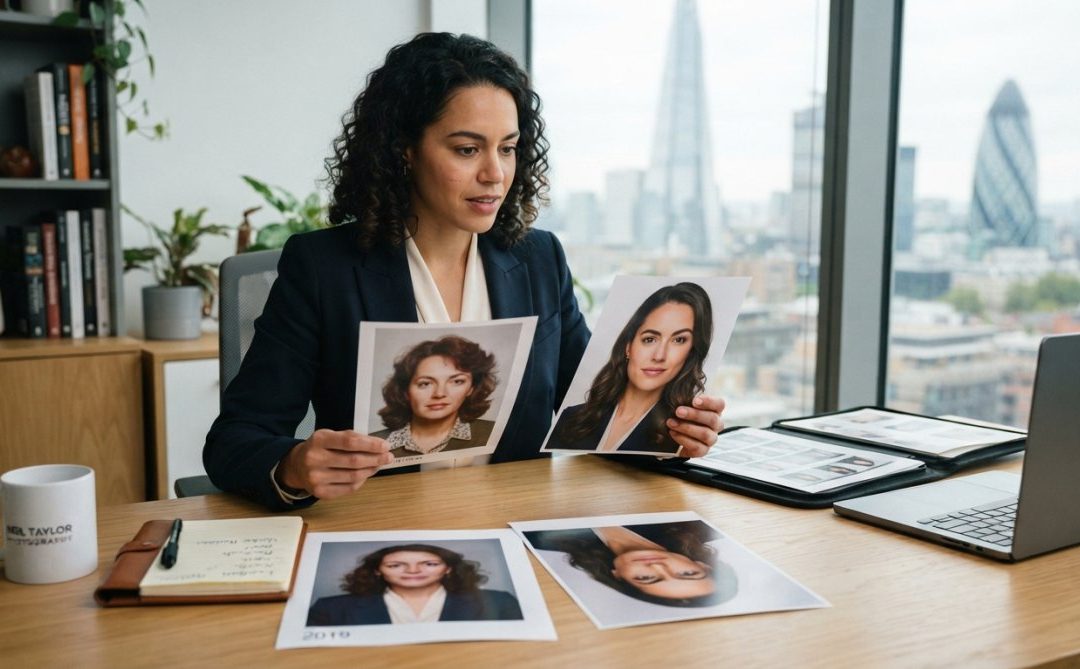
The mismatch between your headshot and actual appearance affects how people perceive you in person or on video calls. That disconnect undermines trust, even unconsciously. Conversely, a current headshot that accurately reflects how you look now creates alignment and builds credibility from the first moment.
LinkedIn Headshot Importance and Social Media Presence
Brand Consistency Across Digital Platforms
Your professional headshot is the visual anchor of your personal brand. It should appear consistent across LinkedIn, your company website, your email signature, and any other professional platform. Consistency signals intentionality and professionalism. LinkedIn’s algorithm also favours profiles with professional headshots, profiles with photos receive significantly more profile views and connection requests than those without.
Professional Headshot Tips: Reflecting Your Current Role and Industry
Industry-Specific Style Guides and Standards
Different industries have different visual expectations. In finance and law, traditional styling, classic clothing, and neutral backgrounds signal stability and trustworthiness. In tech and creative fields, you have more latitude for personality and contemporary styling. In entertainment, your headshot needs to be casting-ready. Understanding your industry’s visual language is crucial, a headshot that works in one field might undermine credibility in another.
Preparation Checklist for Your Headshot Session
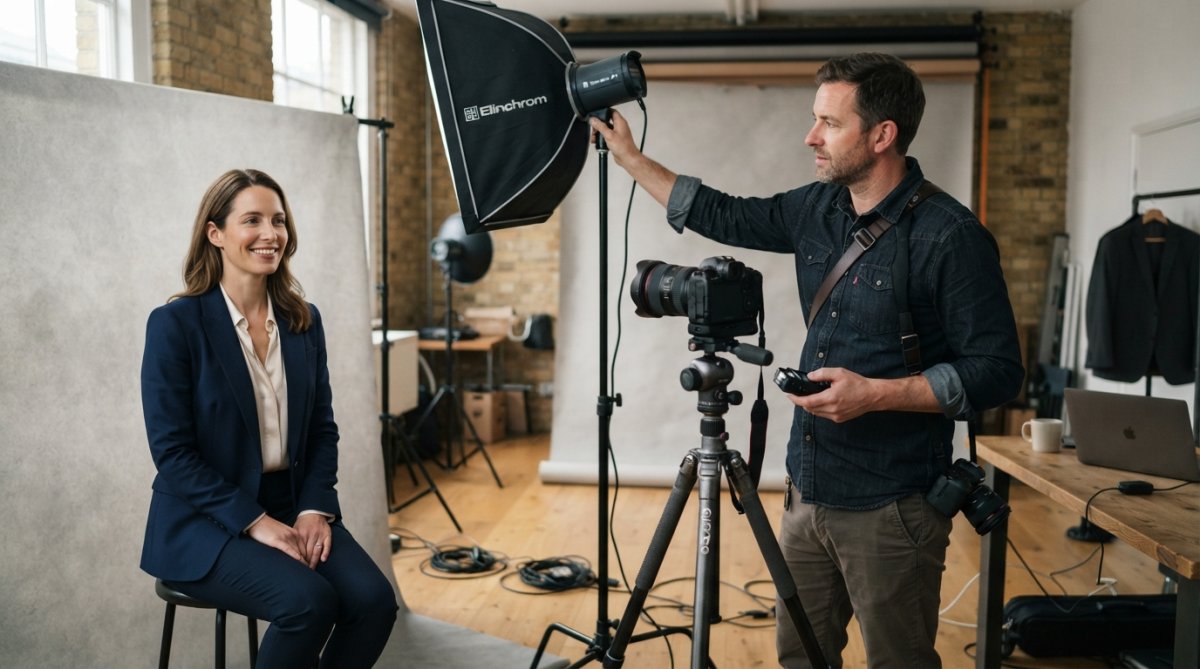
Clarify your purpose: are you updating for LinkedIn, a company website, casting submissions, or all of the above? Get a fresh haircut 2-3 days before your session. Moisturise your skin and avoid heavy makeup. Wear clothing that fits well and makes you feel confident; avoid busy patterns and distracting jewellery. Bring 2-3 outfit options. Consider whether you want a professional studio setting or an on-location shoot that shows you in your actual work environment. On the day, arrive early and give yourself time to relax, tension shows in photos.
AI-Generated Headshots vs. Professional Photography: What You Need to Know
AI-generated headshots promise professional-quality images in minutes for £20-£50, compared to £150-£400+ for professional photography. However, the strategic risks vary significantly depending on your industry.
Where AI Headshots Fall Short
AI-generated images lack authenticity in ways hiring managers can often detect. The lighting feels sterile, the expression neutral but unnatural, and the background generic. More critically, AI headshots don’t actually look like you, they’re mathematical approximations. When you use an AI-generated headshot on LinkedIn but appear noticeably different on a video call, you’ve created a trust problem before the conversation begins.
For casting and entertainment work, AI-generated headshots are disqualifying. Casting directors expect real photographs that accurately represent your appearance and on-camera presence.
Where Professional Photography Wins
A professional photographer captures your actual presence, personality, and the subtle details that make you recognisable and trustworthy. Professional photography is an investment signal communicating that you take your career seriously and understand professional standards in your industry. In competitive hiring situations, especially for senior roles, this signal matters.
The Industry-Specific Reality
In creative fields, design, marketing, entertainment, media, a professional headshot is expected. In tech and startups, there’s more flexibility, though professional photos still outperform. In corporate and finance sectors, professional photography is the standard.
AI headshots are a budget option, not a best-practice option. Use them if you need something current quickly in a low-stakes environment. But if you’re serious about career advancement, casting, or competing in a professional market, professional photography is the investment that pays dividends.
When to Update Your Professional Headshot: Key Moments
Career Transitions and Role Changes
When you change roles, industries, or levels of seniority, your visual identity should shift to match. A headshot from your previous career phase doesn’t serve your new direction. Hiring managers notice misalignment immediately.
Visual Identity Refresh and Personal Rebranding
Personal rebranding moments warrant a headshot refresh: you’ve developed a clearer sense of your professional identity, made significant lifestyle or style changes, or are launching a business or consulting practice. These moments are opportunities to invest in your professional image.
Your professional headshot is one of the highest-ROI investments you can make in your career. It shapes first impressions, influences hiring decisions, and communicates your professionalism across digital platforms. Neil Taylor Photography specialises in creating professional headshots that capture your authentic presence while positioning you strategically in your industry. With both studio and on-location sessions available across London and Kent, we help entrepreneurs, actors, and business professionals stand out with confidence. Book your headshot session today and invest in the image that opens doors.
Frequently Asked Questions
How often should you update your professional headshot?
Most professionals benefit from updating their headshot every 1-2 years. This timeline ensures your image reflects your current appearance, style, and professional role. However, you may need to update sooner if you've experienced significant changes, new role, major career transition, or noticeable changes in appearance. Industry standards vary; actors and entrepreneurs may refresh more frequently, whilst corporate professionals might stretch to 2-3 years if circumstances haven't changed substantially.
Can an outdated headshot actually hurt your career prospects?
Yes. An outdated headshot can negatively impact how hiring managers, recruiters, and clients perceive you. When your headshot doesn't match your current appearance or professional context, it creates confusion and erodes trust, especially on LinkedIn and during recruitment processes. Studies in visual psychology show that mismatched images reduce credibility and can lead to missed opportunities. A fresh, contemporary headshot signals that you're actively engaged in your career and take your professional brand seriously.
What's the difference between AI-generated headshots and professional photography?
Professional photography delivers authentic, personalised imagery that reflects your genuine presence and builds real credibility with hiring managers and clients. AI-generated headshots offer speed and lower cost but often lack the authenticity, nuance, and industry-specific polish that professional photographers provide. Hiring managers increasingly recognise AI images, which can undermine your professional credibility. For serious career advancement, a professional headshot, whether in-studio or on-location, remains the superior investment in your personal brand.
What should I include in my headshot preparation checklist?
Prepare by selecting appropriate clothing for your industry (solid colours work best), ensuring hair and makeup are polished and camera-ready, and arriving well-rested. Bring 2-3 outfit options if your session allows. Consider your lighting environment and whether you prefer studio or on-location shooting. Communicate any concerns about comfort or appearance to your photographer beforehand, professional photographers specialise in helping you feel confident and look natural. Plan for adequate time so you're not rushed, and discuss the final deliverables and editing style with your photographer in advance.
External Sources
[EXTERNAL_LINK: LinkedIn’s official guide on profile optimisation and photo importance | linkedin.com]
[EXTERNAL_LINK: Harvard Business Review on first impressions and professional credibility | hbr.org]
[EXTERNAL_LINK: Society for Human Resource Management (SHRM) research on hiring manager decision-making | shrm.org]
This article was written using GrandRanker