Table of Contents
- Why Preparation Matters for Professional Headshots
- What to Wear for Professional Headshots
- Headshot Grooming Tips for Your Session
- How Long Does a Headshot Session Take
- How to Pose for Headshots with Natural Confidence
- Mental and Physical Preparation Before Your Shoot
- What to Bring and Logistics Planning
- Frequently Asked Questions
Last Updated: September 4, 2026
Why Preparation Matters for Professional Headshots
A professional headshot is far more than just a photograph. It’s your first impression, your calling card, and often the deciding factor in whether someone takes you seriously. Whether you’re an actor preparing for casting directors, an entrepreneur building your personal brand, or a corporate professional updating your LinkedIn profile, the quality of your headshot directly impacts how you’re perceived.
The difference between a rushed, unprepared shoot and a thoughtful, well-prepared one is stark. When you arrive prepared, you look more confident, more polished, and more authentic on camera. At Neil Taylor Photography, we’ve seen countless clients transform their results simply by taking preparation seriously. This isn’t about being overly rehearsed or artificial, it’s about showing up as the best version of yourself so the camera captures what’s actually there.
Preparation also reduces anxiety. When you know what to expect, what to wear, and how to position yourself, you stop worrying about logistics and start focusing on connecting with the lens. That’s when the magic happens.
What to Wear for Professional Headshots
Your clothing choice is one of the most important decisions you’ll make before your session. What you wear frames your face, sets the tone for your image, and communicates something about who you are before anyone hears you speak.
Colour choices that work on camera
Solid colours photograph far better than patterns. Busy prints, stripes, and small checks create visual noise that distracts from your face. Choose jewel tones, deep blues, emeralds, burgundies, or rich purples, which photograph beautifully and make skin tones appear more vibrant. Blacks and greys work well for corporate headshots but can feel heavy if that’s not your brand. Avoid very pale or washed-out colours that can make you look tired on camera.
Neutrals like navy, charcoal, and cream are reliable choices for professional settings. If you’re an actor, consider what roles you typically audition for, your headshot wardrobe should reflect that world. Warm earth tones suit most skin tones and create an approachable, professional feel.
Fit and style considerations
Fit matters enormously. Clothing should be tailored to your frame without being tight or restrictive. Oversized or baggy garments can make you look smaller and less defined on camera, whilst anything too snug will show every movement and distract from your face. A fitted blazer, a well-tailored shirt, or a dress that skims your body without clinging is ideal.
Avoid anything with large logos, busy graphics, or distracting details. Keep jewellery minimal and tasteful, a simple necklace or earrings, not multiple pieces competing for attention. For corporate headshots, business wear is standard: a blazer, dress shirt, or blouse. For creative industries, you have more flexibility, but still aim for polished and intentional rather than casual.
Consider bringing 2-3 outfit options to your session. Different looks suit different face shapes and skin tones, and having variety means you can choose the shot that feels most like you.
Headshot Grooming Tips for Your Session
Your appearance on shoot day sets the foundation for everything that follows. Grooming isn’t about looking unnatural, it’s about presenting yourself at your absolute best.
Hair preparation and timing
Get your hair cut or styled 3-5 days before your shoot, not the day before. This gives your style time to settle and look natural rather than freshly done and stiff. If you’re having your hair professionally styled on the day, book it early enough that you’re not rushed. Avoid trying a completely new hairstyle right before your shoot, stick with something you know works for you.
Hair should be clean and well-conditioned. Limp, greasy hair photographs poorly, but so does hair that’s been over-treated or looks artificially styled. Aim for a look that feels like the best version of your everyday self. If you typically wear your hair down, wear it down. If you usually style it back, do that. Consistency matters because your headshot should feel recognisable when people meet you in person.
Skin care and makeup approach
Start a basic skincare routine at least a week before your session. Hydrated skin photographs beautifully, whilst dehydrated skin looks tired and lined. Drink plenty of water and use a good moisturiser. If you struggle with breakouts, address them early, don’t wait until the day before.
For makeup, the goal is enhancement, not transformation. The camera picks up far more detail than the human eye, so less is often more. If you’re not confident with makeup, consider booking a professional makeup artist who specialises in headshots. They understand how makeup photographs and will create a look that suits your colouring and the lighting conditions.
If you’re doing your own makeup, use a primer to ensure longevity, choose foundation that matches your skin tone exactly, and avoid heavy contouring, it can look harsh on camera. A subtle blush, well-defined eyes, and a natural lip colour work well. Avoid matte finishes that can look flat; a slight luminosity photographs better.
Book your headshot session today →
How Long Does a Headshot Session Take
Most headshot sessions run between 30 and 60 minutes, depending on what you’re having done. A single-outfit corporate headshot typically takes 30-45 minutes. If you’re bringing multiple outfit changes or want variety, allow closer to an hour.
This timeframe includes setup, lighting adjustments, and multiple shots from different angles. You won’t be in front of the camera for the entire duration, there’s always technical preparation happening behind the scenes. The actual shooting usually involves many individual frames, giving you and your photographer plenty of options to choose from.
Don’t rush this process. A hurried session often shows in the results. Give yourself enough time to relax, get comfortable with the camera, and let your natural confidence emerge.
How to Pose for Headshots with Natural Confidence
Posing for headshots feels awkward at first, but there’s a science to it. The goal is to look natural whilst still being intentional about your positioning.
Body positioning and angles
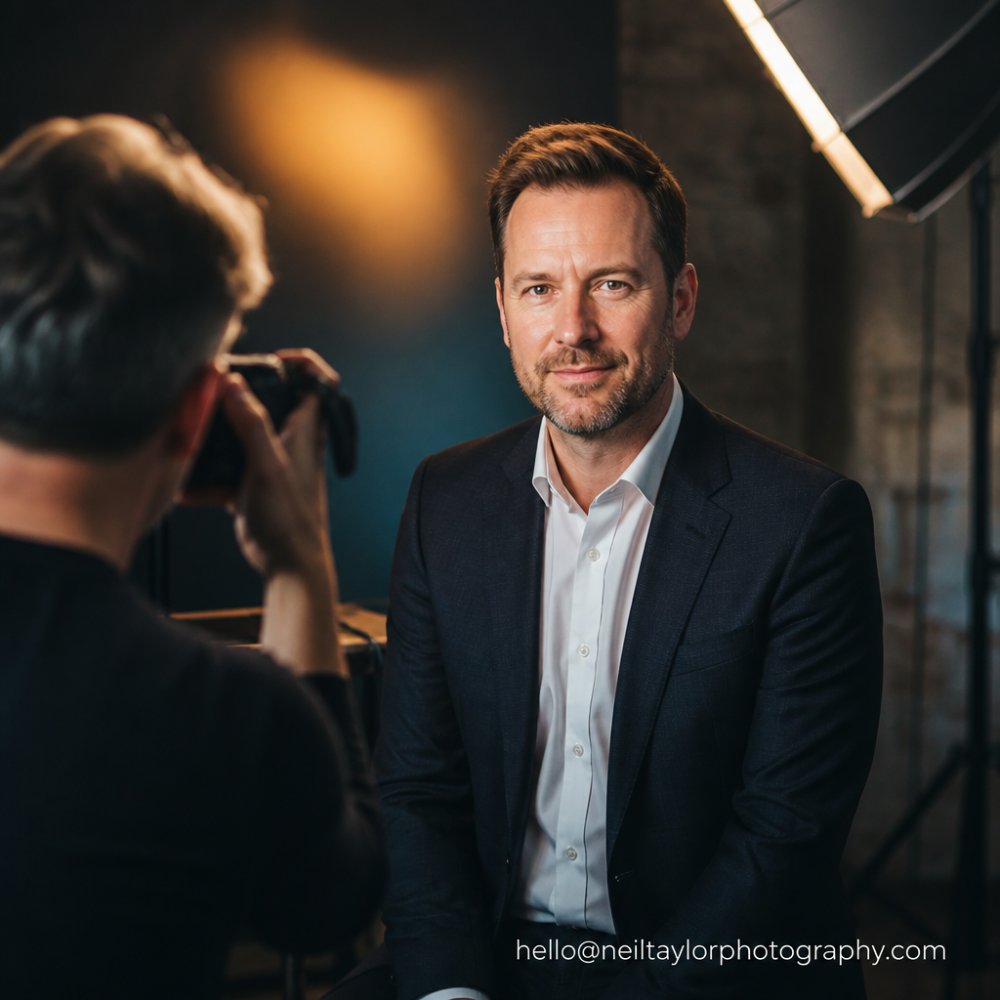
Your shoulders should be angled slightly away from the camera, a straight-on stance can look stiff and flat. Turn your body about 15-20 degrees to one side, then turn your head back towards the camera. This creates dimension and makes your neck and jawline appear more defined.
Avoid tensing your shoulders. Drop them down and back slightly; this makes your neck look longer and your posture more confident. Lean very slightly forward, about an inch or two, rather than leaning back. This creates a subtle sense of engagement and interest.
Your chin position matters. Tilt it slightly downward and forward, not up. This prevents unflattering shadows under the chin and creates a more flattering angle for most face shapes. Work with your photographer to find what feels natural for you.
Facial expressions and eye contact
The most common mistake is trying too hard. A forced smile looks exactly like that on camera. Instead, think of something that makes you genuinely happy or amused, a memory, an inside joke, something that brings a natural smile to your face. Your eyes should be engaged, not vacant.
Eye contact with the lens is crucial. Look directly into the camera, not past it or to the side. This creates connection and presence. Blink naturally between shots, but try to keep your eyes open and alert when the shutter clicks.
A slight smile works better than a huge grin for most professional headshots. Your mouth should be relaxed, not clenched. If smiling feels unnatural, a neutral expression with engaged eyes works perfectly well, especially for corporate or serious industry headshots.
Between shots, completely relax your face and body. Then, when your photographer is ready, shift back into your pose. This prevents the frozen, held-for-too-long look that happens when you stay tense throughout the session.
Mental and Physical Preparation Before Your Shoot
How you feel physically and mentally directly translates to how you appear on camera. Your energy, confidence, and presence are visible in every frame.
Sleep, hydration, and diet
Get a full night’s sleep the night before your shoot. Tired eyes and a tired face are immediately obvious on camera. Avoid alcohol the night before, as it can dehydrate your skin and leave you looking puffy.
Hydration is critical. Drink plenty of water in the days leading up to your session, not just on the day. Well-hydrated skin looks plump, clear, and vibrant. Avoid excessive caffeine on shoot day, which can make you jittery and affect your natural expression.
Eat something light and balanced a few hours before your session. You want energy without feeling bloated or uncomfortable. Avoid heavy foods, sugary snacks, or anything that might make you feel sluggish.
Mindset techniques for camera confidence
Your mindset shapes your presence. Before your session, spend time visualising yourself looking confident and natural in front of the camera. This isn’t about being delusional, it’s about priming your brain to perform at its best.
Remind yourself that the photographer wants you to succeed. They’re on your side, not judging you. Their job is to capture you looking your best, and they have the skills to make that happen. Release the pressure to be perfect; headshots are about authenticity, not flawlessness.
Book your headshot session today →
Some people find it helpful to do a brief warm-up before the shoot. Smile, make funny faces, move your neck around gently. This loosens facial muscles and prevents the stiff, uncomfortable look that comes from holding tension.
The camera captures confidence. When you’ve prepared thoroughly, you genuinely feel more confident, and that shows in every frame.
What to Bring and Logistics Planning
Arrive 10-15 minutes early to your session. This gives you time to settle, use the facilities, and get comfortable with your surroundings before you’re in front of the camera.
Bring your outfit options on hangers, not crumpled in a bag. If you’re wearing makeup, bring a small mirror and touch-up supplies in case you need a quick refresh between outfit changes. Bring a hairbrush or comb as well.
Wear comfortable shoes to your session, even if you won’t be wearing them in the photos. You’ll be standing or moving around during setup, and comfort matters. If you’re unsure about parking or location, check beforehand so you’re not stressed when you arrive.
Communicate with your photographer in advance about what you’re hoping to achieve. Share your vision, the industry you work in, and any specific looks or feels you want to capture. This helps them prepare lighting and positioning that works for your goals.
Updating your headshot is one of the most impactful decisions you can make for your professional image. A current, polished headshot opens doors, whether that’s casting opportunities, client trust, or professional credibility. When you prepare thoroughly, you’re not just getting a better photograph; you’re investing in how the world sees you.
At Neil Taylor Photography, we specialise in creating headshots that capture authenticity alongside professionalism. Whether you need casting-ready actor headshots, corporate portraits for your team, or personal branding images, proper preparation ensures you walk away with shots you’re genuinely proud of. Our studio and on-location sessions are designed to make you feel comfortable and confident throughout the process.
Ready to make your headshot count? Check Availability to book your session, or reach out to hello@neiltaylorphotography.com with any questions.
Frequently Asked Questions
What should I wear for a professional headshot?
Wear solid colours that complement your skin tone, blues, jewel tones, and neutrals photograph well. Avoid busy patterns, white, or black. Choose fitted clothing that suits your industry: business wear for corporate roles, something more creative for actors or entrepreneurs. Ensure nothing distracts from your face. Bring 2-3 outfit options so your photographer can help you choose what works best on camera.
How do I prepare my skin for a headshot session?
Start a skincare routine 1-2 weeks before your session. Cleanse and moisturise daily, and exfoliate gently 2-3 days before. Stay hydrated throughout the week. Avoid new skincare products or treatments close to your shoot date, as they can cause irritation or unexpected reactions. If you have active breakouts, mention them to your photographer beforehand, they can help minimise them during retouching.
Should I get a haircut before my headshot session?
A fresh haircut 1-2 weeks before your session works best. This gives your hair time to settle into its natural shape while still looking polished. Avoid cutting it the day before, as it may look too neat or unfamiliar. If you’re considering a major change, do it well in advance so you feel confident. Have your hair styled the way you’d normally wear it for work or auditions.
How long does a headshot session take?
Most professional headshot sessions last 30 minutes to 1 hour. This timeframe allows your photographer to capture multiple expressions, angles, and outfit changes while keeping you relaxed and natural. Arrive a few minutes early to settle in, discuss your goals with your photographer, and feel comfortable before the camera starts rolling.
How can I look more natural in professional headshots?
Think of something that makes you genuinely smile rather than forcing an expression. Relax your shoulders, avoid tensing your jaw, and take a few deep breaths between shots. Work with your photographer, they’ll guide your posture and give you prompts to keep you feeling natural. Practise in a mirror beforehand if it helps. Remember that the best headshots capture your authentic self, not a stiff, posed version.
What colours look best on camera for headshots?
Jewel tones like sapphire, emerald, and deep purple photograph beautifully and make skin tones pop. Soft neutrals such as cream, taupe, and grey work well for corporate settings. Warm earth tones suit most complexions. Avoid pure white, which can overexpose, and pure black, which can be too harsh. Test colours against your skin in natural light before your session, or bring multiple options for your photographer to advise on.
What should I bring to my headshot session?
Bring 2-3 outfit options, a brush or comb, any makeup you use regularly, and a phone charger. If you wear glasses for work, bring them. Bring a water bottle to stay hydrated. If you have specific styling products that make your hair feel confident, bring those too. Arrive with minimal makeup if possible, your photographer can advise on touch-ups, and it’s easier to add than remove. Most importantly, bring an open mind and willingness to try different poses and expressions.