Table of Contents
- Overview: John Driscoll vs Graham Baker
- Professional Background and Specialisations
- Studio vs On-Location Headshots: What Each Photographer Offers
- Portfolio Style and Visual Approach
- How to Choose a Portrait Photographer for Your Needs
- Professional Headshot Photography Tips for Your Session
- Which Photographer Suits Your Industry and Goals
- Conclusion
Last Updated: August 21, 2026
Overview: John Driscoll vs Graham Baker
When searching for a professional headshot photographer, the choice between practitioners can feel overwhelming. This guide from Neil Taylor Photography breaks down what sets different photographers apart, helping you understand the real differences beyond portfolio aesthetics.
The question isn’t "which photographer is better" but "which photographer is better for YOUR specific needs?" A photographer excelling at corporate LinkedIn headshots may not suit casting-ready actor portraits. Someone brilliant at studio work might struggle with on-location environmental shoots.
In this comparison, we’ll examine how photographers like John Driscoll and Graham Baker approach their craft differently, what each style delivers, and how to identify which approach aligns with your goals. Whether you’re an actor preparing for auditions, an entrepreneur building your personal brand, or a business professional needing team photography, these insights will help you decide based on substance.
Professional headshot photography standards
Professional Background and Specialisations
Understanding photographers’ specialisations matters more than you might think. John Driscoll and Graham Baker represent two different philosophies about professional photography.
John Driscoll’s Approach
John Driscoll focuses on headshot and portrait photography, creating images that serve specific professional purposes. His specialisation is narrow but deep, he understands the technical requirements of casting directors, lighting preferences across industries, and how to direct clients naturally rather than stiffly.
Graham Baker’s Broader Commercial Focus
Graham Baker Photography, based in Welling, Bexley, offers commercial photography, video production, drone photography, and 360 virtual tours. This broader model positions the photographer as a comprehensive visual content provider rather than a specialist in one category.
The distinction matters because headshot photography requires specific understanding of lighting, posing, and direction that differs from commercial brand photography or architectural work. A photographer excellent at product photography may approach headshots differently than someone who’s spent years perfecting that particular craft.
Studio vs On-Location Headshots: What Each Photographer Offers
The choice between studio and on-location sessions fundamentally shapes your final images and reveals which photographer understands your specific goals.
Studio Photography: Control and Consistency
Studio photography offers complete control over lighting, background, and environment. Every variable is managed, backdrop distance, key light angle, fill ratio, and colour. This consistency is why corporate clients prefer studio work. When you need multiple team members photographed with identical lighting and backgrounds, a studio environment delivers efficiently.
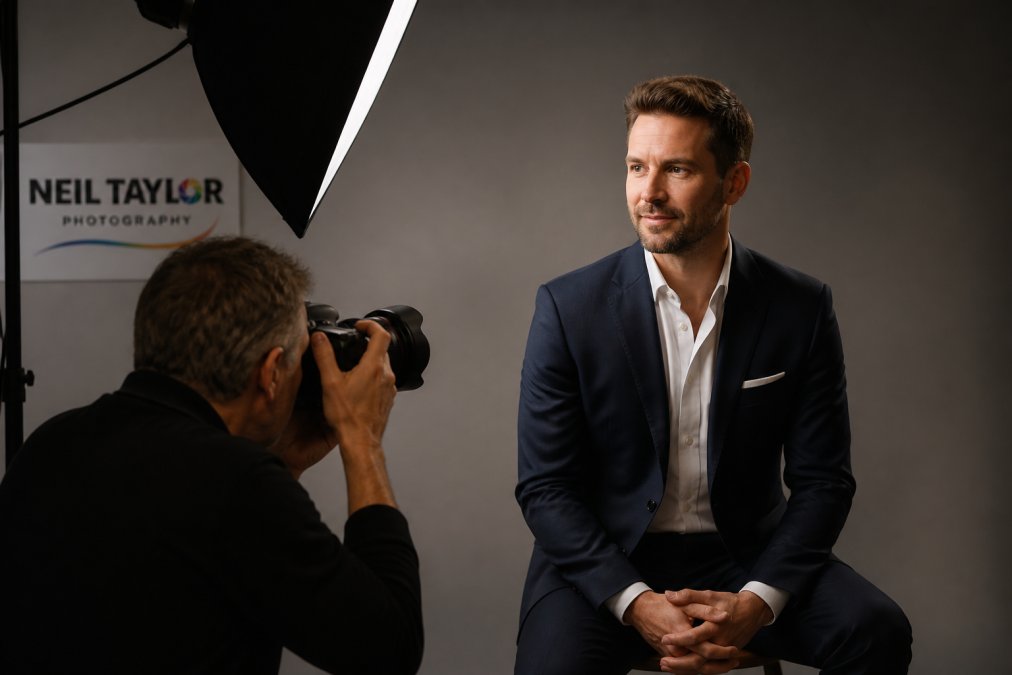
Studio sessions work well for LinkedIn headshots, corporate team photography, and situations requiring multiple outfit changes in one session.
On-Location Shoots: Context and Authenticity
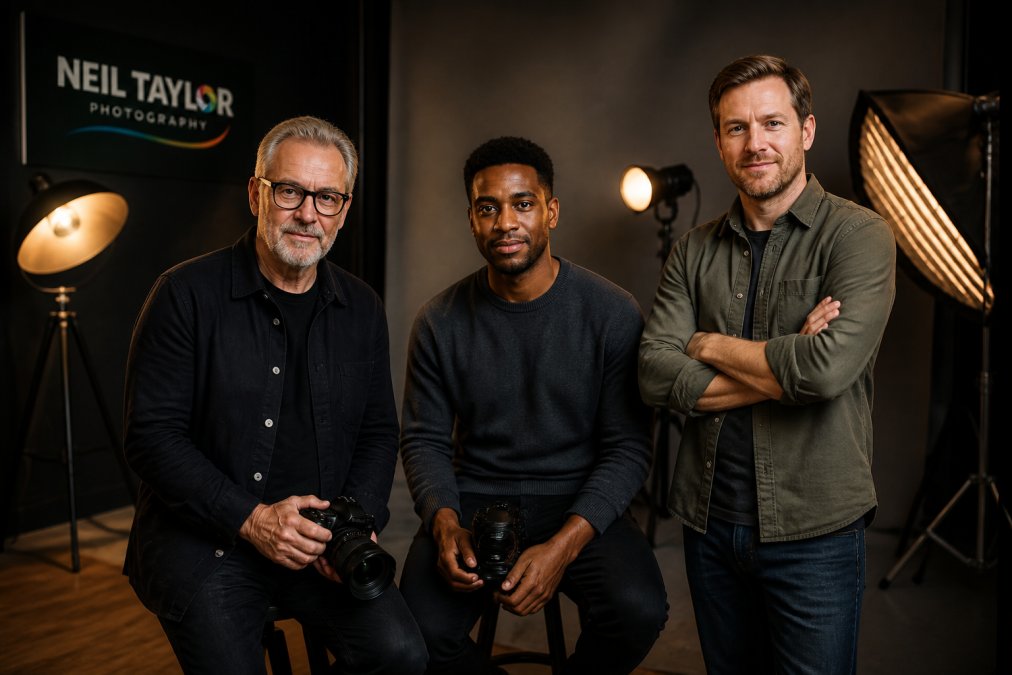
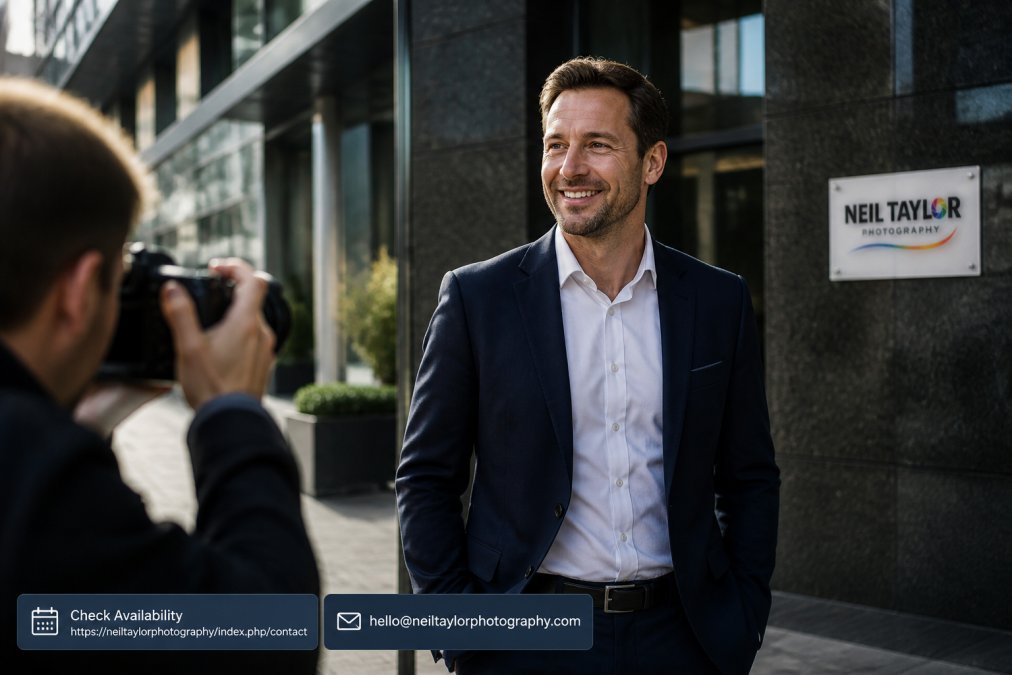
On-location photography tells a different story. Your background becomes part of the narrative. An entrepreneur photographed in their office communicates something different than the same person against a neutral backdrop.
On-location work requires different technical skills. The photographer must manage variable lighting, work with existing backgrounds, and adapt to changing conditions. A skilled on-location photographer understands how to position you relative to natural light, use environmental elements without overwhelming the frame, and create professional images in imperfect conditions.
Neil Taylor Photography offers both approaches, recognising that different clients need different solutions.
Portfolio Style and Visual Approach
How a photographer sees and captures images reveals their fundamental approach to the work.
Lighting Philosophy
Different photographers prioritise different aspects of lighting. Some favour dramatic, sculptural lighting with strong shadows. Others prefer even, flattering light that minimises texture. Neither approach is objectively correct, but they produce different emotional impacts.
When reviewing a photographer’s portfolio, ask "do these images match how I want to be perceived?" An actor might want dramatic, character-revealing lighting. A corporate executive might prefer flattering, approachable light.
Direction and Expression
Some photographers excel at capturing candid, natural expressions. Others produce more polished, controlled looks. The best photographers understand that different clients need different approaches and adapt accordingly.
Editing and Post-Production
Post-production choices significantly impact final images. Some photographers favour natural, minimal retouching. Others use more extensive editing for polished results. Corporate headshots often benefit from more refinement, whilst actor headshots sometimes work better with minimal retouching showing authentic skin and texture.
How to Choose a Portrait Photographer for Your Needs
Use these questions to evaluate whether a specific photographer aligns with your requirements.
Define Your Primary Use Case
Start here. Are you an actor needing casting-ready material? An entrepreneur building a personal brand? A business professional requiring a LinkedIn headshot? A company needing consistent team photography?
Each use case has different requirements. Casting directors want authenticity and minimal retouching. LinkedIn headshots benefit from polish and professionalism. Team photography requires consistency across multiple subjects.
Evaluate Their Portfolio Against Your Goals
Look strategically at their portfolio. Find images similar to what you need, same gender, similar age, similar industry if possible. Do those images look like how you want to be perceived? Is the lighting flattering? Is the expression natural or posed?
Choose based on whether you’d want to look like the people in their portfolio.
Understand Their Process
How does the photographer work? Do they offer pre-session consultation? What should you wear? How much direction do they provide? How many outfit changes are included? How quickly do you receive edited images?
The process matters because it affects your comfort level and results quality.
Check References and Real Client Feedback
Portfolio images represent the photographer’s best work. Client reviews represent the actual experience. Look for feedback about professionalism, comfort level, and satisfaction with results.
Professional Headshot Photography Tips for Your Session
Preparing properly for your headshot session significantly impacts results.
Wardrobe Strategy
Wear something that feels authentically you whilst being professional. For actors, this often means clothing reflecting your casting type. For business professionals, wear something polished but not costume-like. Avoid busy patterns, very bright colours, or distracting logos.
Bring multiple outfit options if your session allows. Different outfits create different energy and serve different purposes.
Preparation Before the Session
Get proper sleep the night before. Your face looks fresher and your eyes brighter. Avoid alcohol the evening before, as it can cause puffiness.
For grooming, keep it natural. Professional grooming is expected, but obvious makeup or heavily styled hair can read as inauthentic. If inexperienced with professional makeup, consider hiring a makeup artist experienced with photography.
During the Session: Mental Approach
The biggest mistake is trying too hard. Tension shows in your face, shoulders, and posture. The best headshots happen when you’re relaxed and thinking about something genuinely interesting rather than thinking about your face.
Work with your photographer on creating an environment where you relax. Good photographers understand how to chat between shots, play music, or give specific direction about what to think about.
Managing Expression and Energy
Different expressions serve different purposes. A warm, genuine smile works for approachable professional contexts. A more neutral expression sometimes works better for actors. A confident, direct gaze communicates authority.
Discuss with your photographer what expressions you’ll explore during the session. Most sessions include multiple looks, smiling and non-smiling, direct eye contact and looking slightly off-camera, different head tilts and angles.
Which Photographer Suits Your Industry and Goals
Different industries and professional contexts call for different photographic approaches.
For Actors and Performers
Casting directors want authenticity above polish. They want to see your actual face, genuine expressions, and range. Headshots should be current, within the last year or two.
Look for a photographer who understands that actor headshots are fundamentally different from corporate headshots, they’re about looking authentic and casting-ready, not as polished as possible.
For Entrepreneurs and Business Owners
Your headshot communicates credibility and approachability. You need something working across multiple contexts, your website, LinkedIn, social media, marketing materials. Consistency matters because people need to recognise you across platforms.
Consider whether you need just a headshot or broader personal branding images. If you need multiple images for different contexts, a photographer experienced with personal branding, like Neil Taylor Photography, understands how to create cohesive visual branding across multiple images.
For Corporate Teams
When photographing multiple team members, consistency becomes critical. Everyone needs similar lighting, backgrounds, and styling so images work together as a set. Studio photography excels here, with controlled environments ensuring every team member looks equally professional.
You need a photographer experienced with corporate photography who can manage logistics efficiently and understand what looks appropriate for your industry.
For LinkedIn and Professional Networking
LinkedIn headshots have specific requirements. The image appears small on screen, so lighting and contrast matter more than subtle details. You want to look approachable but professional, confident but not arrogant.
A photographer experienced with LinkedIn photography understands these requirements and knows how to light for visibility at small sizes.
Conclusion
The choice between photographers ultimately comes down to alignment, between their specialisation and your needs, between their style and your goals, between their process and your comfort level.
John Driscoll and Graham Baker represent different approaches to professional photography. Driscoll’s specialisation in headshot and portrait work means deep expertise in that specific category. Baker’s broader commercial offering provides flexibility for clients needing multiple services.
Neither approach is universally "better." The better photographer for you is the one whose specialisation, style, and process align with your specific requirements.
When you’re ready to invest in professional headshots that actually work for your career, Neil Taylor Photography offers specialised expertise in actor, entrepreneur, and business professional photography. With both studio and on-location options, Neil Taylor Photography delivers authentic, polished images that help you stand out with genuine confidence.
Portrait photography best practices for professional branding
Headshot photography industry standards and guidance
Check Availability
For enquiries, contact hello@neiltaylorphotography.com
Frequently Asked Questions
Q: How do I compare professional headshot photographers?
A: Start by reviewing their portfolios to assess style consistency and quality. Check whether they specialise in your industry, actors, entrepreneurs, and corporate professionals need different approaches. Ask about their session process, turnaround times, and whether they offer both studio and on-location options. Request client testimonials or case studies relevant to your field, and clarify what's included in their packages before committing.
Q: What should I look for in a professional portrait portfolio?
A: A strong portfolio demonstrates consistency in lighting, composition, and editing across multiple subjects. Look for evidence that the photographer understands your industry. Check for variety in expressions and poses rather than repetitive shots. Ensure the editing style matches your brand vision, and verify the portfolio includes recent work. A professional photographer should showcase client testimonials that speak to their ability to capture authentic, casting-ready imagery.
Q: What are the benefits of studio versus on-location photography?
A: Studio photography offers controlled lighting, consistent backgrounds, and a professional environment ideal for corporate headshots and LinkedIn profiles. On-location shoots provide natural light, authentic backdrops that reflect your workplace or brand environment, and a relaxed atmosphere that often produces more genuine expressions. Studio work suits actors needing casting-ready images, whilst on-location sessions work well for entrepreneurs wanting to showcase their environment. Your choice depends on your industry, brand identity, and whether you need versatility or consistency in your final images.
Q: How do I choose between different photography styles?
A: Consider your professional goals and industry expectations. Formal, polished studio headshots often convey authority and trustworthiness. Creative industries like acting benefit from natural, expressive on-location work. Review each photographer's style by examining their portfolio, do they specialise in your sector? Ask whether they adapt their approach to your personality and needs, or follow a fixed style. Request a consultation to discuss your vision and confirm the photographer understands your professional background and career objectives.
Q: Does a photographer's specialisation impact my personal brand?
A: Absolutely. A photographer experienced in your industry understands the visual language and expectations of your field. Someone specialising in actor headshots knows what casting directors seek; a commercial photographer understands corporate credibility. Your personal brand reflects your professional credentials and career history, so choosing a photographer familiar with your sector ensures your images align with industry standards. This is especially important where professional presentation directly influences how clients and colleagues perceive you.
Ready to book your professional headshot session? Check Availability
For more information, contact Neil Taylor Photography: hello@neiltaylorphotography.com