
Last Updated: 24 October 2026
Quick Summary
Natural smile professional photos come from relaxation, genuine emotion, and eye engagement rather than forcing your mouth. Focus on feeling something real instead of thinking about your smile, relax your jaw and shoulders beforehand, and trust your photographer to guide you through authentic expressions.
- Arrive 10-15 minutes early to settle in and reduce tension before your session
- Practise deep breathing and jaw relaxation exercises to loosen facial muscles
- Think of something genuinely meaningful rather than trying to create a happy expression
- Wear clothes that make you feel confident, as this translates to your face
- Communicate clearly with your photographer about your needs and preferences
Table of Contents
- Why a Natural Smile Matters in Professional Photography
- How to Smile for a Headshot: Preparation and Mindset
- Relaxation Techniques Before Your Session
- How to Look Confident in Photos: Eye Engagement and Expression
- Professional Headshot Tips for Authentic Results
- Natural Smile Photography Tips: Finding Your Genuine Expression
- Common Mistakes That Kill Your Natural Smile
- Booking Your Professional Headshot Session
- Frequently Asked Questions
Why a Natural Smile Matters in Professional Photography
Natural smile professional photos are the difference between looking stiff and looking approachable. It’s the first thing people notice about your headshot. When your smile looks genuine, it builds trust instantly.
This matters whether you’re an actor seeking casting roles, an entrepreneur building your brand, or a professional updating your LinkedIn. A forced smile reads as uncomfortable. A natural smile reads as confident.
A genuine smile transforms a headshot from forgettable to memorable. The smile isn’t just a facial expression, it’s the core of how people perceive you in a still image. Get it right, and your photo works for you across auditions, job interviews, and business opportunities.
The challenge most people face is that smiling on command feels awkward. Your face tenses. Your eyes don’t engage. The result looks strained. This guide walks you through how to relax your face, engage your eyes, and deliver a smile that feels authentic when the camera clicks.
How to Smile for a Headshot: Preparation and Mindset
The best smiles start before you arrive at the session. Your mindset matters more than technique.
Most people overthink smiling. They focus on their mouth and forget everything else. That tension shows in the photo. Instead, think of a smile as a full-face expression. Your eyes need to participate. Your shoulders need to relax. Your jaw needs to be loose.
Here’s what works:
- Think of something genuinely amusing, not just happy
- Let the smile build naturally rather than forcing it immediately
- Relax your shoulders and neck before the shot
- Take a few deep breaths to settle your body
- Trust the photographer to guide you through the process
The mental shift is critical. You’re not trying to create a smile, you’re allowing one to happen. When you approach it that way, your face looks natural instead of posed.
Relaxation Techniques Before Your Session
Tension kills natural smiles. Tight facial muscles create strained expressions. Loose muscles create genuine ones.
Arrive at your session early enough to settle in. Rushing creates tension that shows in every frame. Give yourself 10-15 minutes to acclimatise to the studio or location before the camera starts rolling.
Face and Jaw Relaxation
Your jaw holds more tension than you realise. When you’re nervous, your jaw tightens. That tension travels up your face and shows in your smile.
Before your session, try this:
- Open your mouth wide and move your jaw side to side slowly
- Massage your cheeks and temples with your fingertips
- Let your jaw hang loose and relaxed
- Gently tap your cheeks to wake up the muscles
These movements take two minutes but make a visible difference. A relaxed jaw creates a relaxed smile. Your mouth sits naturally instead of being clenched.
Breathing and Body Tension
Shallow breathing creates tension throughout your body. Deep breathing releases it.
Practise this before you’re in front of the camera:
Book your headshot session today →
- Breathe in slowly through your nose for a count of four
- Hold for a count of four
- Exhale slowly through your mouth for a count of four
- Repeat five times
This calms your nervous system. Your shoulders drop. Your face softens. When the photographer asks you to smile, you’re already in a relaxed state.
How to Look Confident in Photos: Eye Engagement and Expression
Confidence shows through your eyes before it shows through your smile. An engaged eye creates an engaged face.
When your eyes are alive, your entire expression changes. The smile becomes secondary. People see the confidence first.
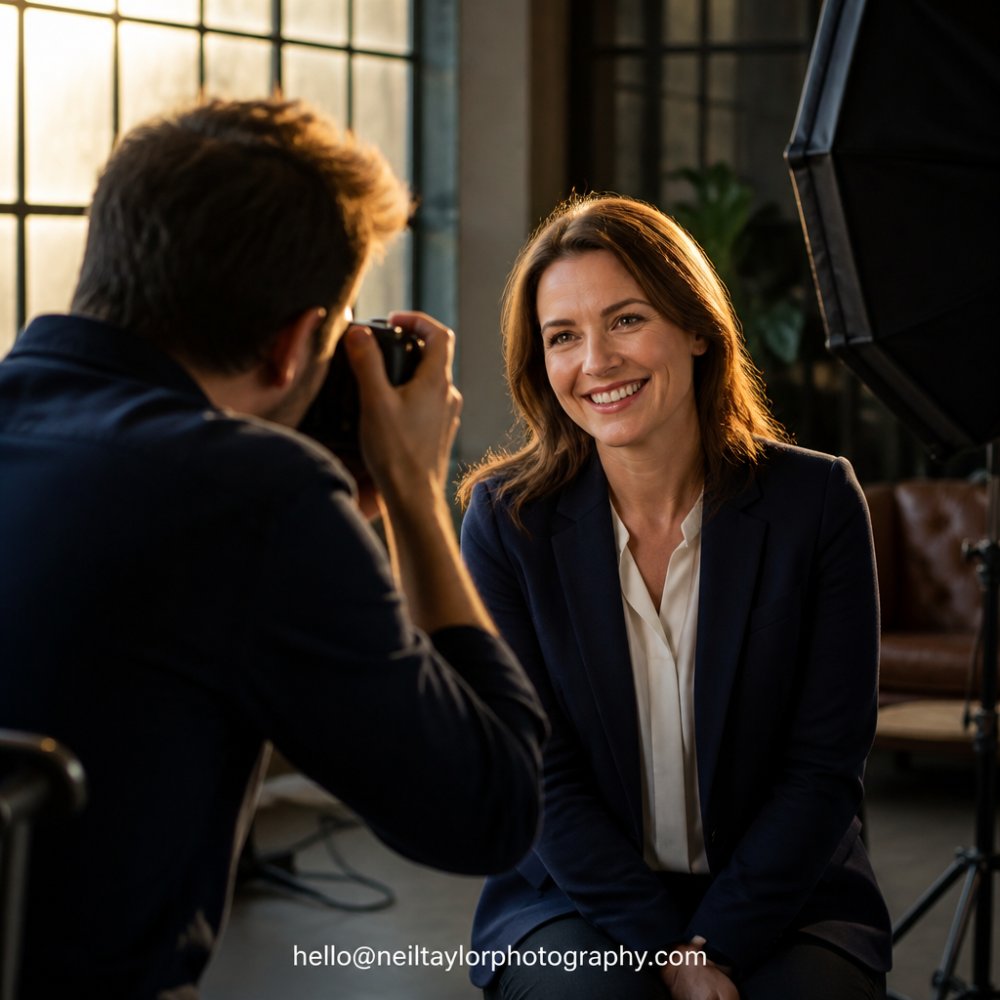
Think of something specific that makes you feel confident. Not a generic happy thought, something real. Maybe it’s a recent achievement, a person you care about, or a moment you felt proud. That specific thought changes your eyes. It brings life to your face.
When you’re thinking of something genuine, your pupils dilate slightly. Your eyes soften. The camera captures that shift. It’s the difference between a photo that looks posed and one that looks alive.
Work with your photographer on this. Tell them what you’re thinking about. Let them guide you toward expressions that feel natural. The best headshots happen when photographer and subject are communicating, not when the subject is frozen in place.
Professional Headshot Tips for Authentic Results
Authenticity comes from preparation, not improvisation. The more prepared you are, the more natural you look.
Wardrobe and Grooming Choices
What you wear affects how you feel. When you feel good in your clothes, that confidence translates to your face.
For professional headshots:
- Wear something that makes you feel confident
- Choose solid colours that complement your skin tone
- Avoid busy patterns that distract from your face
- Ensure your hair is styled how you’d wear it for the role or job you’re targeting
- Bring a change of outfit if possible
Your grooming should look like the best version of yourself, not an exaggerated version. What to Wear for a Headshot: A 2026 Guide covers this in detail, but the principle is simple: dress for the part you’re playing or the role you’re pursuing.
Communication with Your Photographer
The photographer’s job is to help you look natural. That requires communication.
Before the session starts:
- Explain what you’re using the headshots for
- Share any concerns about how you look on camera
- Ask the photographer how they typically guide clients through expressions
- Discuss whether you prefer direction or space to find your own expressions
During the session:
- Listen to feedback and adjust accordingly
- Ask for a moment between shots to reset
- Let the photographer know if something feels uncomfortable
- Request another take if you felt the expression wasn’t genuine
The best headshots come from collaboration. Your photographer has experience guiding people through natural expressions. Trust that process.
Natural Smile Photography Tips: Finding Your Genuine Expression
Natural smile professional photos use different facial muscles than forced ones. The difference is visible in photos.
When you force a smile, you use your mouth muscles. When you smile genuinely, you engage your eyes. The corners of your eyes crinkle slightly. That crinkle is what makes a smile look real.
Here’s the practical approach:
Book your headshot session today →
- Don’t think about your smile at all
- Think about the emotion you want to convey
- Let your face respond naturally to that emotion
- Trust the photographer to capture the moment
How to Look Natural in Headshots: 7 Essential Tips provides specific techniques, but the core principle is this: the more you focus on your smile, the less natural it becomes. Focus on the feeling instead.
Between shots, relax completely. Let your face return to neutral. Then, when the photographer is ready, think of your emotion again and let your face respond. That moment of genuine response is when the best shots happen.
Common Mistakes That Kill Your Natural Smile
Understanding what doesn’t work helps you avoid it.
The biggest mistake is over-smiling. A smile that’s too wide looks forced. Your natural smile is probably smaller than you think. Trust that.
Other common mistakes:
- Tensing your shoulders while smiling
- Holding your breath during the shot
- Thinking about your smile instead of your emotion
- Not giving yourself time to reset between shots
- Wearing clothes that make you feel uncomfortable
- Arriving rushed or stressed
Each of these creates visible tension in your face. The photo captures that tension. When you avoid these mistakes, your natural smile emerges.
These common mistakes create visible tension that undermines your natural smile in photos.
| Mistake | Cause | Fix |
|---|---|---|
| Over-smiling | Trying too hard to look happy | Use a smaller, more natural smile |
| Tensing shoulders | Nervousness or concentration | Relax shoulders before and during shots |
| Holding your breath | Focusing on the smile itself | Breathe normally throughout the session |
| Thinking about your smile | Over-analysing your expression | Focus on genuine emotion instead |
| Not resetting between shots | Fatigue or rushing | Relax completely between each take |
| Uncomfortable clothing | Poor wardrobe choices | Wear clothes that make you feel confident |
| Arriving rushed or stressed | Poor time management | Arrive early to settle in for 10-15 minutes |
Booking Your Professional Headshot Session
Preparation before your session sets up success during it.
Choose a photographer who understands your specific needs. If you’re an actor, you need someone experienced with casting headshots. If you’re building a personal brand, you need someone who understands professional portraiture. If you’re updating corporate photos, you need consistency and polish.
How to Prepare for a Natural Headshot Session walks through the specific steps, but the principle is straightforward: the more prepared you are, the more relaxed you’ll be, and the more natural your smile will look.
When you arrive for your session, give yourself time to settle. Chat with your photographer. Let them help you understand what they’re looking for. Then, when you’re ready, think of something genuine and let your face respond.
That moment, when you’re relaxed, focused, and thinking of something real, is when natural smiles happen. That’s when the camera captures the real you.
A natural smile in professional photos isn’t about technique. It’s about relaxation, genuine emotion, and trust in the process. When you arrive prepared, communicate clearly with your photographer, and focus on feeling rather than posing, your smile becomes authentic. Check Availability to book your professional headshot session with Neil Taylor Photography, where we specialise in capturing genuine expressions that help you stand out with confidence. For questions, reach out to hello@neiltaylorphotography.com.
Frequently Asked Questions
How do you smile naturally in professional photos?
The key is relaxing your face before the camera captures the shot. Start by loosening your jaw, dropping your shoulders, and taking a few deep breaths. Think of something genuinely amusing or a positive memory rather than forcing a smile. Engage your eyes by looking directly at the lens with intention. Most people find that a slight, genuine smile looks more professional than a wide grin. Work with your photographer to practise a few expressions so you feel comfortable and natural when the shutter clicks.
What should I think about to get a genuine smile for a headshot?
Instead of thinking ‘smile,’ recall a moment that made you genuinely happy: a recent accomplishment, time with someone you care about, or something that always makes you laugh. This mental shift triggers authentic facial muscles rather than the forced, strained look of a posed smile. Some people find it helpful to think about why they’re having the session, building their personal brand, advancing their career, or making a strong impression, which brings confidence into their expression. Your photographer can guide you through this process during the session.
Should I show my teeth in a professional headshot?
It depends on your industry and personal preference. Actors often benefit from a warm, teeth-showing smile for casting photos, whilst corporate professionals sometimes prefer a subtle, closed-mouth smile that conveys professionalism and approachability. The best approach is to discuss this with your photographer beforehand and practise both styles. A genuine smile, whether teeth are visible or not, always reads better than a forced expression. Your photographer can show you examples and help you choose what feels most authentic and suits your professional goals.
How can I stop looking awkward when I smile for a photo?
Awkwardness usually stems from tension in your face, neck, and shoulders. Before your session, spend a few minutes relaxing: roll your shoulders, massage your jaw, and do gentle neck stretches. During the shoot, avoid holding your breath or clenching your teeth. Instead, breathe normally and let your expression settle naturally. Ask your photographer for feedback and adjust slightly if needed. Many people find that the more shots taken, the more relaxed they become. Trust the process, and remember that your photographer is experienced at helping people look their best.
