
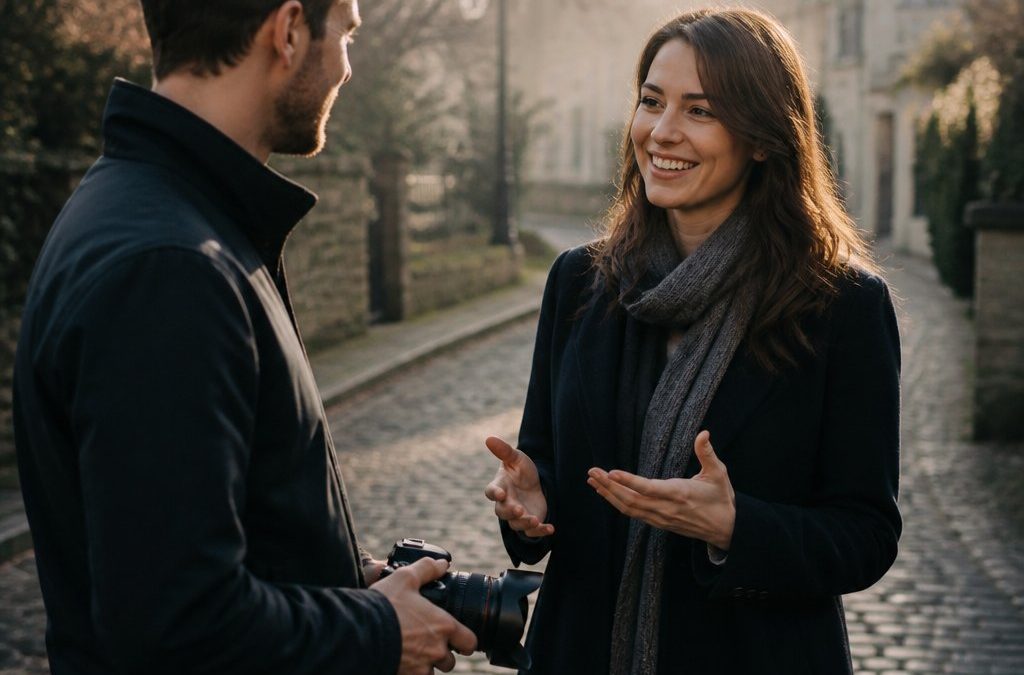
Last Updated: October 23, 2026
Quick Summary
To overcome camera shyness, understand that it’s a learned response, not a personality flaw, and build familiarity through practise and preparation. Focus on relaxation techniques, work with a supportive photographer, and shift your mindset from worrying about how you look to thinking about your message.
- Camera shyness is a habit you can change through familiarity and practise, not a permanent personality trait.
- Deep breathing between shots, moving between frames, and talking to your photographer help you relax during a photoshoot.
- Wearing solid jewel tones or black in well-fitting clothes boosts your confidence and frames your face effectively.
- Practise your expressions in the mirror a few days before your session and arrive 10-15 minutes early to settle in.
- A good photographer listens to your needs, communicates during the shoot, and takes many frames to capture authentic moments.
Table of Contents
- Why Camera Shyness Holds You Back
- 1. Understand What Your Camera Shyness Actually Is
- 2. How to Look Natural in Photos
- 3. How to Pose for a Headshot with Confidence
- 4. How to Relax During a Photoshoot
- 5. What to Wear for a Professional Headshot
- 6. Practise and Preparation Before Your Session
- 7. Work with a Photographer Who Puts You at Ease
- Frequently Asked Questions
Why Camera Shyness Holds You Back
Camera shyness is more common than you might think. Whether you’re an actor preparing for auditions, an entrepreneur building your personal brand, or a professional updating your LinkedIn profile, feeling uncomfortable in front of the lens can hold you back from opportunities.
The problem isn’t that you’re “bad at photos.” It’s that you haven’t learned how to work with a camera in a way that feels natural. When you feel tense, that tension shows. Your smile looks forced. Your posture stiffens. The camera captures discomfort instead of confidence.
The good news? You can overcome camera shyness. It takes understanding, preparation, and the right support. Below, we’ll walk you through seven practical ways to overcome camera shyness and feel more confident and look more authentic when you’re in front of the lens.
1. Understand What Your Camera Shyness Actually Is
Camera shyness is not a personality flaw. It’s a learned response to feeling self-conscious in an unfamiliar situation. Research into social anxiety shows that teachers and practitioners use social-learning strategies including verbal encouragement, praise and modelling behaviour to help people overcome anxiety.
The same principles apply to camera work. Your shyness isn’t permanent. It’s a habit you can change.
Most people feel some nervousness in front of a camera. The difference between someone who looks relaxed and someone who looks stiff is not confidence, it’s familiarity. They’ve done it enough times that it no longer feels strange.
The moment you stop thinking about the camera and start thinking about your message, your expression changes. You shift from “Am I doing this right?” to “What do I want to say?” That shift is visible in every frame.
Understanding this is the first step. You’re not broken. You’re not alone. You simply need practise and a framework to build that comfort.
2. How to Look Natural in Photos
Looking natural in photos means letting your real expression come through instead of forcing a smile. The best headshots capture you at ease, not posed and rigid.
Start with your eyes. Your eyes communicate more than your mouth. In a good headshot, your eyes should look engaged and present.
Your mouth follows your eyes. If your eyes are genuinely engaged, your smile will look real. You don’t need to show teeth. A subtle, natural expression often works better than a big grin.
Here’s what helps most people look natural:
- Focus on a point slightly above the camera lens
- Take a breath and relax your shoulders before each shot
- Blink between frames to reset your face
- Think about your purpose, not the camera
Explore how to look natural in headshots with seven essential tips that cover posture, expression, breathing and working with your photographer during the session.
The most natural-looking headshots come from people who’ve stopped thinking about how they look and started thinking about what they want to convey.
3. How to Pose for a Headshot with Confidence
Posing for a headshot isn’t about looking stiff or artificial. It’s about positioning your body so the camera captures the best angle of your face and projects confidence.
A few simple adjustments make a huge difference:
- Angle your body slightly away from the camera. A straight-on pose often feels less natural than a 45-degree angle. Turn your shoulders slightly to the side.
- Bring your chin forward slightly. This prevents shadowing under your chin and makes your face look more defined.
- Relax your arms. If you’re shooting from the shoulders up, your arms should hang naturally or rest on something. Tension in your arms shows in your face.
- Keep your shoulders down. Tense shoulders make your whole body look stiff. Roll them back and down before each shot.
The key is finding a pose that feels stable, not frozen. You want to feel like you could hold this position comfortably for a conversation, not like you’re balancing on one leg.
Learn more about professional headshot posing techniques in our detailed guide to positioning and angles.
Book your headshot session today →
4. How to Relax During a Photoshoot
Relaxation is the secret ingredient in every good headshot. When your body is tense, the camera sees it. Your jaw tightens. Your eyes narrow. Your whole expression changes.
The challenge is that knowing you should relax and actually relaxing are two different things. Here’s what works:
- Take deep breaths between shots. Not during, between. Breathe in slowly, breathe out slowly. This calms your nervous system.
- Move between frames. Don’t stand still between shots. Shake out your hands. Roll your shoulders. Step to the side. This breaks the tension cycle.
- Talk to your photographer. A good photographer will chat with you, make you laugh, and help you feel at ease. The session should feel like a conversation, not an interrogation.
- Give yourself permission to be imperfect. The more you chase perfection, the more tense you become. Most of the best headshots happen when you stop trying so hard.
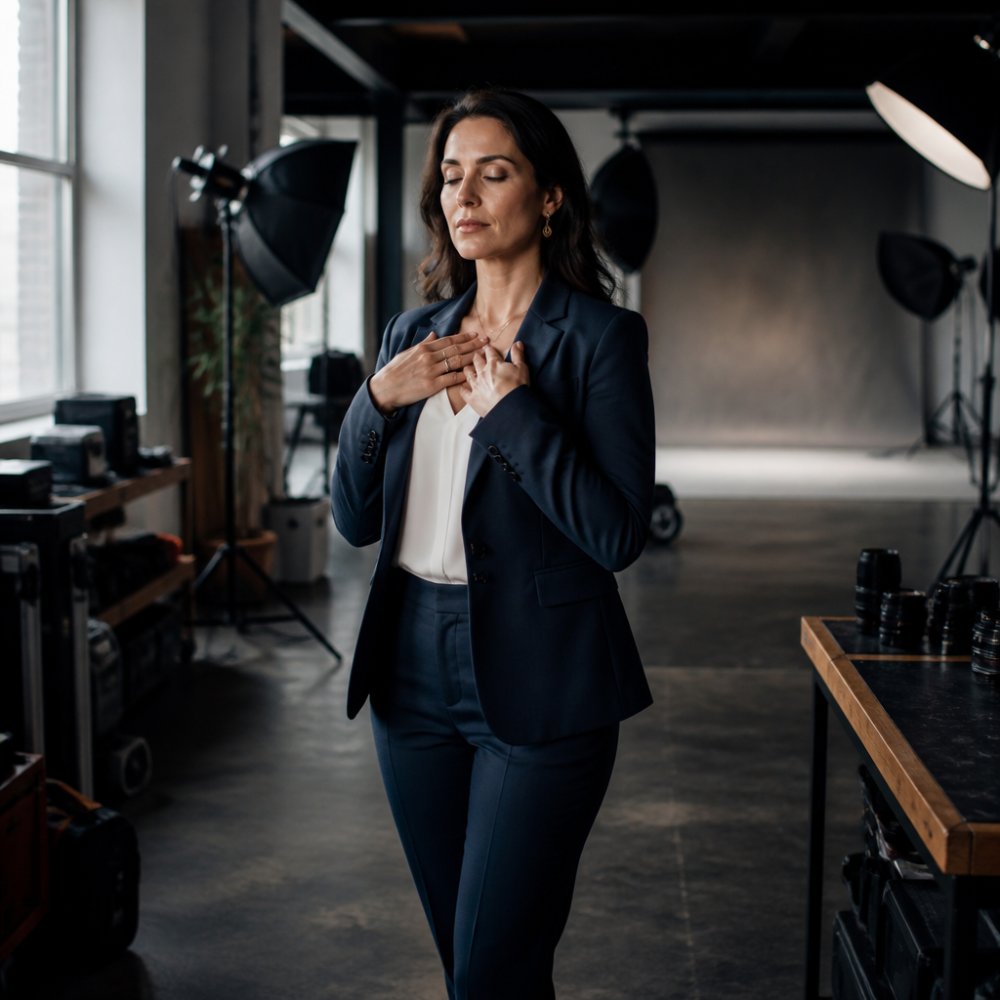
If you arrive at a shoot already stressed or rushed, that stress will show in every frame. Give yourself extra time to get there, settle in, and breathe before you start.
5. What to Wear for a Professional Headshot
What you wear affects how you feel and how you look. The right outfit boosts your confidence and frames your face well.
Choose colours that suit your skin tone and complement your industry:
- Solid colours work best. Patterns and busy designs distract from your face.
- Avoid white or very bright colours. They can blow out in lighting and make your face look washed out.
- Jewel tones (deep blues, greens, purples) photograph well. They’re professional and flattering on most skin tones.
- Black works for many industries. It’s classic and lets your face be the focus.
- Fit matters more than fashion. Wear something that fits well and lets you move comfortably. Tight or loose clothing makes you feel self-conscious.
Necklines should be simple and not too low. A crew neck, v-neck, or scoop neck works well for headshots. Avoid busy necklaces that compete with your face.
Explore our complete guide to choosing professional headshot clothing for advice on colour, fit, layers and accessories that suit your work and personal brand.
Wear something you’ve worn before and felt confident in. Wearing something brand new and uncomfortable will show in your expression. Familiarity builds confidence.
6. Practise and Preparation Before Your Session
The more prepared you are, the more confident you’ll feel. Preparation removes uncertainty, and that calm shows in your photos.
Start a few days before your session:
- Get good sleep the night before. Sleep deprivation shows in your face. Your eyes look tired and your skin looks dull.
- Eat well. Avoid heavy meals right before the shoot, but don’t arrive hungry either.
- Groom yourself. Get a haircut or have your hair done a day or two before, not the morning of. This gives your hair time to settle naturally.
- Practise your expressions. Look in the mirror and try different slight smiles, head angles, and eye positions. Notice what feels natural.
- Arrive early. Don’t rush to your session. Arrive 10-15 minutes early so you can settle in and breathe.
Learn how to prepare for a professional headshot session with expert tips on clothing, grooming, posing and timing so you feel confident and ready.
Preparation in the days leading up to your session removes uncertainty and builds the confidence that shows in your photos.
| Preparation step | Timing | Why it matters |
|---|---|---|
| Get good sleep | Night before | Prevents tired eyes and dull skin |
| Eat well | Before shoot | Avoid heavy meals or arriving hungry |
| Get hair done | Day or two before | Allows hair time to settle naturally |
| Practise expressions | Few days before | Notice what feels natural in mirror |
| Arrive early | 10-15 minutes before | Settle in and breathe before starting |
7. Work with a Photographer Who Puts You at Ease
The photographer you choose makes a huge difference. A good photographer understands camera shyness. They know how to put you at ease and bring out your best self.
Look for a photographer who:
- Listens to what you need. Whether you’re an actor seeking casting-ready images or an entrepreneur building your brand, they should understand your goals.
- Communicates during the shoot. They should give you direction, feedback, and encouragement. A good photographer talks you through the process.
- Shows you examples of their work. Look at their past headshots. Do the people look relaxed and authentic? Or stiff and uncomfortable?
- Offers a comfortable environment. Whether it’s a studio or on location, the space should feel welcoming, not intimidating.
- Takes many shots. More frames mean more chances to capture the right moment. You don’t need to be perfect in every shot.
At Neil Taylor Photography, we specialise in helping actors, entrepreneurs, and business professionals feel confident in front of the camera. Our studio and on-location sessions are designed to capture authentic images that help you make a powerful first impression.
Anyone who’s felt uncomfortable in front of a camera and wants to work with someone who understands that feeling and knows how to help you overcome it.
Frequently Asked Questions
How do I stop feeling awkward in front of a camera?
Camera shyness is rooted in self-consciousness, not actual inability. Start by reframing the camera as a tool to capture your authentic self, not judge you. Practise in low-pressure settings: take selfies, record voice notes, or ask a friend to photograph you casually. A 2021 review of interventions for social anxiety found that modelling behaviour and verbal encouragement from others significantly reduced discomfort. Work with a photographer who explains what they’re doing and gives you feedback between shots, this builds familiarity and reduces the awkwardness.
Can practising in front of a mirror help with camera shyness?
Yes, mirror practice is effective preparation for overcoming camera shyness. It helps you become comfortable with your own expressions, identify angles that feel natural, and practise subtle movements without the pressure of being watched. Spend 5-10 minutes daily experimenting with different expressions and postures. However, mirror practice alone isn’t enough, a mirror shows only one angle, whereas a camera captures how you actually appear to others. Combine mirror work with taking photos or video on your phone to see the full picture before your professional session.
How do photographers help people feel comfortable?
Experienced photographers use several techniques to ease camera shyness. They explain the process clearly so you know what to expect, give specific direction rather than vague instructions, and offer genuine feedback and encouragement between shots. They may use music, conversation, or movement to help you relax. The environment matters too: a calm, well-lit studio or familiar location reduces anxiety. Many photographers also show you test shots during the session so you can see you’re looking good, this builds confidence and reduces fear of the unknown.
What should I do with my hands during a photo shoot?
Hands are often the most awkward part of posing. Avoid letting them hang straight at your sides or crossing your arms tightly, both look stiff. Instead, place one hand on your hip, rest hands naturally on your lap if seated, or position one hand near your face. Keep fingers slightly separated rather than clenched. Your photographer will guide you through specific poses, but the key is to give your hands something to do so they don’t feel like dead weight. Practise these positions at home so they feel natural when the camera is on you.
Camera shyness doesn’t have to hold you back from the opportunities you deserve. With the right mindset, preparation, and support, you can feel confident and look authentic in your headshots. The next step is to work with a photographer who understands your needs and helps you feel at ease throughout the process. Check Availability to book your session, or email hello@neiltaylorphotography.com to discuss your headshot goals.
