Table of Contents
- Why Your Pose Matters in Professional Headshots
- Professional Headshot Poses: Core Techniques
- Headshot Posing Tips for Natural Expression
- Corporate Headshot Poses for Professional Credibility
- Actor Headshot Poses for Casting Success
- Common Posing Mistakes to Avoid
- Preparing for Your Headshot Session
- Frequently Asked Questions
Last Updated: 10 October 2026
Why Your Pose Matters in Professional Headshots
Understanding how to pose for professional headshots is the foundation of a powerful image. It’s not just about standing in front of the camera, how you position your body, shoulders, and head directly affects how you’re perceived. A strong pose conveys confidence, professionalism, and authenticity. A weak one can make you look uncomfortable or uncertain, even if you’re neither.
At Neil Taylor Photography, we’ve worked with actors, entrepreneurs, and business professionals. The ones who nail their headshots understand one thing: pose matters as much as lighting or expression. Your pose tells the viewer something about you before they even see your face clearly.
The right pose depends on your industry and goals. An actor needs something different from a corporate executive. A LinkedIn profile requires a different energy than a casting headshot. But across all these contexts, certain principles remain constant. Learning how to pose for professional headshots transforms how you look on camera.
The three-quarter angle is your safest bet if you’re unsure. It’s forgiving, flattering, and works across nearly every industry and purpose.
Professional Headshot Poses: Core Techniques
The Three-Quarter Turn
The three-quarter turn is the most versatile pose for professional headshots. Your body angles slightly away from the camera while your head turns back towardss it. This creates dimension and shows more of your face than a direct profile, while adding depth that a straight-on shot lacks.
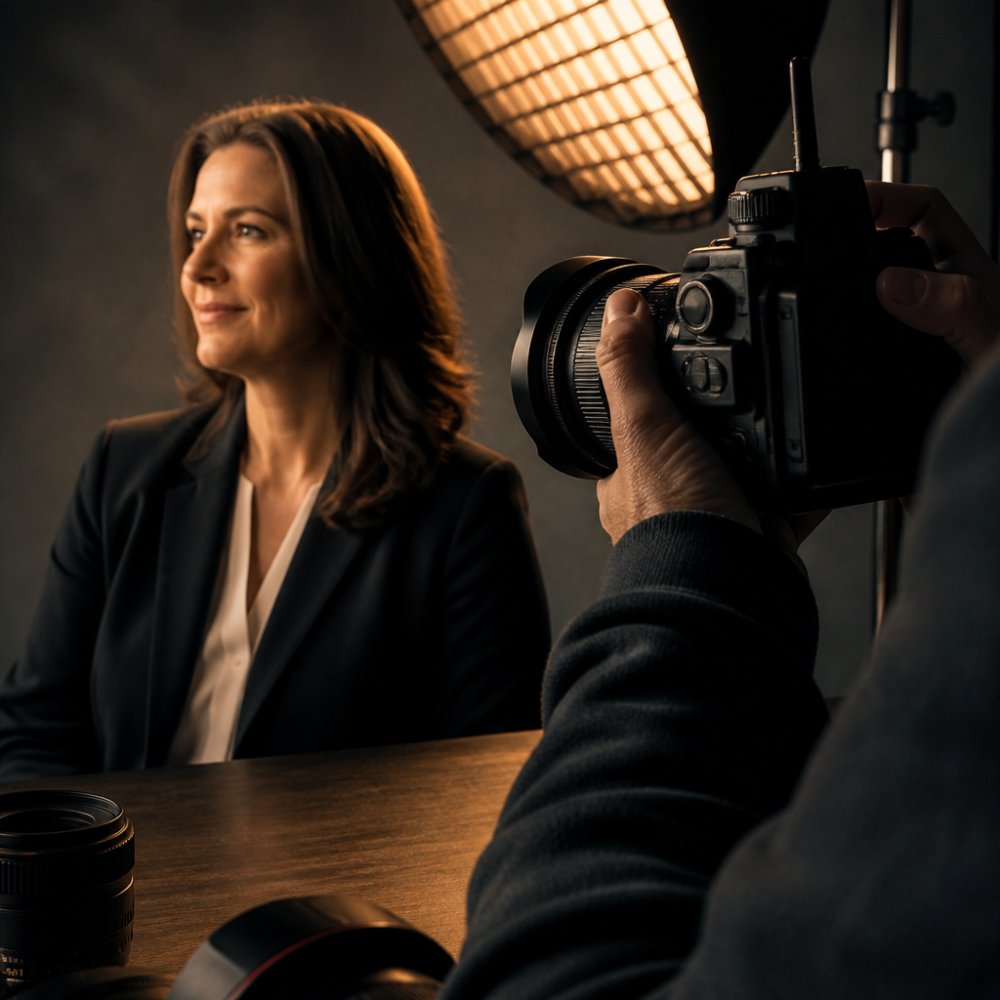
Position your feet shoulder-width apart. Turn your torso about 45 degrees away from the camera. Then rotate your head back to face the lens directly or with a slight angle. Your shoulders should stay relaxed, tension reads immediately in headshots.
This angle works because it’s inherently flattering. It shows the contour of your face without emphasising width. Most people photograph better at three-quarter than straight-on. It’s the default pose we recommend when clients aren’t sure what to do.
The Direct-to-Camera Approach
Looking straight into the lens projects confidence and authority. This pose works particularly well for corporate headshots and LinkedIn profiles where you want to establish direct connection with the viewer.
Stand with your shoulders square to the camera. Keep your chin level, neither tilted up nor down. Your eyes should be engaged and looking directly into the lens. This directness can feel intense, so balance it with a relaxed expression and soft shoulders.
The challenge with direct-to-camera is that it offers nowhere to hide. Any tension in your face or shoulders becomes obvious. But when executed well, it’s powerful. It says “I’m comfortable being seen” and “I’m straightforward.”
The Chin-Down Technique
Dropping your chin slightly changes how your face appears on camera. It can reduce the appearance of a double chin, define your jawline, and create a more engaged, thoughtful expression.
Lower your chin about an inch from neutral. Don’t overdo it, you’re not looking down, just shifting slightly. Combine this with the three-quarter turn for maximum effect. This technique is particularly useful if you’re concerned about how your neck or jawline appears.
The chin-down works because it changes the angle at which light hits your face. It naturally creates shadow and definition. Just avoid dropping your chin so far that you’re actually looking downward. That reads as disengaged or uncertain.
Headshot Posing Tips for Natural Expression
Finding Your Authentic Smile
Your smile should feel natural, not forced. A genuine smile reaches your eyes, what photographers call a Duchenne smile. It’s the difference between looking happy and looking like you’re posing for a photo.
Think of something that genuinely makes you smile rather than trying to smile on command. Some photographers ask you to think of a person you love or a moment that made you laugh. Others have you smile, relax completely, then smile again, the second smile is usually more natural.
Practice in the mirror before your session. Find the smile that feels authentic to you. A slight smile often photographs better than a big grin. It looks more professional and approachable without seeming forced.
Book your headshot session today →
A natural smile is worth more than perfect lighting or posture. It’s the first thing viewers notice and the thing that makes them trust you.
Eye Contact and Focus
Your eyes carry energy in a headshot. They should feel engaged, not vacant or staring. Direct eye contact with the lens creates connection. Soften your gaze slightly, intensity works for some industries but comes across as aggressive in others.
Think about where you’re looking. Are you looking at the camera lens itself or slightly above it? Most photographers recommend focusing on the lens. This creates the illusion that you’re looking directly at the viewer.
Avoid looking down or to the side unless that’s a specific stylistic choice. Your eyes should feel present and engaged. Tired or distracted eyes undermine even a perfect pose and expression.
Shoulder and Neck Alignment
Your shoulders set the tone for your entire pose. Tense shoulders read as nervous or uncomfortable. Relaxed shoulders project confidence and ease.
Roll your shoulders back and down. Let them sit naturally. Avoid hunching forward or pulling back too far. Your neck should feel elongated but not strained. Imagine a string gently pulling the top of your head upward.
Proper neck alignment prevents the dreaded “tech neck” look, that forward slouch many of us develop from phones and computers. It also creates a more flattering line from your shoulders through your neck to your head.
Corporate Headshot Poses for Professional Credibility
Corporate headshots require a different energy than casting headshots. You’re communicating competence, trustworthiness, and professionalism. Your pose should reflect these qualities.
The three-quarter turn with direct eye contact works well for corporate contexts. Add a slight forward lean, it suggests engagement and approachability. Keep your expression neutral to warm. Avoid anything that reads as too casual or overly friendly.
Your clothing and background matter here, but so does your posture. Sit or stand with good alignment. Keep your hands visible and relaxed. Avoid crossing your arms, which can read as defensive. If you’re seated, lean slightly forward, it shows engagement.
Corporate clients often use these headshots for LinkedIn, company websites, and professional directories. They want to see someone who looks capable and trustworthy. Your pose should support that message.
Actor Headshot Poses for Casting Success
Actor headshots need to showcase personality and range. Casting directors want to see you looking natural and authentic, not stiff or overly posed.
The industry standard is the three-quarter turn with a natural expression. But within that, there’s room for personality. Your expression should feel like “you on your best day”, confident, approachable, and interesting to look at.
Many actors do multiple looks in a single session: a serious look, a friendly look, a thoughtful look. This gives casting directors options. Your pose might stay the same, but your expression shifts. The key is keeping each look genuine, not theatrical.
Avoid anything that feels like acting. Casting directors want to see the real you, not a character. They’re looking for someone they can imagine in their project. An authentic, slightly vulnerable expression often books more than a perfect smile.
The biggest mistake actors make is over-posing. You’re not performing, you’re being yourself on camera. The more natural you look, the more casting directors can see you in their roles.
Common Posing Mistakes to Avoid
Tensing your shoulders. This is the most common mistake. Tension reads immediately and makes you look uncomfortable. Roll your shoulders back and let them relax completely before the shot.
Tilting your head too far. A slight tilt adds interest. Too much tilt looks unnatural. Aim for a 15-20 degree angle, not more.
Book your headshot session today →
Looking down or away. Your eyes should be engaged with the camera. Looking down reads as uncertain or disengaged. Looking away suggests you’re not interested in connecting with the viewer.
Standing too stiffly. You’re not a soldier. Relax your posture. A slight forward lean suggests engagement. Standing ramrod straight looks defensive.
Forcing an expression. Your face will tense if you’re trying too hard. Let your expression be natural. Think of something that genuinely makes you feel confident or happy.
Overcomplicating your hands. If you’re unsure what to do with your hands, keep them simple. Hands in pockets work. Hands at your sides work. Avoid fidgeting or over-gesturing.
Preparing for Your Headshot Session
Arrive rested and hydrated. Dehydration shows in your face, you’ll look tired or drawn. Drink water the day before and the morning of your session.
Get a good night’s sleep. Tired eyes and puffy skin undermine even perfect posing. Your face looks best when you’re well-rested.
Wear something you feel confident in. This matters more than trendy clothing. If you feel uncomfortable in what you’re wearing, it shows. Choose something that fits well and makes you feel like yourself.
Arrive early. Give yourself time to settle in. Rushed energy translates to tension. The first few shots are often stiff because you’re still getting comfortable. By shot 20 or 30, you’ve usually found your rhythm.
Bring water and a snack. Shooting can be tiring. Staying hydrated and fuelled helps you maintain energy and a natural expression throughout the session.
Most importantly, remember that professional photographers like those at Neil Taylor Photography are there to help you look your best. We understand how to position you, direct your expression, and capture your authentic self. You don’t have to be perfect, you just have to be present.
Looking for a professional headshot that actually captures who you are? The right photographer makes all the difference. At Neil Taylor Photography, we specialise in actor headshots, corporate portraits, and professional branding photography for entrepreneurs and business leaders across London and Kent. We’ll guide you through posing, expression, and every detail that makes a headshot work. Check Availability to book your session, or reach out to hello@neiltaylorphotography.com to discuss your headshot needs.
Frequently Asked Questions
How should I pose for a professional headshot?
Start with a slight three-quarter turn rather than facing the camera straight on, as this creates dimension and flatters most face shapes. Keep your shoulders relaxed and angled away from the camera. Position your chin slightly forward and down to avoid double chin appearance. Maintain good posture without looking stiff, and ensure your eyes are engaged and looking directly at the camera or slightly off-camera depending on your industry. Work with your photographer to find angles that feel natural and authentic to you.
What’s the best way to look natural in a professional headshot?
Authenticity comes from being relaxed and comfortable. Before the shoot, practise smiling in the mirror to find your genuine expression rather than forcing something that feels unnatural. During the session, engage in light conversation with your photographer to ease tension. Avoid overthinking your expression; instead, think of something that brings a subtle smile. Blink between shots, relax your jaw, and ask your photographer for feedback on how you’re coming across. Remember that the camera picks up tension, so breathing deeply and taking breaks between poses helps tremendously.
Should I smile in a professional headshot?
A warm, genuine smile is generally recommended for most professional headshots, particularly for corporate, entrepreneurial, and client-facing roles. However, the style depends on your industry and the image you want to project. Actors may use a range of expressions including serious, thoughtful, or smiling looks depending on casting requirements. For corporate and LinkedIn headshots, a natural, confident smile builds approachability and trust. The key is ensuring your smile reaches your eyes rather than appearing forced. Discuss your industry expectations with your photographer to determine the best expression for your needs.
How do I position my shoulders in a professional headshot?
Angled shoulders create a more flattering silhouette than facing the camera straight on. Turn your shoulders slightly away from the camera at about a 45-degree angle, then rotate your head back towardss the lens. This technique elongates your neck, defines your jawline, and creates visual interest. Keep your shoulders relaxed and down away from your ears to avoid tension. Avoid hunching forward, as this can create unflattering shadows under the chin. Your photographer will guide you through small adjustments to find the most flattering angle for your frame and facial structure.