
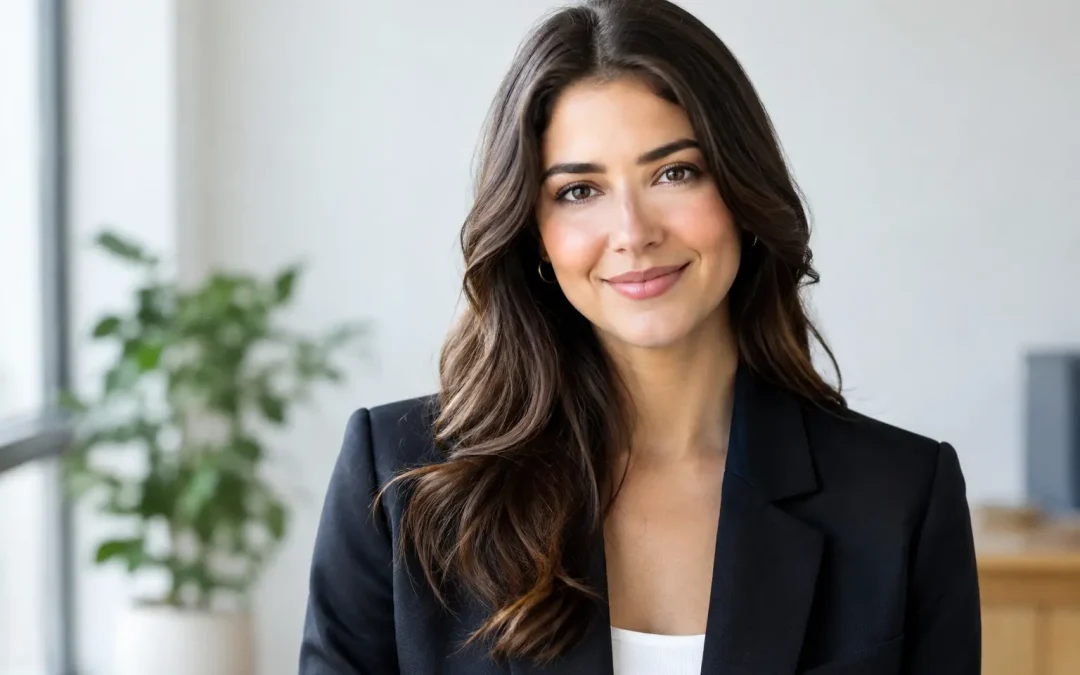
Most people arrive at a headshot session saying some version of the same thing: “I’m not very photogenic.” The good news is that knowing how to pose for headshots is not about being photogenic or copying a model’s pose. It is about a few small adjustments that help you look comfortable, engaged and recognisably like yourself.
A strong headshot needs to work hard. For an actor, it may need to catch a casting director’s eye in a crowded gallery. For an executive or business owner, it needs to create trust before a first meeting. In both cases, the most effective image rarely looks posed. It looks natural because the posture, expression and camera angle have been carefully guided.
Start with posture, not a pose
The quickest way to look stiff is to stand square to the camera with both shoulders level, arms pressed to your sides and your weight evenly distributed. It feels safe, but it often appears rigid in a photograph.
Instead, stand at a slight angle, usually with one shoulder a little closer to the camera than the other. Place your weight more on one leg and allow the other knee to soften. This creates a gentle shift through the body without looking theatrical. Your shoulders should remain relaxed, not pulled back so far that you appear to be standing to attention.
Think tall rather than tense. Let the crown of your head lift slightly, lengthening the neck, while keeping your chest open and easy. Good posture gives your face a clearer frame and conveys calm confidence. It should never feel forced.
If you are seated, the same principle applies. Sit towards the front of the chair rather than leaning into the backrest. Keep both feet grounded, turn your body slightly away from camera and bring your attention up through your spine. Small changes have a greater effect than people expect.
How to pose for headshots: lead with your face
A headshot is about connection, so the face needs to remain the focus. Once your body is positioned, bring your face back towards the camera. This combination – body slightly angled, face closer to front-on – is flattering for many people and avoids the passport-photo effect.
Avoid pushing your chin upwards, particularly when you are trying to look confident. It can make the nostrils more prominent and disconnect the eyes from the camera. A better approach is to bring your forehead very slightly towards the lens and lower the chin by a fraction. This feels unusual at first, but it creates definition around the jawline and keeps the eyes present.
There is no single angle that suits everybody. A photographer may ask you to turn a little more, tilt your head slightly, or bring one ear marginally forward. These are refinements, not tests you need to get right. The best sessions are conversational and guided, with time to see what feels natural on you.
Keep your hands occupied, but not distracting
Hands can be a source of anxiety, especially in three-quarter portraits or personal-branding photographs. You do not need elaborate gestures. Let one hand rest lightly in a pocket, hold the opposite wrist gently, or allow your arms to fall naturally with a little space from your torso.
Avoid tightly clasped hands, clenched fists or folding your arms unless the image genuinely calls for it. Crossed arms can look assured for some leadership portraits, but they can also feel guarded. It depends on the message you want the image to send and where it will be used.
For a close-cropped professional headshot, your hands may not appear in the final image at all. They still matter because a relaxed body helps produce a relaxed expression.
Aim for an expression, not a fixed smile
The pressure to smile on command is one of the main reasons people feel uncomfortable in front of a camera. A forced smile tends to sit only around the mouth. A convincing, approachable expression comes from the eyes, the mouth and your overall body language working together.
Rather than holding a smile for too long, allow it to build and fade naturally. Take a breath, look away for a moment, then return your attention to the camera. Talking during the session helps, too. A good photographer will give you something specific to respond to rather than leaving you in silence waiting for the shutter.
Your ideal expression depends on the purpose of the headshot. LinkedIn and executive portraits often benefit from a warm, open expression that feels credible and easy to approach. Actors may need a broader range, from friendly and commercial to more thoughtful or quietly intense. A personal-brand image can be more relaxed, provided it still reflects how clients or colleagues will experience you in real life.
Do not assume a serious face is more professional. Serious can become distant very quickly. Equally, a wide smile is not always the right choice. The aim is not to perform a personality you do not have. It is to show a clear, confident version of your own.
Give yourself permission to move
Stillness is useful for a brief moment when the photograph is taken, but it is not the best way to arrive there. If you freeze in position, tension usually builds in the jaw, shoulders and eyes.
Make small movements between frames. Reset your feet. Roll your shoulders once. Look away, then return. Change the angle of your body by a few degrees. These natural resets stop one expression becoming fixed and give the photographer subtle variations to work with.
This is also why headshot posing should be coached rather than left entirely to the client. You should not have to remember your chin, shoulders, eyes, smile and hands all at once. Clear direction allows you to focus on being present, while someone else watches the details.
Choose clothes that support the pose
Your wardrobe changes how a pose reads. Clothing that fits well gives your body a clean shape and lets you move comfortably. If a jacket is too tight across the shoulders, or a shirt collar sits awkwardly, you are likely to keep adjusting it and that discomfort will show.
For most professional headshots, choose clothing that feels like a slightly more polished version of what you would wear when meeting an important client or attending a meaningful audition. Solid colours and subtle textures tend to photograph well. Very busy patterns, large logos and overly shiny fabrics can pull attention away from your face.
Necklines matter because they frame the face. A well-fitting collar, a simple crew neck, or a clean blouse neckline can all work beautifully depending on your style. Bring options if you are unsure. Seeing two or three choices on camera is often more useful than trying to decide in front of a mirror at home.
Work with the light and the photographer
Professional lighting is designed to shape your features sympathetically, but posing still affects how it falls across your face. Turning just slightly towards or away from a light source can change the level of shadow, the definition of your cheekbones and the catchlights in your eyes.
You do not need to understand the technical side. Simply follow the direction you are given, even if a small adjustment feels insignificant. “Turn your shoulder a touch”, “bring your chin forward” or “drop that shoulder” may sound minor, yet each instruction is intended to improve the final frame.
If something feels unnatural or you are concerned about a feature, say so. An experienced photographer can adjust the angle, lens position, lighting or crop. The answer is rarely to hide behind a pose. It is usually to find a position that feels more balanced and authentic.
A simple mindset for camera-shy people
Try not to judge every click of the shutter. A headshot session involves testing expression, posture and angles, and not every frame is meant to be the final photograph. That is part of the process, not a sign that you are doing badly.
You also do not need to arrive knowing your “good side”. The right image is created through observation and collaboration, not guesswork. At Neil Taylor Photography, clients are guided throughout the session, with clear, calm direction and time to settle in rather than pressure to perform from the first frame.
The most useful thing you can bring is not a catalogue of poses. Bring a willingness to make small adjustments, take a breath and trust the process. When you stop trying to look like someone else, your headshot has the best chance of showing the person people will want to meet.