Your LinkedIn photograph is often seen before your experience, your recommendations or the message you send. For a recruiter, prospective client or industry contact, it creates an immediate impression: approachable, credible and ready to do business – or distant, dated and difficult to read.
Choosing a LinkedIn headshot photographer London professionals can rely on is not simply about finding someone with a good camera. It is about working with someone who can help you look like yourself on a very good day, while making the process feel manageable if being photographed is not your favourite thing.
What a strong LinkedIn headshot needs to do
A good LinkedIn headshot is not meant to look overly styled or heavily edited. It should give people confidence that they will recognise the same person when they meet you. Your expression, posture, clothing and background should all support the kind of professional relationship you want to build.
For many people, the best result sits between formal and relaxed. You may want to look polished enough for an executive profile, yet open enough for a potential client to feel comfortable getting in touch. A forced smile, rigid shoulders or a very corporate-looking pose can create distance, even when the image is technically well lit.
That balance changes according to your role. A solicitor, consultant or senior leader may need a composed, assured portrait. A founder or creative professional might benefit from a little more warmth and personality. Actors often need something different again: an image that feels current, truthful and appropriate for casting. The right photograph is not a one-size-fits-all exercise.
Why professional guidance matters more than posing experience
Most people arriving for a headshot session are not models. They may be perfectly confident in meetings but feel self-conscious as soon as a camera is pointed at them. That is normal, and it should not be treated as a problem you need to solve alone.
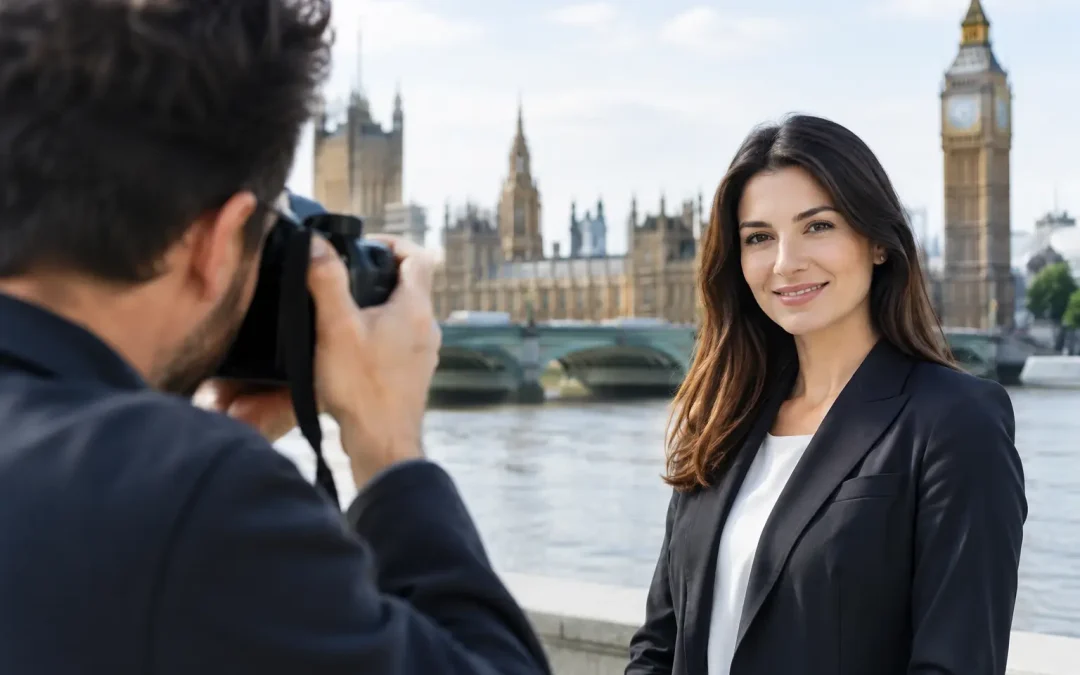
A skilled photographer directs the session clearly: where to stand, how to position your shoulders, where to place your hands and how to make small adjustments to your expression. The difference is often subtle. Turning slightly rather than facing straight on, lifting your posture or softening your eyes can make a portrait feel natural rather than posed.
The aim is not to teach you a performance. It is to give you enough direction that you can stop worrying about what you are doing and focus on having a straightforward conversation. Relaxed expressions tend to appear when clients know they are being looked after.
A well-run session also gives you time to settle in. The first few frames are rarely the photographs people choose. Once you have become used to the lighting and rhythm of the shoot, your face relaxes and your natural confidence starts to come through.
Choosing a LinkedIn headshot photographer in London
London offers plenty of options, from quick office pop-ups to carefully planned studio portraits. The best choice depends on what you need the image to achieve and how comfortable you feel in front of the camera.
A short, high-volume session can be practical for a large team that needs consistent imagery quickly. However, if you are updating your personal profile, launching a business, applying for senior roles or building a public-facing brand, more individual attention is usually worthwhile. You need space to try a few expressions, make useful wardrobe changes and select an image that genuinely represents you.
When comparing photographers, look beyond a portfolio of attractive images. Ask whether the work feels natural and consistent. Do the people photographed look comfortable? Are the portraits appropriate for different industries, rather than following one fixed style? Most importantly, does the photographer explain how they guide clients who feel nervous?
Location matters too, but it should serve the purpose of the portrait. A studio setting offers control, privacy and a clean, timeless finish. An office or workplace can be useful for company-wide photography, particularly where a team needs a coherent look without asking everyone to travel. Environmental portraits can add context for entrepreneurs and creatives, although the setting should never distract from your face.
Preparing without overthinking it
The strongest headshots are usually prepared, not overproduced. You do not need a new wardrobe or an elaborate grooming routine. You do need clothes that fit well, suit your role and allow you to feel comfortable.
Choose colours that complement your complexion and avoid very busy patterns, large logos or anything likely to date quickly. Mid-tones and solid colours often work well, while a simple jacket, knitwear, blouse or shirt can provide structure without looking too formal. If you are uncertain, bring two or three options. A photographer can help you decide what works best on camera and against the chosen background.
Think about the message you want your profile to send. If your day-to-day work involves meeting board-level clients, your clothing should be aligned with that expectation. If you run a more creative or informal business, wearing something that feels recognisably you may be more convincing than adopting an outfit you would never normally choose.
Haircuts, shaving and beauty treatments are best scheduled a little before the session rather than immediately beforehand. This gives you time to feel settled and avoids the fresh, unfamiliar feeling that can come with a major change. Professional retouching can deal with temporary blemishes, stray hairs and small distractions, but it should preserve your skin texture and character. You should still look like you.
The difference between polished and over-retouched
A LinkedIn profile is a professional space, but it is also personal. Heavy smoothing, altered facial features or overly dramatic lighting may produce an impressive image at first glance, yet they can undermine trust when the photograph does not reflect the person in the room.
Thoughtful retouching is quieter. It removes distractions without erasing expression lines, natural skin detail or the qualities that make your face familiar. The goal is a refined final image, not a different version of you.
This approach also helps the photograph last longer. A natural, professionally finished headshot can support your profile for several years, provided your appearance has not changed significantly. You may update it sooner if you have changed roles, refreshed your brand or simply want an image that better matches your current confidence and ambitions.
For teams, consistency builds confidence
Individual profiles matter, but inconsistent staff photography can weaken a company website, proposal or leadership page. One employee may have a cropped holiday photograph, another a dark webcam image and another a formal studio portrait. The result can feel fragmented, even when the business itself is highly professional.
A coordinated team headshot session creates visual consistency across LinkedIn, websites, press material and internal directories. This does not mean everyone has to look identical. It means the lighting, background, crop and overall standard work together, while each person still looks individual.
For organisations, planning is key. Agree the intended style before the session, give staff clear wardrobe guidance and allow enough time for each person to be properly directed. A calmer schedule produces better expressions than moving people through too quickly.
What if I dislike having my photograph taken?
Tell your photographer at the start. A good session is built around guidance, not an expectation that you will arrive knowing how to pose. You should be talked through posture, expression and positioning throughout, with time to adjust and review what is working.
How long does a LinkedIn headshot session take?
It depends on the type of session and how many final looks you need. An individual headshot session should allow time to settle in, try suitable options and make considered choices. Team sessions need a clear schedule, but should still give each person enough direction to avoid rushed, generic results.
Should I smile in my LinkedIn photograph?
Usually, a natural hint of warmth works well. The right expression depends on your profession and personality, but you do not need a broad smile if it does not feel like you. The best option is often the one that looks open, confident and believable.
Your headshot does not need to make you look like someone else. It simply needs to make it easier for the right people to see your professionalism, recognise your confidence and feel comfortable starting a conversation. With calm direction and a little preparation, that is entirely achievable.