Table of Contents
- Why Updating Your Business Headshots Matters
- When to Update Your Professional Headshot
- How Recent Should a LinkedIn Headshot Be
- What to Wear for a Business Headshot
- Corporate Headshots for Teams
- Signs Your Current Headshot Needs Replacing
- Making the Most of Your Headshot Investment
- Conclusion
- Frequently Asked Questions
Last Updated: October 16, 2026
Why Updating Your Business Headshots Matters
When you update business headshots, you’re refreshing the first impression people have of you. It appears on LinkedIn, your company website, casting directories, and professional directories. A dated photo can undermine your credibility before anyone meets you in person.
The challenge isn’t vanity, it’s strategy. Your headshot is a professional asset that directly affects how people perceive your expertise and trustworthiness. When your photo no longer reflects who you are, it creates a mismatch that audiences notice immediately.
At Neil Taylor Photography, we work with actors, entrepreneurs, and corporate professionals who understand this. They know that updating business headshots isn’t about chasing perfection. It’s about staying current and authentic.
Your headshot is working 24/7 on your behalf. When it’s outdated, it’s working against you. A fresh image aligned with your current brand sends a signal: you’re active, engaged, and serious about your professional presence.
When to Update Your Professional Headshot
Timing matters more than you might think. Some updates are urgent. Others are preventative maintenance. Knowing the difference helps you stay ahead.
After a significant career change or promotion
A major career shift demands a new headshot. If you’ve moved into a new role, industry, or professional direction, your image should reflect that change.
This isn’t just about looking different. It’s about signalling your evolution. A headshot from your previous career can confuse your audience about who you are now and what you offer.
Career transitions that warrant an update:
- Moving from employment to self-employment
- Stepping into a leadership role
- Changing industries entirely
- Launching a new business or venture
- Shifting your professional positioning or niche
The investment in a fresh session pays for itself through the clarity it creates. People understand your current role immediately.
When your appearance has noticeably changed
Physical changes happen over time. Hair colour,, length, weight, facial hair, these shifts alter how you present.
The key word is “noticeably.” Small changes don’t matter. But if someone who hasn’t seen you in a year wouldn’t recognise your photo, it’s time for an update.
Common appearance changes that signal an update:
- Significant weight loss or gain
- Major hair change (colour, length, style)
- Growing or removing facial hair
- Significant ageing (wrinkles, greying)
- Change in glasses style or prescription
Your headshot should match the person people see when they meet you. Mismatches create awkwardness and erode trust.
Every 2-3 years as a baseline refresh
Even if nothing major has changed, you should update business headshots every 2-3 years as standard maintenance.
This isn’t because you look dramatically different. It’s because the professional world evolves. Lighting trends, styling preferences, and what reads as “current” shifts over time. A photo from 2023 will start to feel dated by 2026.
Regular refreshes also give you options. You might want different backgrounds, clothing styles, or expressions for different platforms or purposes. Having multiple recent options keeps your professional materials flexible.
The baseline rule: update your business headshots every 2-3 years, or sooner if you’ve experienced a major career change or noticeable appearance shift.
How Recent Should a LinkedIn Headshot Be
LinkedIn is where most professionals evaluate you. Your headshot there carries weight.
Book your headshot session today →
How recent should a LinkedIn headshot be? Ideally, within the last 12 months. At minimum, no older than 2 years.
LinkedIn users notice outdated photos. Recruiters, clients, and colleagues form opinions based on your image. When your photo is clearly old, it signals that you’re not actively engaged on the platform or with your professional development.
The platform itself encourages regular updates. LinkedIn’s algorithm gives slight preference to profiles with recent activity and current imagery. More importantly, your connections expect your photo to match reality when they see you.
A LinkedIn headshot should show:
- Your current appearance
- Professional attire appropriate to your industry
- Clear, well-lit facial expression
- Neutral or warm background
- Direct eye contact and natural confidence
If your current LinkedIn photo is older than 2 years, prioritise updating it. This single change often leads to more profile views, connection requests, and professional opportunities.
What to Wear for a Business Headshot
Your clothing sets the tone for your entire headshot. It communicates your industry, your professionalism, and your personal brand.
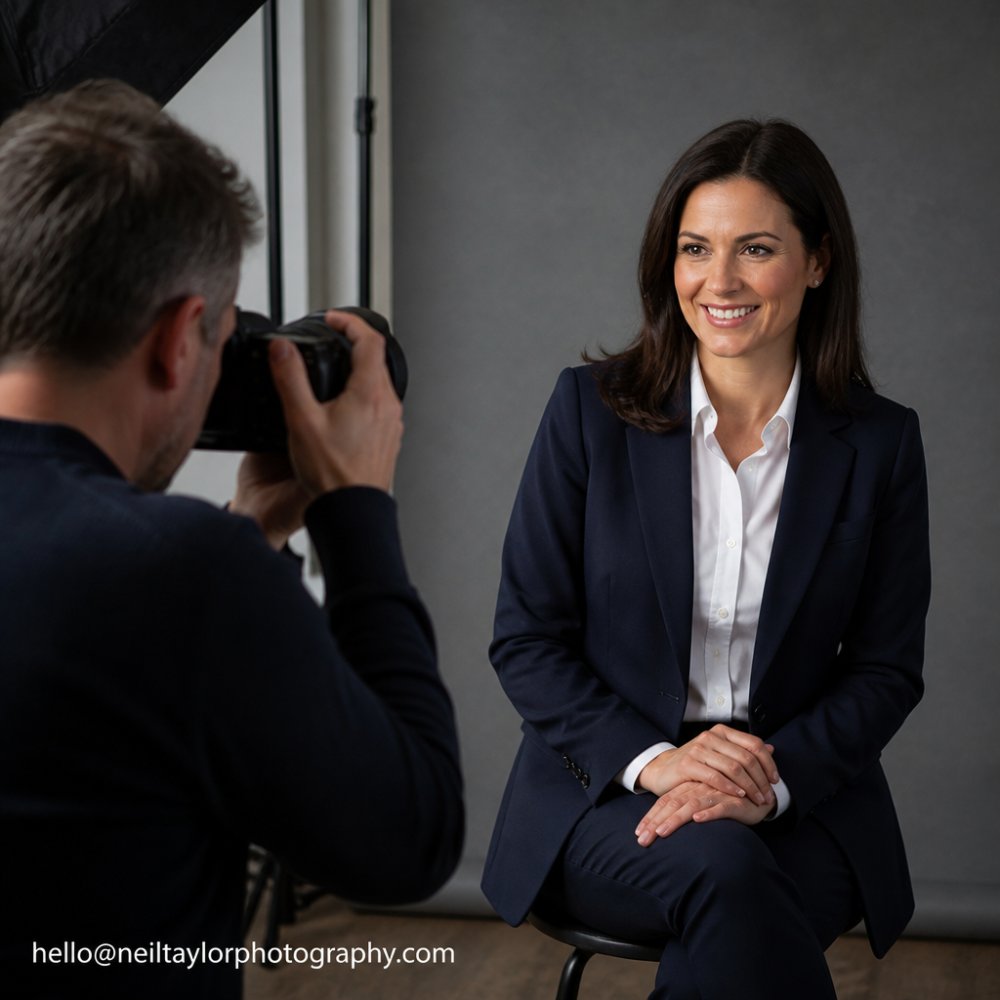
The golden rule: dress for the role you want, not the role you have.
If you work in corporate finance, wear business formal. If you’re a creative entrepreneur, business casual or smart casual works. If you’re an actor, wear something that reflects the roles you book.
Clothing choices that work well:
- Solid colours (navy, charcoal, white, cream, jewel tones)
- Well-fitted blazers or structured tops
- Minimal patterns (avoid busy prints or stripes)
- Clothes that fit your body properly (not too tight or loose)
- Colours that complement your skin tone
- Jewellery kept minimal and professional
Avoid:
- Logos or branded clothing
- Busy patterns or distracting prints
- Overly casual wear (t-shirts, hoodies)
- Clothes that don’t fit well
- Clashing colours
- Excessive jewellery
Your headshot reflects your professional identity. The clothes you choose either support that identity or work against it. Invest in pieces that make you feel confident and that represent your professional brand accurately.
Corporate Headshots for Teams
When you need multiple team members photographed, consistency matters enormously.
Corporate headshots for teams should follow a unified approach. Same background, similar lighting, consistent styling guidelines. This creates a cohesive, professional appearance across your marketing materials and website.
Benefits of consistent team photography:
- Builds trust through visual consistency
- Makes your company look organised and professional
- Creates a unified brand identity
- Looks polished on your website and in materials
- Signals that you invest in your team
When planning corporate headshots for teams, establish guidelines beforehand:
- Clothing palette (e.g., business formal, or navy and white)
- Background style (studio, outdoor, office environment)
- Lighting approach
- Expression guidelines (professional, warm, approachable)
- Pose consistency (seated, standing, angle)
Neil Taylor Photography works with businesses in London and Kent to create cohesive team imagery. Having a single photographer handle your entire team ensures visual consistency and efficiency.
Book your headshot session today →
Mismatched team photos (different lighting, backgrounds, styles) make your company look disorganised. Consistency signals professionalism and attention to detail.
Signs Your Current Headshot Needs Replacing
Sometimes the decision to update isn’t about a specific timeline. It’s about recognising warning signs.
Your headshot needs replacing if:
- People comment that you look different in person than your photo
- You cringe when you see your photo on LinkedIn or your website
- Your photo is more than 3 years old
- Your appearance has changed noticeably
- Your career or professional positioning has shifted
- Your photo doesn’t match your current personal brand
- The lighting or background looks dated
- You’re wearing styles you no longer wear
- Your photo doesn’t match the quality of your competitors’ headshots
- You avoid using your headshot because you don’t like it
The emotional signal matters. If you don’t feel confident in your headshot, it shows. People pick up on that hesitation. A headshot you love using is one that’s working for you.
Making the Most of Your Headshot Investment
A professional headshot is an investment. Maximise its value by using it consistently across all professional platforms.
Where to use your business headshot:
- LinkedIn profile
- Company website (team pages, about pages)
- Email signature
- Professional directories and casting sites
- Social media profiles (if professional)
- Speaking engagement materials
- Articles or bylines you publish
- Networking profiles
Get multiple options from your session. Different backgrounds, expressions, or poses give you flexibility for different contexts. A more formal headshot works for corporate settings. A warmer expression works for creative industries or client-facing roles.
Consistency across platforms builds recognition. When people see the same professional image of you repeatedly, it reinforces your brand and makes you more memorable.
Consider the longevity of your investment. A quality headshot session gives you imagery that works for 2-3 years. During that time, use it everywhere. Don’t let a great photo sit unused because you’re unsure where it fits.
Conclusion
Your business headshot is a professional tool. Like any tool, it needs maintenance and updating to remain effective.
The decision to update your business headshots isn’t complicated. If you’ve experienced a major career change, your appearance has shifted noticeably, or it’s been 2-3 years since your last session, it’s time.
A fresh, current headshot signals that you’re engaged, professional, and serious about your career. It builds trust before you even speak. When you’re ready to invest in imagery that represents your best professional self, Neil Taylor Photography specialises in creating headshots that work across all platforms, whether you need casting-ready actor headshots, LinkedIn portraits, or consistent corporate team photography.
Check Availability to book your headshot session, or email hello@neiltaylorphotography.com to discuss your requirements.
Frequently Asked Questions
How often should you update your business headshot?
Most professionals benefit from updating their business headshots every 2-3 years as a baseline. However, you should update sooner if you’ve changed jobs, undergone a significant career shift, or your appearance has noticeably changed. Actors auditioning regularly may need updates annually or more frequently. The key is ensuring your headshot accurately represents how you look now and aligns with your current professional positioning.
How recent should a LinkedIn headshot be?
Your LinkedIn headshot should reflect your current appearance as closely as possible. Ideally, it should be no more than 2-3 years old. Since LinkedIn is often the first impression potential employers, clients, or collaborators have of you, an outdated photo can undermine your credibility. If you’ve made significant changes to your appearance, new hairstyle, weight loss, or styling, updating sooner is worthwhile.
Should you update your headshot after changing jobs?
Yes, updating your headshot after a significant career change is highly recommended. A new role, especially one that represents a shift in your professional identity or industry, deserves a fresh image that reflects your new position. This is particularly important if you’re moving into a more senior role or transitioning to a different field. A recent headshot signals that you’re actively engaged in your career and serious about your professional brand.
Can you use the same headshot across different platforms?
Yes, you can use the same professional headshot across LinkedIn, your company website, and other professional platforms. However, ensure the image is versatile enough to work in different contexts and formats. A high-quality headshot taken by a professional photographer typically works well across platforms. The important thing is that it’s current, authentic, and represents you professionally across all channels.