Table of Contents
- What Makes a Good Professional Headshot
- Lighting and Technical Quality
- Pose, Expression, and Natural Presence
- Professional Headshot Clothing Tips
- How to Prepare for a Professional Headshot
- How Long Does a Professional Headshot Session Take
- Background and Composition
- Why Updating Your Professional Headshot Matters
- Frequently Asked Questions
Last Updated: September 21, 2026
What Makes a Good Professional Headshot
A professional headshot is more than just a photograph, it’s your personal brand distilled into a single image. Whether you’re an actor preparing for auditions, an entrepreneur building credibility, or a corporate professional updating your LinkedIn, the quality of your headshot shapes how people perceive you before they ever speak to you.
The difference between a headshot that lands opportunities and one that gets overlooked comes down to a few core elements: technical execution, authentic presence, and strategic preparation. At Neil Taylor Photography, we’ve worked with actors, business owners, and executives across London and Kent to create headshots that genuinely represent who they are and what they bring to the table.
This guide breaks down what separates a compelling professional headshot from a mediocre one, and how to prepare so you walk away with images you’ll actually want to use.
The Core Elements That Matter
A strong professional headshot rests on four pillars: lighting, pose and expression, wardrobe, and composition. Each one matters independently, but they work together to create an image that feels authentic and professional at the same time.
The most common mistake people make is treating a headshot like a casual snapshot. It isn’t. A professional headshot requires intentional choices about how you present yourself, how the camera sees you, and what message that image sends. That doesn’t mean stiff or artificial, it means purposeful.
Lighting and Technical Quality
Lighting is where amateur headshots fall apart. Poor lighting makes even the most photogenic person look tired, washed out, or unflattering. Professional headshot photography uses controlled lighting setups that sculpt your face, add dimension, and ensure your features read clearly in the final image.
The best lighting for professional headshots typically uses a main light source positioned slightly to one side of your face, with fill light to soften shadows and prevent harsh contrast. This creates dimension without making you look overly lit or artificial. Natural window light can work in certain conditions, but studio lighting gives you consistency and control, which matters when you’re shooting multiple takes and need every frame to be equally strong.
Technical quality extends beyond lighting. Your headshot should be shot with a camera and lens combination that flatters human features, typically a focal length between 50mm and 85mm, which avoids the distortion that wider lenses create. The final image should be sharp, properly exposed, and colour-balanced so your skin tone looks natural rather than orange or grey.
This is where working with an experienced professional makes a tangible difference. A photographer who specialises in professional headshots understands how to light your specific face shape, skin tone, and features to create the most flattering result.
Pose, Expression, and Natural Presence
Your pose and expression are what make a professional headshot feel authentic rather than stiff. The goal is to look engaged, approachable, and confident without appearing forced or uncomfortable.
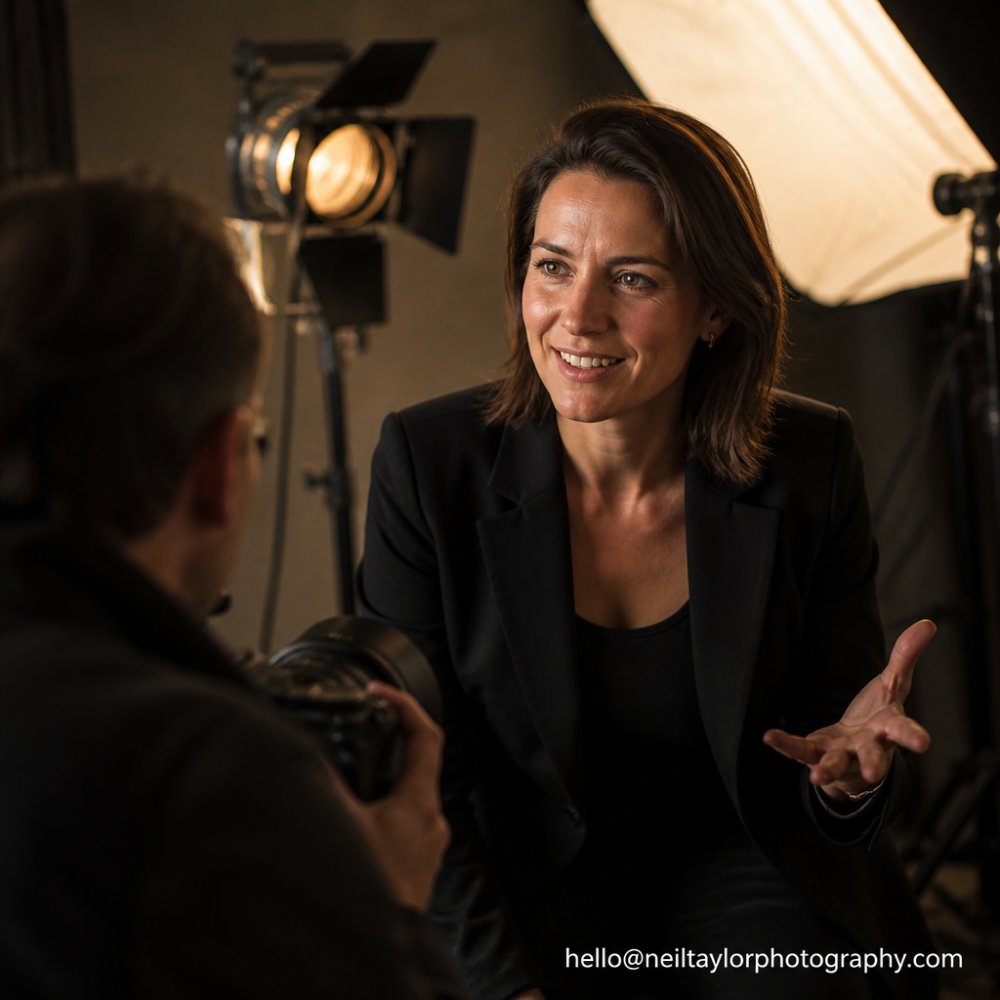
A common mistake is holding your pose too rigidly. Your shoulders should be relaxed, not tensed up toward your ears. Your chin should be positioned naturally, slightly forward can help define your jawline, but avoid tilting your head back, which creates an unflattering angle. Your eyes should feel alive and present, not distant or staring blankly at the lens.
The thing most guides miss is that your expression needs to match your industry and personal brand. An actor’s headshot might include a more dynamic range of expressions, genuine smiles, thoughtful looks, intensity. A corporate professional’s headshot typically calls for a more measured, approachable expression that conveys trustworthiness. An entrepreneur might want something that shows energy and confidence.
Book your headshot session today →
This is where a skilled photographer makes the difference. They’ll direct you through different expressions, help you relax, and capture the moments when you look genuinely like yourself rather than performing for the camera. Multiple takes aren’t a sign something’s wrong, they’re how you land the shot that actually works.
Professional Headshot Clothing Tips
What you wear directly impacts how your headshot reads. Clothing should complement your face and personal brand without competing for attention.
Solid colours work better than patterns. Busy patterns, stripes, or loud prints pull focus away from your face. Jewel tones, deep blues, emerald greens, burgundy, photograph beautifully and complement most skin tones. Avoid white and very light colours, which can create exposure issues and wash you out. Black works well for contrast, though some people find it too severe depending on their colouring.
Fit matters enormously. Your clothing should be tailored to your frame, not too loose, which makes you look smaller than you are, and not so tight that it’s distracting. Necklines should sit naturally and flatter your face shape. For women, avoid anything that pulls across the chest or creates awkward bunching. For men, ensure your shirt or jumper fits through the shoulders without pulling.
Jewellery and accessories should be minimal and intentional. A watch, simple earrings, or a pendant can work, but avoid anything that jingles, catches light in distracting ways, or draws focus. Remove anything you’re not completely comfortable wearing, discomfort shows in your expression.
Consider your industry. An actor’s headshot might allow for more personality in styling. A corporate professional typically benefits from more conservative, timeless choices. An entrepreneur can usually afford slightly more edge while staying professional.
How to Prepare for a Professional Headshot
Preparation is where most people underinvest. The better prepared you are, the more relaxed you’ll feel, and the better your headshots will be.
The Week Before Your Session
Hair and grooming should feel natural to you. Don’t try a drastically different style right before your session, if you’re used to your hair one way, that’s what will feel most like you on camera. Get a fresh haircut or colour if you usually do, but do it a week or two before, not the day before. This gives any new style time to settle and feel natural.
Skincare matters. Start a consistent routine a week before if you’re not already in one. Moisturise regularly, avoid anything that might cause breakouts or irritation, and stay hydrated. If you have particularly dry skin, this is especially important, dry skin photographs as dull and tired.
Think about your baseline look. What do you look like when you feel most like yourself? Not overdone, not underdone, but genuinely you. Replicate that for your session. If you usually wear makeup, wear makeup you’re comfortable in. If you don’t usually wear much, don’t suddenly wear a full face.
Get rest. Sleep deprivation shows in your face, puffy eyes, dull skin, lack of energy. The night before your session, aim for a full night’s sleep. It sounds obvious, but it genuinely impacts how you look and how you feel in front of the camera.
The Day of Your Session
Arrive early enough to feel unhurried. Rushing creates tension that shows in your face and shoulders. Give yourself time to settle, use the facilities, and get comfortable with the photographer and the space.
Eat something light before your session. You don’t want to be hungry, which affects your energy and expression, but you also don’t want to be uncomfortably full. A light meal or snack an hour or two before works well.
Book your headshot session today →
Avoid alcohol the night before. It dehydrates you and can leave you looking puffy or tired the next day. Stay hydrated instead, drink water consistently.
Wear something comfortable to your session that you can easily change out of. You’ll be changing into your headshot outfit, and you want the transition to feel easy rather than stressful.
Bring a few outfit options if you’re unsure what works best. Your photographer can help you choose, and having options takes pressure off the decision.
Communicate with your photographer about what you’re hoping to achieve.
How Long Does a Professional Headshot Session Take
A typical professional headshot session runs between 30 and 60 minutes. This timeframe allows for setup, multiple outfit changes if needed, and enough takes to capture genuinely good expressions rather than just one or two frames.
Background and Composition
Your background should support your face without competing for attention. A clean, neutral background, whether it’s a solid colour, a subtle texture, or a soft blur, keeps focus on you.
Why Updating Your Professional Headshot Matters
An outdated professional headshot works against you. If your headshot is noticeably older than you look now, different hair, significantly different appearance, or just dated photography style, you’re creating a disconnect between the image people expect and the person who shows up.
Frequently Asked Questions
What should you wear for a professional headshot?
Wear solid colours that complement your skin tone and avoid busy patterns or logos. Jewel tones, neutrals, and pastels work well. Choose fitted clothing that feels comfortable and reflects your industry, formal business wear for corporate roles, creative pieces for entrepreneurs. Ensure your outfit is clean, crease-free, and allows you to move naturally. Avoid large jewellery that distracts, and consider necklines that frame your face well. Your photographer can offer specific guidance based on your industry and the headshot’s purpose.
How often should you update your professional headshot?
Update your professional headshot every 2-3 years or when your appearance changes noticeably. If your hair style, colour, or facial hair changes significantly, or if you’ve aged considerably, a new headshot keeps your professional image current and authentic. For actors, agents often request fresh shots annually. For corporate professionals, updating when you change roles or refresh your personal brand ensures your LinkedIn and company website reflect who you are now.
How do you look natural in a professional headshot?
Natural presence comes from genuine connection rather than forced smiling. Think of something that brings you warmth or confidence just before the shutter clicks. Relax your shoulders, soften your jaw slightly, and allow your eyes to engage with the camera. Work with your photographer to find poses that feel comfortable, tension shows in your face. Take breaks between shots, and trust the process. A skilled photographer will guide you with direction and encouragement to help you feel at ease.
Does lighting matter for a professional headshot?
Lighting is crucial for a professional headshot. Proper lighting flatters your features, reduces unflattering shadows, and creates depth and dimension in the image. Studio lighting or controlled natural light is far superior to harsh overhead or direct sunlight. Good lighting highlights your eyes, defines your cheekbones, and creates an engaging, polished result. This is why working with a professional photographer matters, they understand how to position and shape light to bring out your best features and create a headshot that commands attention.