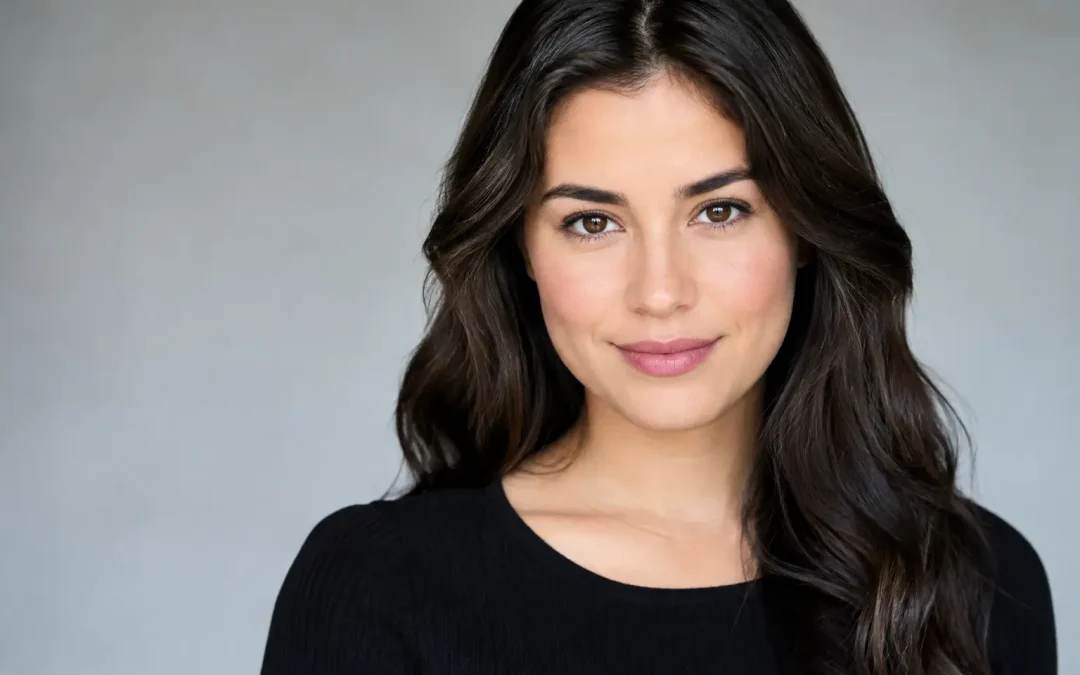
Casting decisions often begin before you enter the room. Actor headshots are not simply a polished photograph for your profile: they are a casting tool, designed to help an agent or casting director understand your type, energy and credibility in seconds. The strongest image looks like you on a particularly good day – recognisable, current and ready to work.
That can feel like a great deal to ask from one photograph, especially if being in front of a camera makes you self-conscious. You do not need to know your best angle or arrive with a catalogue of poses. A well-directed session should give you space to settle, with clear guidance on posture, expression and small adjustments that make a meaningful difference.
What Casting Directors Need From Actor Headshots
A headshot should make the next step easy. It needs to be clear enough for someone scanning many submissions, natural enough to feel believable, and specific enough to hint at the roles you may be right for. It is not about forcing a single, limiting label on yourself. It is about presenting an honest version of your casting range.
Clarity matters first. Your face should be well lit, your eyes visible and your expression easy to read. Heavy filters, dramatic shadows and busy backgrounds can distract from the person casting wants to assess. A clean, professionally lit image holds attention because there is nothing competing with you.
Authenticity matters just as much. An overly polished image can create a gap between the photograph and the person who walks into an audition. A current headshot builds trust with your agent, with casting teams and, ultimately, with the people you meet in the room. Update your images whenever your hair, facial hair, style or overall appearance changes noticeably.
The right mood depends on the work you are pursuing. A warm, open expression may suit commercial casting, while a quieter, more grounded portrait could better support television, theatre or dramatic roles. There is no universal expression that works for every actor. The goal is to create a considered selection that feels like different truthful sides of the same person.
A Great Headshot Is Not About Looking Like a Model
Many actors arrive worried that they are not photogenic. Usually, what they mean is that they have felt awkward or unsupported in photographs before. Being photographed without direction can be uncomfortable, particularly when you know the result carries professional weight.
A headshot session should not expect you to perform confidence from the first frame. It should begin with conversation, test shots and a chance to get used to the camera. Small changes in how you stand, where you place your shoulders and how you breathe can soften tension quickly. Rather than being told to “smile” or “look natural”, you should receive useful direction that gives you something practical to do.
Expression is rarely about holding a fixed face. The most engaging portraits often appear in the moments between instructions, when your attention is focused and your eyes have some life behind them. An experienced photographer will watch for those moments and help you repeat them without making the process feel mechanical.
Choosing Clothes That Keep the Focus on You
Your wardrobe should support your face, not compete with it. Bring a small range of options so you can see how different colours and necklines work on camera. The best choices tend to feel like a refined version of what you would genuinely wear, rather than a costume for a role you think you ought to play.
Plain, mid-tone colours are often a reliable starting point. They separate you from a neutral background without pulling attention away from your eyes. Navy, charcoal, deep green, burgundy and muted earth tones can work beautifully, but the right colour depends on your complexion, hair and the feel you want the image to have.
Avoid prominent logos, busy patterns and very bright white where possible. They can draw the eye away from your face or create exposure issues under studio lighting. Layers can be useful because a jacket, overshirt or knitwear can create a distinct second look without requiring a complete change of outfit.
Bring clothes that fit well now. A headshot is an investment in the person casting will meet, so it is better to choose comfort and truth over an outfit that feels restrictive or unlike you. If you are unsure, lay out a few options before the session and ask for guidance when you arrive.
Studio or Location: Which Is Right for You?
Both approaches can produce excellent actor headshots, and the best choice depends on your casting direction, personal brand and the existing images in your portfolio.
A studio session gives a clean, controlled result. Lighting, background and weather are managed carefully, which makes it easier to create consistent images across several looks. Studio portraits can be especially effective when you need a strong, versatile main headshot that keeps all attention on your face.
Location photography brings more texture and atmosphere. Soft daylight, a simple exterior wall or an uncluttered urban setting can feel relaxed and contemporary. It can be a good fit for actors seeking a natural, editorial quality, though the background must remain secondary to the expression.
Neither option is automatically more professional. A polished headshot is about intention, lighting and direction, not whether it was taken against a studio backdrop or outdoors. If you are updating an established portfolio, it can be helpful to consider what is missing rather than simply replacing a similar image.
How to Prepare Without Overthinking It
Get a good night’s sleep, drink water and allow enough time to arrive without rushing. Those straightforward details do more for your comfort than trying to practise expressions in the mirror for hours. You do not need a new haircut immediately before the shoot, but a trim or tidy-up a few days beforehand can help you feel settled.
If you wear make-up, aim for a version that still looks like you. Camera-ready does not have to mean heavy. A little preparation to reduce shine or even skin tone is often enough, while professional hair and make-up may be worthwhile if it helps you feel confident. The key is to avoid changing your appearance so dramatically that the final image no longer feels familiar.
Think about the roles and projects you are drawn to, but do not arrive determined to manufacture a character. A useful session can explore confidence, warmth, thoughtfulness, edge or humour through subtle shifts in energy. These are qualities you already have. The photographer’s role is to help bring them forward naturally.
Selecting Images With a Clear Head
After the session, choosing favourites can be harder than expected. You may initially focus on tiny details that nobody else will notice, particularly if you are not used to seeing professional photographs of yourself. Give yourself time with the proof gallery, then assess each image by asking a better question: does this look like someone I would be confident to send into an audition?
Your strongest choice may not be the one with the biggest smile. Look for a connection in the eyes, relaxed facial expression and a sense that the image has room for a casting director to imagine you in different work. It should look current and believable at thumbnail size as well as when viewed larger.
Professional retouching should be light and respectful. Temporary blemishes, stray hairs and minor distractions can be refined, but skin texture, character and recognisable features should remain. A headshot is not improved by being made anonymous.
Common Questions About Actor Headshots
How often should I update my headshot?
There is no fixed calendar rule. Update it when you look meaningfully different, when your casting has shifted, or when the quality and style of your current image no longer represents your professional standard. For many actors, this is every one to two years, but appearance should lead the decision.
How many final images do I need?
A small, purposeful set is more useful than dozens of near-identical frames. You may need one strong main image and a few alternatives showing a different expression, outfit or energy. Your agent’s preferences and the platforms you use can also shape the final selection.
What if I feel awkward on camera?
That is completely normal, and it is precisely why direction matters. You do not need to be naturally relaxed at the beginning. With a calm pace, clear coaching and time to settle in, most people find that the experience becomes far easier than they expected.
Your next headshot does not need to turn you into somebody else. It should make it easier for the right people to see you, remember you and picture you in the work you are ready to do. When you are ready to update your portfolio, choose a session where you can arrive as yourself and leave with images you are genuinely pleased to send out.