Table of Contents
- Why Headshot Makeup Matters More Than You Think
- Headshot Makeup Tips That Work on Camera
- Makeup for Corporate Headshots: Credible, Not Costume
- DIY Headshot Makeup: A Step-by-Step Approach
- Headshot Makeup Mistakes That Show on Camera
- Working With Your Photographer to Get It Right
- Frequently Asked Questions
Last Updated: 14 October 2026
Why Headshot Makeup Matters More Than You Think
The best makeup for professional headshots is the makeup you barely notice. It is skin that looks like skin, features that read clearly on camera, and a finish that holds up under studio lighting without turning shiny or flat.
At Neil Taylor Photography, we photograph actors, entrepreneurs and corporate teams across London and Kent, and the same thing comes up in almost every session: people worry about their outfit when the camera is actually reading their skin. Makeup for headshots is not the same as makeup for a night out. It is closer to good lighting in a bottle.
How Studio Lighting Changes Everything
Studio lighting is unforgiving in a very specific way. It flattens texture, amplifies shine, and picks up any product that sits on top of the skin rather than blending into it.
Softboxes and beauty dishes create broad, even light, which is flattering but revealing. A foundation that looked seamless in your bathroom mirror can separate around the nose under a flash. Shimmer that catches the eye in daylight becomes a bright white speck on camera.
The fix is simple: matte or satin finishes, thin layers, and powder only where you actually get shiny. Heavy coverage is the most common reason a headshot looks dated rather than professional.
Headshot Makeup Tips That Work on Camera
Good on-camera makeup follows one rule: build in thin layers and stop early. The camera adds contrast, so you need less product than you think.
A few practical points we give clients before a shoot:
- Match foundation to your jawline in daylight, not indoor lighting
- Skip SPF in your base on shoot day, as some formulas flash back white
- Use cream blush over powder for a finish that looks lit from within
- Keep highlighter off the centre of the forehead and the tip of the nose
- Set only the T-zone, not the whole face
Skin Prep: The Step Most People Skip
Skin prep is where headshot makeup is won or lost. Hydrated skin holds foundation; dry or over-exfoliated skin grabs it in patches.
Drink water in the days before your session, moisturise as normal, and avoid trying a new active ingredient the week of your shoot. A common mistake is booking a facial or a strong peel two days before, then arriving with skin that is still settling. Give any treatment at least a fortnight.
If you have a beard or heavy stubble, groom the edges but leave the length. Clean lines photograph better than a fresh shave that leaves the skin red.
Shine Control for Flash Photography
Shine control is about placement, not product volume. Powder the forehead, nose and chin, then leave the cheeks alone so the skin keeps some life.
Blotting papers are more useful than a second layer of powder, because they remove oil without adding texture. If you are shooting for a couple of hours, bring papers and a small brush rather than reapplying foundation.
Book your headshot session today →
Ask your photographer to show you one test frame on the back of the camera before the full session starts. It takes thirty seconds and it catches shine, colour cast and stray hairs while there is still time to fix them.
Makeup for Corporate Headshots: Credible, Not Costume
Makeup for corporate headshots should look like you on a very good day, not like you are going to an event. The goal is credibility.
For most corporate and LinkedIn sessions, we suggest:
- A base that matches your neck and chest, not a shade lighter
- Brows filled lightly and brushed upward for structure
- A neutral lip, one or two steps up from your natural colour
- Mascara on the top lashes only, which opens the eye without weight
- No glitter, no strong contour, no dramatic liner
Men are often told makeup is not for them. In practice, a little translucent powder and a touch of concealer on a blemish makes a real difference on camera, and nobody watching the final image will know it is there.
British Association of Beauty Therapy and Cosmetology guidance on professional skin and makeup practice
DIY Headshot Makeup: A Step-by-Step Approach
If you are doing your own makeup, work in this order and keep every layer thin. The whole routine should take around twenty minutes once you have practised it.
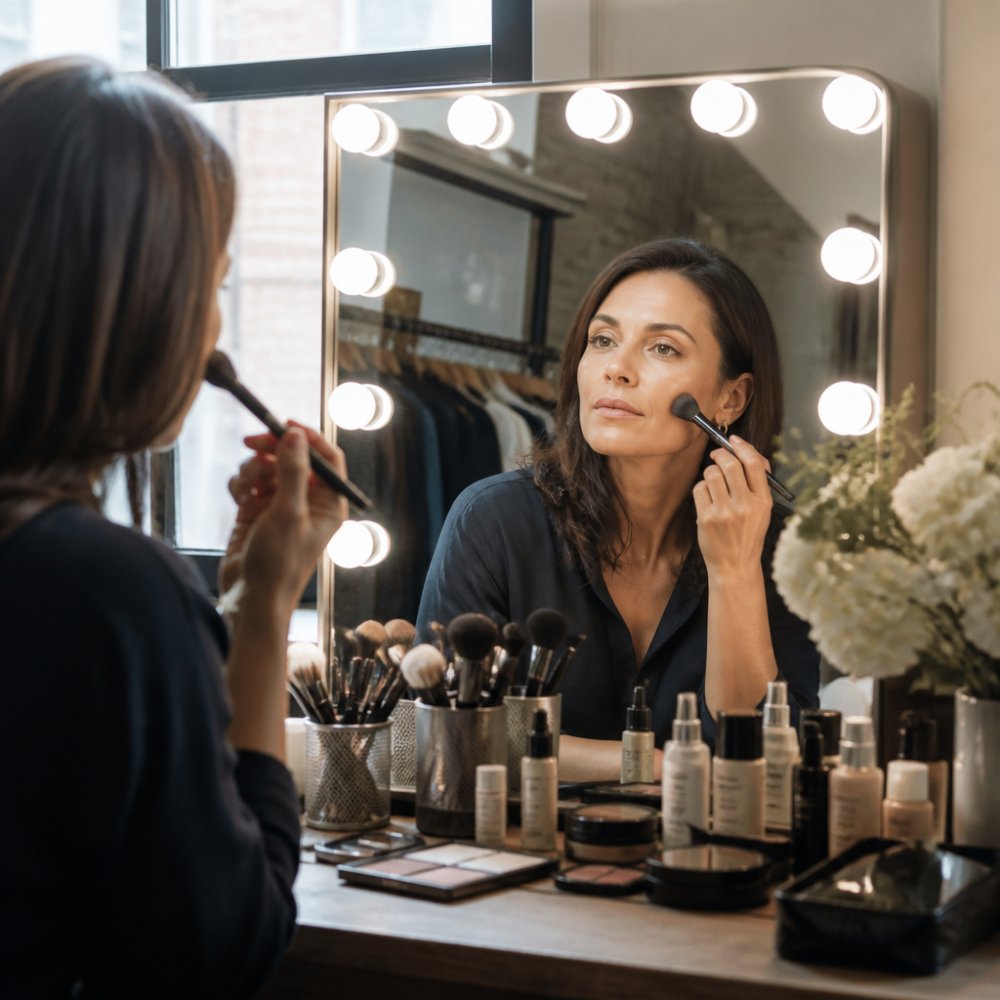
Step 1: Prep (5 minutes). Cleanse, moisturise, and let it settle for ten minutes before you start. Any skincare needs time to absorb or your base will slide.
Step 2: Base (4 minutes). Apply foundation with a damp sponge, starting at the centre of the face and blending outward. Sheer coverage everywhere, extra only where you need it.
Step 3: Conceal (2 minutes). Dot concealer under the eyes and on any redness. Tap, do not rub.
Step 4: Structure (4 minutes). Light brow fill, a wash of neutral blush on the cheekbone, and a soft neutral shadow in the crease.
Step 5: Eyes and lips (3 minutes). One coat of mascara on the top lashes, a defined but natural lip.
Step 6: Set (2 minutes). Powder the T-zone only. Blot, do not dust, if you get shiny later.
What to Pack in Your Touch-Up Kit
Bring a small kit and keep it simple. You will use less than you expect.
Book your headshot session today →
- Blotting papers
- Translucent powder and a small brush
- The lip colour you started with
- Cotton buds for smudges
- A comb or small brush for hair
- Hairspray or a light styling product
Headshot Makeup Mistakes That Show on Camera
The mistakes that ruin headshots are consistent, and most of them come from doing too much rather than too little.
SPF in your foundation is the most common flash problem we see. Many sunscreens contain ingredients that reflect flash and leave a pale cast across the face. Skip it on shoot day and wear it on the way there instead.
Other repeat offenders:
- Foundation one shade too light, which makes the face float above the neck
- Heavy powder all over, which kills the skin’s natural dimension
- Shimmer on the cheekbones, which reads as a hotspot under studio light
- Overdrawn or very dark brows, which dominate a small headshot crop
- A glossy lip that catches the light and pulls attention from the eyes
Working With Your Photographer to Get It Right
The best headshot makeup is a collaboration, not a solo performance. Tell your photographer what the images are for before you start.
An actor needs a casting-ready look that reads at thumbnail size. An entrepreneur needs something that says credible and approachable. A corporate team needs consistency across every person in the set. Those are three different briefs, and they change how makeup should be handled.
Ask to see test frames during the session. Ask what the final crop will look like. A good photographer will direct you on chin angle, hair placement and expression, and will tell you honestly if something on your face is catching the light badly.
If you are travelling in from Kent for a session, build in time to arrive early and settle. Rushing in and going straight under the lights rarely produces the relaxed expression you want.
Health and Safety Executive guidance on safe practice in cosmetic and studio settings
Getting the makeup right is only half the job. The other half is working with a photographer who knows how to light you, direct you and put you at ease so the final image actually looks like you. At Neil Taylor Photography, we specialise in actor, professional and LinkedIn headshots, with studio and on-location sessions, and we guide you through wardrobe, grooming and expression from the moment you arrive. Check Availability or email hello@neiltaylorphotography.com to book your headshot session today.
Frequently Asked Questions
What makeup looks best for professional headshots?
Natural, matte finishes work best for headshot makeup. Aim for skin that looks like skin, with light coverage that evens tone without masking texture. Avoid heavy contouring, glitter, and high-shine products that reflect studio lighting. A soft, defined brow, neutral eyeshadow, and a satin or matte lip colour in a shade close to your natural tone photograph well across different lighting setups.
Should you wear more makeup for photos than you would day to day?
Slightly more definition helps on camera because studio lighting can wash out features. But ‘more’ means added structure, not added product. Build coverage gradually, define brows and lash lines a touch more than usual, and set everything with powder. Going too heavy creates a mask-like effect that reads as unnatural in a professional headshot.
How do you stop your face looking shiny in headshots?
Start with a mattifying primer on your T-zone, use a light dusting of translucent powder, and keep blotting papers handy for touch-ups during the session. Avoid dewy foundations and cream highlighters on the forehead, nose, and chin. If you have naturally oily skin, ask your photographer to angle the key light slightly higher, which reduces specular highlights on the face.
Can you do your own makeup for a professional headshot?
Yes, DIY headshot makeup works well if you practise beforehand. Test your full look in similar lighting, take phone photos with flash, and check how it reads on screen. Stick to products you already know, bring blotting papers and your lip colour for touch-ups, and arrive with your base already applied so you only need minor adjustments.