
Table of Contents
- Why Natural Headshot Poses Matter for Your Professional Image
- Headshot Posing Tips for Men: The Foundation
- How to Pose for a Headshot: Five Effective Techniques
- Professional Poses for Men: Hand Placement and Expression
- Common Posing Mistakes to Avoid
- Preparation Tips for a Natural Headshot Session
- Conclusion
- Frequently Asked Questions
Last Updated: October 8, 2026
Why Natural Headshot Poses Matter for Your Professional Image
Your headshot is often the first impression people have of you. Whether you’re an actor seeking casting opportunities, an entrepreneur building your brand, or a corporate professional establishing credibility, how you present yourself in a photograph matters enormously.
The difference between a stiff, uncomfortable-looking headshot and a natural, confident one can determine whether someone takes you seriously. At Neil Taylor Photography, we work with professionals who initially worry they’ll look awkward on camera, helping them understand the fundamentals of natural posing.
Natural headshot poses for men aren’t about adopting uncomfortable, exaggerated positions. They’re about understanding how small adjustments to your shoulders, chin, and gaze create images that look authentic rather than staged.
Headshot Posing Tips for Men: The Foundation
Before diving into specific poses, it’s worth understanding the core principles that make any headshot work. These fundamentals apply across every technique you’ll try.
Shoulder and Spine Alignment
Your shoulders form the foundation of every strong headshot. Many people make the mistake of squaring their shoulders directly towards the camera, which creates a rigid, formal appearance.
Instead, angle your shoulders slightly away from the camera, roughly 45 degrees. This creates natural lines that draw the viewer’s eye toward your face rather than making your frame look blocky. Keep your spine straight but not stiff. Think of lengthening through the crown of your head rather than tensing your neck.
This simple adjustment instantly makes you look more relaxed and confident. It’s the difference between looking like you’re posing for a passport photo and looking like someone who’s comfortable in front of a camera.
Drop your shoulders away from your ears. Tension in the shoulders reads immediately in photographs and makes you look uncomfortable. A quick shoulder roll before the shot helps release this tension naturally.
Chin and Jaw Positioning
Your chin position dramatically affects how your face appears in a headshot. Pushing your chin forward creates an unflattering angle and emphasises the neck. Tucking it too far back makes you look uncertain.
The sweet spot is a subtle forward tilt, imagine you’re moving your chin forward just slightly while keeping your gaze level. This elongates the jawline and creates definition without looking exaggerated. It’s a micro-adjustment, but it’s one of the most important in natural headshot poses for men.
If you’re unsure whether you’re getting it right, ask your photographer to show you test shots. Small adjustments here make a noticeable difference in how sharp and defined your features appear.
How to Pose for a Headshot: Five Effective Techniques
These five poses form the foundation of professional headshot photography. Each creates a slightly different mood and works for different contexts. You’ll likely use several during a session to give yourself options.
The Three-Quarter Turn
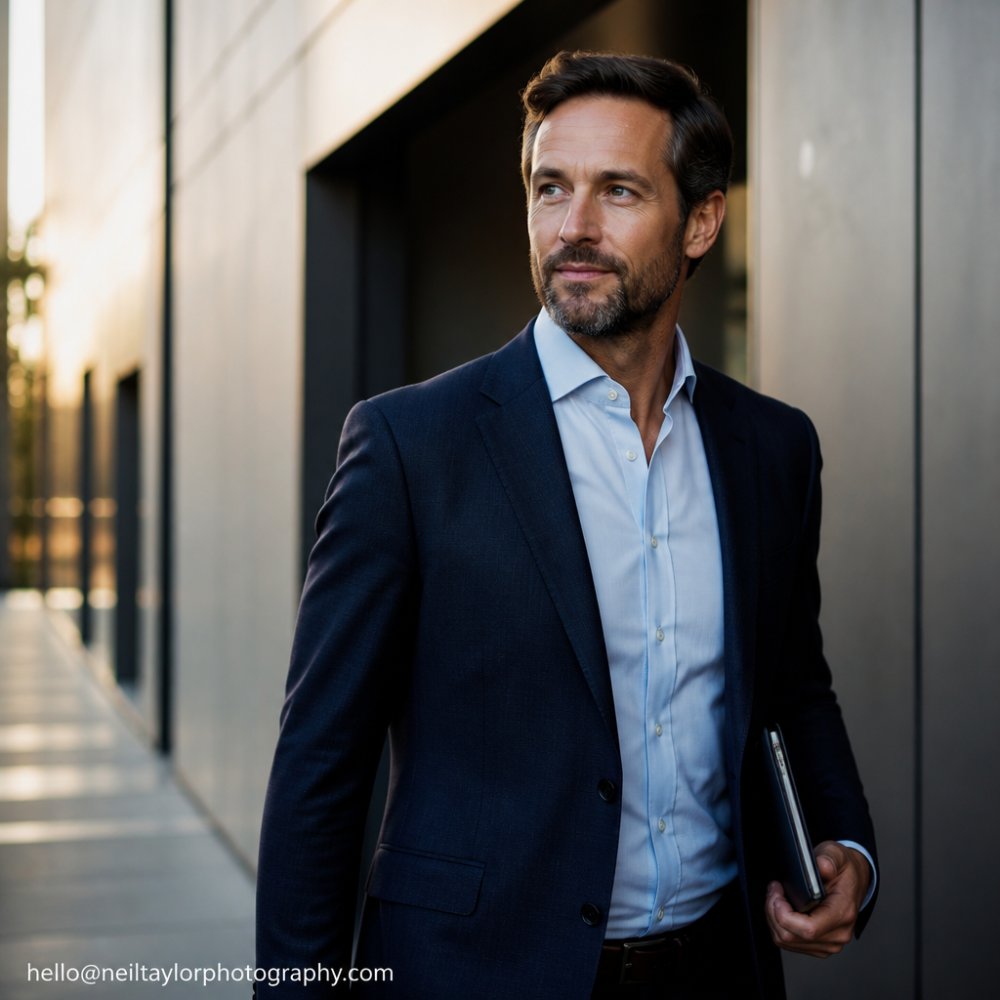
The three-quarter turn is one of the most flattering angles for headshots. Your body angles away from the camera at roughly 45 degrees, while your head turns slightly back toward the lens. This creates dimension and makes your face appear more sculpted.
This pose works particularly well for actors and entrepreneurs because it feels natural rather than confrontational. You’re not staring directly at the camera, which can feel intense. Instead, you’re angled in a way that suggests approachability and confidence.
When you try this pose, make sure your front shoulder (the one closer to the camera) stays down and relaxed. Many people unconsciously lift it, which creates tension in the neck and shoulders. Keep that shoulder dropped and let your head do the turning.
The Direct-to-Camera Approach
Sometimes the most powerful pose is the simplest. Facing directly toward the camera with your shoulders angled slightly back creates an authoritative, confident look. This works exceptionally well for corporate professionals and LinkedIn headshots where you want to convey trustworthiness and approachability.
The key to making this work is ensuring you don’t look stiff. Keep your weight slightly forward on the balls of your feet rather than locked into your heels. This creates a subtle sense of energy and engagement. Your expression should feel present rather than posed.
This direct approach removes any ambiguity about who you are and what you’re offering. You’re looking straight at the viewer, which creates a connection. It’s ideal when you want to establish credibility and authority.
The Slight Head Tilt
A subtle head tilt, just 10 to 15 degrees, creates a more approachable, engaged expression. Rather than looking straight ahead, you’re tilting your head slightly toward one shoulder while keeping your shoulders relatively level.
Book your headshot session today →
This pose works well for professional headshots where you want to seem personable and open. It’s less formal than the direct-to-camera approach but still professional. Many people find this pose feels more natural because slight head tilts are something we do naturally in conversation.
The tilt should feel organic, not exaggerated. If you tilt too far, you risk looking uncertain or submissive. Keep it subtle and let your expression do the work.
The Shoulder Rotation Technique
This technique involves rotating your shoulders away from the camera while keeping your head relatively level. Your body angles at roughly 45 degrees, but your head stays more frontal than in the three-quarter turn.
This creates an interesting dynamic where your torso suggests movement or engagement while your face remains present and connected with the viewer. It’s particularly effective for professional headshots because it conveys both confidence and approachability.
The shoulder rotation technique also helps elongate the neck and creates better definition in the jawline. It’s a subtle adjustment that professional photographers use frequently because the results are consistently strong.
The Relaxed Gaze
Rather than a specific body position, this is about how you direct your eyes. Instead of staring directly at the lens, look just slightly to the side or above the camera. Your body might face the camera directly, but your gaze is softer and less confrontational.
This works particularly well for creative professionals, entrepreneurs, and actors because it suggests thoughtfulness and confidence without intensity. You’re present but not demanding attention. Many people find this gaze feels more natural because it’s how we actually look when we’re thinking or engaged in something.
The relaxed gaze can be combined with any of the body positions above. It’s about the quality of your attention rather than your physical placement.
The best natural headshot poses for men share one quality: they look effortless rather than constructed. If a pose feels uncomfortable or requires you to hold tension, it will read in the photograph.
Professional Poses for Men: Hand Placement and Expression
Once you’ve mastered basic positioning, attention to your hands and facial expression elevates your headshots from good to exceptional.
What to Do With Your Hands
In a traditional headshot, your hands often don’t appear in the frame at all. But if they do, placement matters enormously. Avoid letting your hands hang limply at your sides, which makes you look passive. Similarly, crossing your arms creates a defensive appearance.
If your hands are visible, keep them active but natural. You might rest one hand on your chest, tuck your thumbs into your pockets (with fingers visible), or position your hands as if you’re about to gesture. The key is that your hands should look like they belong to someone engaged and present, not someone waiting for the shot to be over.
Many photographers suggest keeping hands out of the frame entirely for traditional headshots. This keeps the focus entirely on your face and expression, which is usually what you want.
Facial Expression and Smiling
Your expression communicates more than your body position. A genuine smile reaches your eyes and creates warmth. A forced smile looks uncomfortable and reads as inauthentic.
Rather than trying to smile on command, think of something that genuinely makes you feel positive. This might be anticipation about an upcoming opportunity, gratitude for the session, or simply a memory that makes you feel good.
If smiling doesn’t feel natural for your industry or personal brand, a neutral expression with engaged eyes works equally well. The key is that your eyes should feel alive and present. Avoid the thousand-yard stare that suggests you’re thinking about something else entirely.
Many actors and professionals find that a slight smile, not a full grin, works best for professional headshots. It conveys approachability without looking forced or overly casual.
Avoid smiling too broadly or holding your smile too long before the shot. Your face muscles tire, and the smile becomes less genuine. Take a breath, relax your face completely, then bring the expression back just before the photographer shoots.
Common Posing Mistakes to Avoid
Understanding what doesn’t work helps you recognise when you’re drifting into uncomfortable territory during your session.
Many people tense their entire body when they see a camera. This tension reads immediately and makes you look stiff and uncomfortable. Before your session, do some light stretching and shoulder rolls.
Book your headshot session today →
Tilting your chin too far up or down is another frequent mistake. Both create unflattering angles that distort your features.
Over-smiling is surprisingly common. People think a bigger smile equals a better photograph, but often the opposite is true. A genuine, relaxed expression outperforms a forced grin every time.
Finally, avoid looking too serious or intense. Even for corporate headshots, you want to appear approachable. If your default expression feels stern, practise softening your gaze and relaxing your facial muscles before your session.
Preparation Tips for a Natural Headshot Session
How you prepare before your session affects how natural you look in front of the camera.
Get adequate sleep the night before. Tired eyes show immediately in photographs, and you’ll naturally look less confident.
Wear clothing that fits well and makes you feel confident. Avoid busy patterns or logos that distract from your face.
Consider your grooming carefully. A fresh haircut a few days before your session (not the day of) gives you time to adjust to the style.
Arrive early to your session. This gives you time to settle in, use the facilities, and feel comfortable in the space. Rushing creates tension that shows in your photographs.
During the session itself, trust your photographer’s guidance. They understand what creates natural-looking, professional images.
Conclusion
Natural headshot poses for men aren’t about looking perfect or adopting uncomfortable positions. They’re about understanding the small adjustments that create images you’ll feel confident using across your professional life.
At Neil Taylor Photography, we specialise in helping actors, entrepreneurs, and business professionals look their best in front of the camera.
The investment in a professional headshot session pays dividends. A strong headshot opens doors, whether that’s casting opportunities, client relationships, or professional credibility. When you look confident and present in your photograph, people respond to that energy.
Ready to invest in professional headshots that genuinely represent you? Check Availability to book your session, or get in touch at hello@neiltaylorphotography.com to discuss your needs.
Frequently Asked Questions
What’s the best natural headshot pose for men?
The three-quarter turn is often the most flattering and natural headshot pose for men. Rotate your shoulders 45 degrees from the camera, keep your spine straight, and angle your head slightly towardss the lens. This approach shows dimension while avoiding the stiffness of a direct-on pose. Pair it with a relaxed expression and soft eye contact for authenticity.
How should men angle their face for a professional headshot?
Angle your face slightly downward and towardss the camera, aim for a 15 to 30-degree tilt. This subtle movement creates definition in your jawline and cheekbones while appearing natural rather than posed. Avoid tilting too far, which can look unnatural. Work with your photographer to find the angle that suits your face shape and brings out your best features.
What should men do with their hands in a headshot?
Keep hands out of frame or position them near the shoulders and neck if they must appear. Avoid crossing your arms, which reads as defensive. If your hands are visible, keep them relaxed with fingers slightly apart, never clenched. Your hands should never draw attention away from your face, which is the focal point of a professional headshot.
Should men smile in a professional headshot?
A subtle, natural smile works best for most professional headshots. Avoid a forced grin or overly wide smile, which looks inauthentic. Instead, think of something that genuinely interests you and let that warmth show in your eyes. For casting headshots, follow your agent’s guidance, some roles call for a neutral expression, whilst others benefit from approachability. The key is authenticity over technique.