Table of Contents
- Why Professional Headshots Matter More Than Ever in 2026
- The Benefits of High Quality Headshots for Your Career
- How Often to Update Your Professional Headshot
- What to Wear for Professional Headshots: A Practical Guide
- Actors, Entrepreneurs and Executives: Why Each Needs a Distinct Approach
- Common Mistakes That Undermine a Professional Headshot
- Frequently Asked Questions
Last Updated: 14 September 2026
Why Professional Headshots Matter More Than Ever in 2026
Professional headshots are no longer a nice-to-have for a select few. They have become the visual handshake that precedes almost every career conversation, whether that’s a casting director scrolling through Spotlight submissions or a potential client checking your LinkedIn before a discovery call. At Neil Taylor Photography, we’ve watched that shift happen in real time across London and Kent, and the pattern is consistent: the people who invest in their image get taken more seriously, faster.
Think about how often your face now represents you without you in the room. A headshot is a portrait photograph used to present your professional identity across platforms, from company websites and LinkedIn profiles to audition portals and conference speaker pages. Every one of those moments is a first impression you don’t get to narrate.

The shift to digital-first first impressions
Hiring managers, casting directors and clients now meet your image before they meet you. A recruiter screening a shortlist may spend only a few seconds on each profile, and the photograph is often what decides whether they read on. That’s not vanity. It’s filtering behaviour, and it applies just as much to a corporate team page as it does to an audition tape.
How a strong headshot builds instant credibility
A clear, well-lit portrait signals attention to detail before a single word is read. It tells the viewer you take your work seriously enough to present it properly. Weak, outdated or poorly cropped images do the opposite, and the damage happens silently: you simply don’t get the callback, and you never find out why.
The Benefits of High Quality Headshots for Your Career
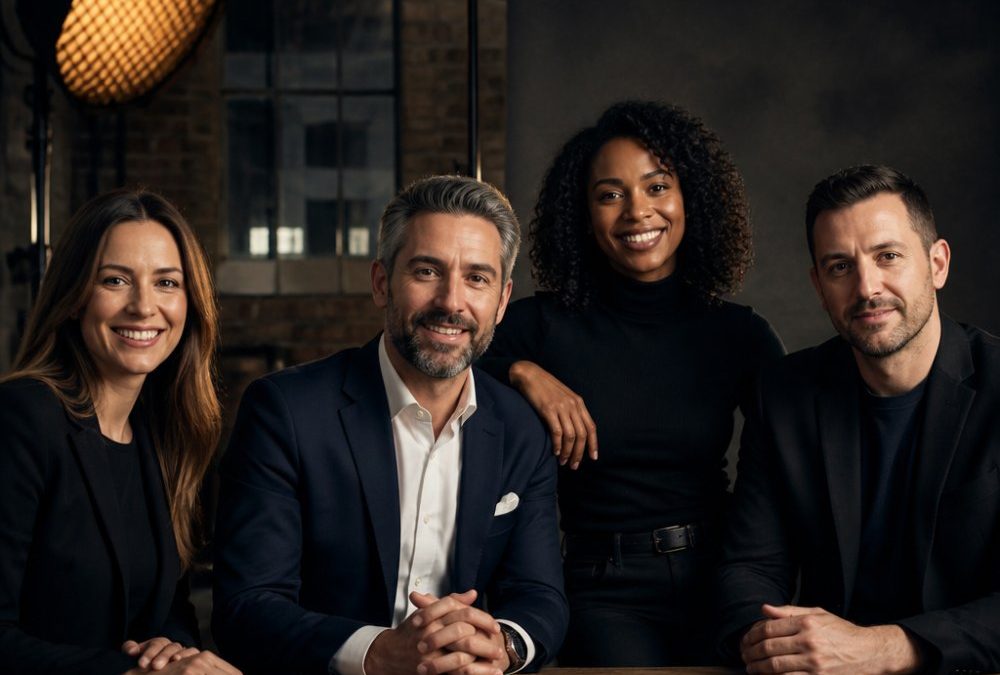
The benefits of high quality headshots extend well beyond looking polished. A strong portrait does three jobs at once: it builds trust, it differentiates you from a crowded field, and it gives every platform you appear on a consistent visual identity.
For actors, the headshot is the primary marketing tool. It has to look like you on a good day, not a heavily retouched stranger, because casting directors are matching the image to the person who walks into the room. For entrepreneurs and executives, the same photo is doing quieter work: it’s establishing authority before you’ve said a word.
What most guides miss is that consistency matters as much as quality. If your LinkedIn photo, your company website and your conference bio all show different versions of you, the cumulative effect is confusion rather than recognition. A single, well-executed set of images solves that problem in one session.
One good headshot used consistently across every platform will outperform five different photos that each tell a slightly different story about who you are.
How Often to Update Your Professional Headshot
Most professionals should update their headshot every two to three years, or sooner if their appearance has changed noticeably. That’s the short answer. The longer one is that “how often to update professional headshot” isn’t really about a calendar, it’s about whether the image still matches the person turning up to the meeting.
Book your headshot session today →
If you’ve changed your hair significantly, gained or lost weight, started wearing glasses, or shifted your personal style, the photo is now out of date regardless of when it was taken. The same applies if your role has changed. An image shot for a junior marketing position may not carry the weight needed for a director-level profile.
Clinging to an eight-year-old headshot is one of the most common mistakes we see. The mismatch between image and reality creates a subtle sense of distrust at exactly the moment you need the opposite.
Signs your current headshot is costing you opportunities
- The photo is more than three years old
- It was cropped from a group shot or a wedding
- The background is cluttered, or the lighting is harsh and uneven
- It doesn’t match how you actually look today
- You feel a small pang of embarrassment when someone brings it up
That last one is the clearest signal of all.
What to Wear for Professional Headshots: A Practical Guide
What to wear for professional headshots comes down to one principle: dress for the role you want, not the one you have. Solid colours in mid-to-deep tones photograph best, and they keep the focus on your face rather than your pattern.
For actors, a plain top in a colour that suits your skin tone works for most casting submissions, with a second look in something more character-specific if your agent has asked for range. Corporate professionals should aim for the same standard they’d wear to an important client meeting. Executives often benefit from a jacket, even if the shirt underneath is simple.
Avoid busy prints, large logos and stark white, which can blow out under studio lighting. Bring two or three options and let the photographer help you decide on the day. That’s a normal part of the process, not an imposition.
Actors, Entrepreneurs and Executives: Why Each Needs a Distinct Approach
Actors, entrepreneurs and executives all need headshots, but they need different things from them. Treating a casting shot and a corporate portrait as the same brief is where a lot of generic photography falls down.
Actors need images that read clearly at thumbnail size, because that’s how casting directors first see them. The expression has to feel alive and specific, not neutral. Entrepreneurs usually need a portrait that conveys approachability and energy, often for a website or social profile where the photo is doing the selling before the copy does. Executives tend to need something more composed, with lighting and framing that signal seniority without tipping into stiffness.
Neil Taylor Photography works with all three groups, and the sessions are structured differently for each. Actors get guidance on casting-ready expressions and multiple looks. Business clients get direction that produces a consistent set of images for websites, LinkedIn and marketing materials. The common thread is that nobody is left standing awkwardly in front of a camera wondering what to do with their hands.
Book your headshot session today →
Bring reference images to your session, but bring them for the feeling you want, not for the exact pose. A good photographer can read “confident and warm” from a reference and translate it to your face. Copying someone else’s pose rarely works.
Common Mistakes That Undermine a Professional Headshot
The most damaging mistake is choosing a photographer on price alone. A cheap session that produces images you never use isn’t a saving, it’s a cost. The second most common error is over-retouching, which strips out the very character that makes a portrait trustworthy.
Other frequent missteps:
- Using a selfie or a phone snap for a professional context
- Choosing a background that competes with your face
- Wearing a pattern that distracts at small sizes
- Skipping the session because you “don’t photograph well”
That last one deserves a direct response. Most people who believe they photograph badly have simply never been directed properly. Looking natural in front of a camera is a skill the photographer should be drawing out of you, not something you’re expected to arrive with.
| Mistake | Why it hurts | The fix |
|---|---|---|
| Old photo | Mismatch with reality | Refresh every 2-3 years |
| Over-retouching | Looks untrustworthy | Keep skin texture natural |
| Busy background | Distracts from face | Use plain or softly blurred settings |
| No direction | Stiff, awkward expression | Book a photographer who guides you |
| Inconsistent images | Dilutes recognition | Shoot one set for all platforms |
Your image is working for you or against you every day, whether you’re an actor preparing for auditions, an entrepreneur building a personal brand, or an executive establishing authority. Neil Taylor Photography offers studio and on-location sessions for clients across London and Kent, with specialist experience in actor headshots, LinkedIn portraits and consistent corporate photography for teams. Every session includes direction on what to wear, how to stand and how to look natural in front of the lens, so you leave with images you’re genuinely happy to use. Check Availability
Frequently Asked Questions
Are professional headshots still relevant in 2026?
Yes. With most first impressions now happening online, a professional headshot remains one of the fastest ways to signal credibility. Recruiters, casting directors and clients often see your photo before they read a single word about you. A clear, well-lit image that looks like you on a good day builds trust instantly, while a dated or casual selfie can quietly cost you opportunities.
How often should you update your professional headshot?
As a general rule, update your headshot every two to three years, or sooner if your appearance has changed noticeably. Significant changes such as a new hairstyle, weight change, glasses or facial hair are all good reasons to book a session. If your headshot no longer looks like you when you walk into a room, it is time for an update.
What should I wear for a professional headshot in 2026?
Choose solid colours and simple patterns that reflect your industry and personal brand. Avoid busy prints, logos and stark white, which can distract or blow out under studio lighting. Bring two or three outfit options so you can vary the look, and make sure everything is clean and well-fitted. For actors, a plain top in a colour that contrasts with the background usually works best.
Do professional headshots help with job applications?
They can. A polished headshot on LinkedIn or a company website helps you appear more approachable and professional, which encourages people to engage with your profile. While a photo will not replace relevant experience, it supports the overall impression you make. Consistency matters too: using the same high-quality image across your CV, LinkedIn and website reinforces a coherent personal brand.