Table of Contents
- Professional Headshot vs Selfie: Key Differences
- How Long Should a Headshot Session Last
- What to Wear for Professional Headshots
- Benefits of Professional Business Portraits
- Why Selfies Fall Short for Professional Use
- Professional Headshot vs AI-Generated Alternatives
- Making Your Choice: Professional or Selfie
- Frequently Asked Questions
Last Updated: 20 September 2026
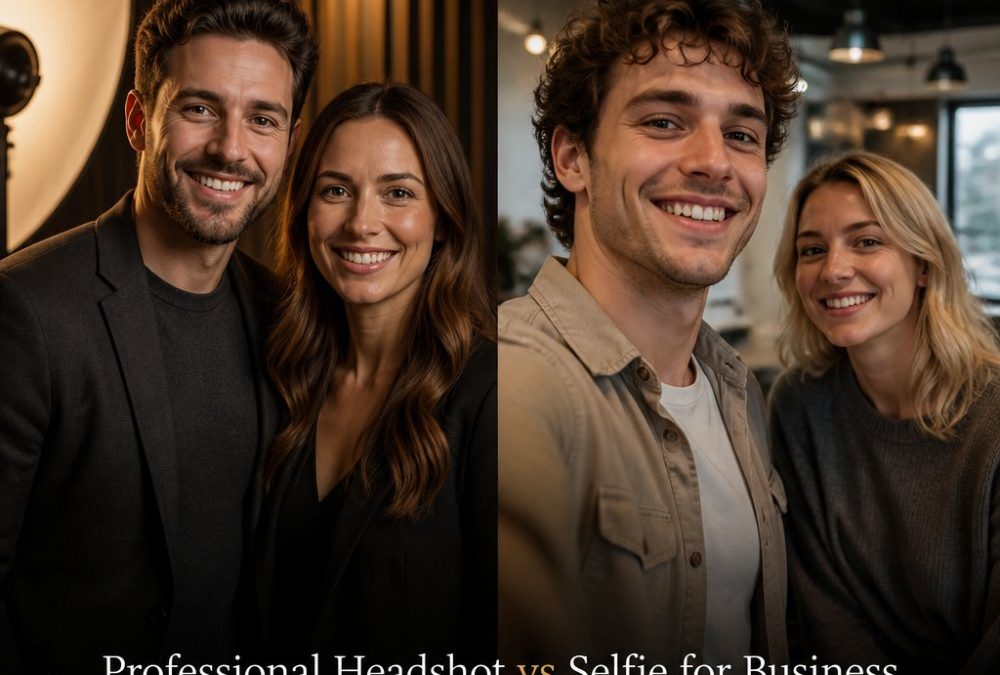
Professional Headshot vs Selfie: Key Differences
A professional headshot and a selfie might both be photographs of your face, but they’re fundamentally different tools with vastly different outcomes. The distinction matters more than you might think, especially when your image is doing the heavy lifting for your career or business.
A professional headshot is a carefully composed portrait taken by a trained photographer with intentional lighting, positioning, and direction designed to present you at your absolute best. A selfie is an uncontrolled, self-directed photograph taken on a smartphone, typically with whatever lighting happens to be available and whatever angle feels comfortable in the moment.
The gap between the two isn’t just about image quality. It’s about what those images communicate to the person viewing them.
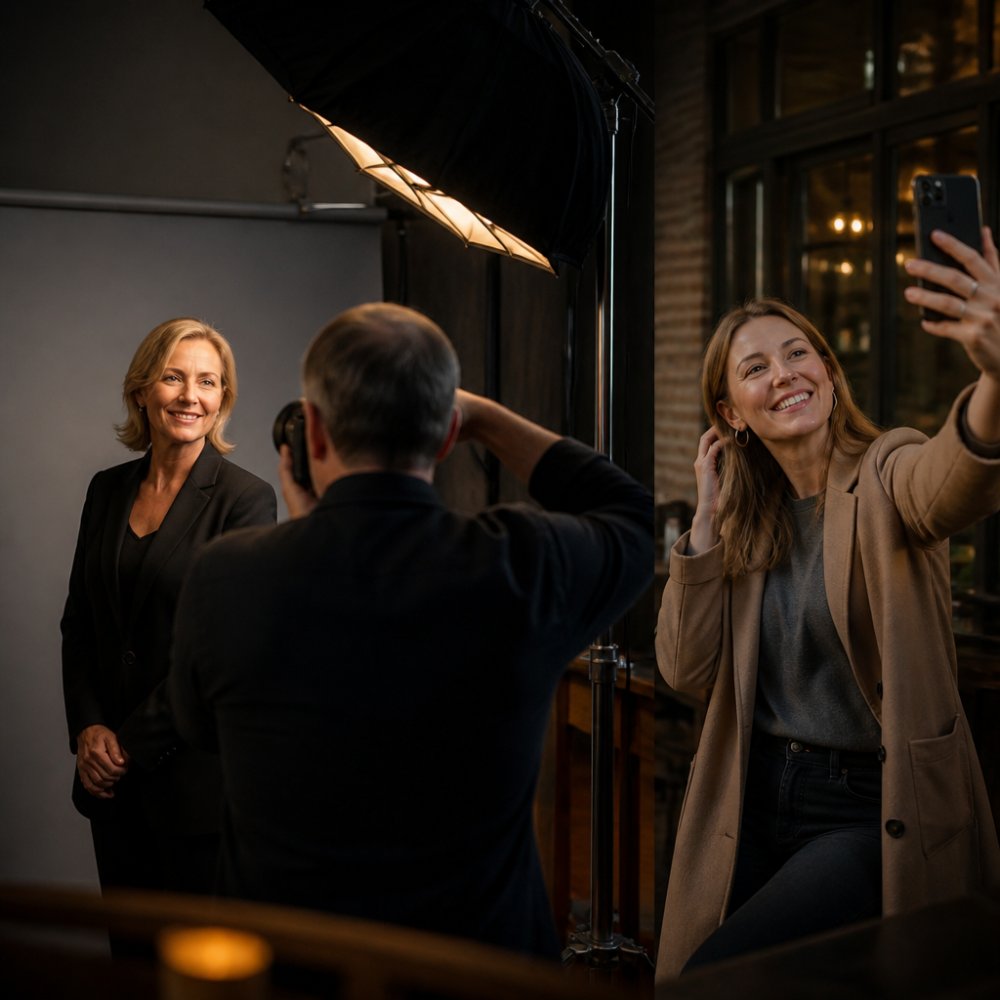
When you’re an actor seeking auditions, an entrepreneur pitching to investors, or a professional building your LinkedIn presence, the image you present shapes how people perceive your credibility before they’ve heard a word from you. A professional headshot signals intention, investment, and seriousness. A selfie, however well-intentioned, often reads as casual or dated, especially if it’s been sitting in your profile for years.
Neil Taylor Photography specialises in professional headshots that capture authenticity without the stiffness many people fear. The difference between a good headshot and a great one comes down to understanding how to position you, light your features, and direct your expression so you look like the best version of yourself, not a polished stranger.
| Aspect | Professional Headshot | Selfie |
|---|---|---|
| Lighting | Controlled studio or on-location setup | Ambient, often uneven or harsh |
| Composition | Intentional framing and positioning | Self-directed, limited angles |
| Expression | Guided by photographer’s direction | Self-directed, may appear stiff or uncertain |
| Background | Carefully chosen or neutral | Random or cluttered |
| Retouching | Professional-grade editing | Basic phone filters or none |
| Perceived professionalism | High credibility | Casual, potentially outdated |
| Best for | Casting, LinkedIn, corporate use | Personal social media |
How Long Should a Headshot Session Last
Most professional headshot sessions run between 30 minutes and two hours, depending on what you need and how many different looks you want to capture.
A focused single-headshot session, where you’re after one polished image for LinkedIn or a corporate website, typically takes 30 to 45 minutes. That’s enough time to set up lighting, position you properly, take multiple frames, and capture a few different expressions so you have genuine options to choose from.
If you’re an actor needing casting-ready headshots with multiple looks (dramatic, comedic, neutral), you’ll want 60 to 90 minutes. This gives you time to try different expressions, adjust your clothing or styling between shots, and build confidence in front of the camera. The photographer can also experiment with angles and lighting variations to find what works best for your face shape and colouring.
Corporate team shoots, where multiple people are being photographed, typically run longer: 2 to 3 hours for a small team, with each person getting 15 to 20 minutes of dedicated shooting time. This ensures consistency across team members whilst giving each person enough attention to feel comfortable and look their best.
The session length also depends on how comfortable you are in front of a camera. If you’re nervous or this is your first professional shoot, building in extra time helps. A good photographer will use that time to help you relax and find natural expressions rather than rushing through frames.
What to Wear for Professional Headshots
Your clothing choices for a professional headshot should complement your face and the image you want to project, without competing for attention.
Solid colours work best, they keep the focus on your face rather than patterns or busy designs. Jewel tones (deep blues, emerald, burgundy) photograph beautifully and convey professionalism. Neutrals like black, white, grey, and navy are reliable choices. Avoid neon, overly bright colours, or anything with large logos or text.
Fit matters. Clothes that are too loose can look sloppy; too tight can look uncomfortable. You want to wear something that makes you feel confident and moves naturally with you. For most professional headshots, a blazer, structured top, or well-fitted shirt works well.
Consider the neckline. Avoid high turtlenecks or busy patterns at the neck, they can make your face feel cramped. Open necklines, v-necks, or simple crew necks tend to photograph better and draw attention to your face.
For actors, you might need multiple outfit changes to show different character types. For corporate professionals, one or two outfit options are usually sufficient. Bring a backup in case you want to see how a different colour or style photographs.
Accessories should be minimal and intentional. A simple necklace, watch, or earrings can add personality without distraction. Avoid anything that jingles, catches light in distracting ways, or makes you feel self-conscious.
Hair and grooming matter as much as clothing. Come with your hair styled the way you normally wear it, or the way you want it to look in professional settings. If you’re unsure, a professional photographer can offer guidance during your session.
Benefits of Professional Business Portraits
A professional headshot delivers benefits that extend far beyond a single photograph. It’s an investment in how you’re perceived across every platform where your image appears.
On LinkedIn, a professional headshot provides a clear image alongside your profile information. Compared with a blurry selfie, a professionally photographed portrait can also offer greater control over lighting, composition and presentation. For recruiters and business contacts, a strong headshot signals that you take your professional presence seriously.
For actors, a casting-ready headshot is essential. Casting directors expect professional images that show your face clearly, with appropriate expressions for the roles you’re pursuing. A selfie won’t cut it in that context, it reads as amateur and costs you audition opportunities.
In corporate settings, consistent team photography builds brand trust. When your website or company materials feature professional, polished images of your team, it reinforces credibility and professionalism. Clients and prospects form impressions based on these images, and a professional headshot contributes to a cohesive, trustworthy brand image.
A strong professional portrait also boosts your own confidence. When you know you have a genuinely good image representing you, you’re more likely to use it, share it, and present yourself confidently across professional channels. That confidence comes through in how you engage with your network.
For entrepreneurs and business owners, a professional headshot becomes part of your brand identity. It appears on your website, in email signatures, on social media, and in business materials. Consistency and professionalism in that image reinforce your credibility and help you stand out in a crowded market.
Why Selfies Fall Short for Professional Use
Selfies have their place, but professional contexts aren’t it. The reasons are practical and perceptual.
Technically, selfies are limited. Smartphone cameras are designed for convenience, not flattery. The wide-angle lens distorts your face, making your nose appear larger and your features less balanced. Lighting is whatever’s available in your environment, often uneven, harsh, or too dim. The angle is dictated by how you hold the phone, which rarely aligns with the most flattering perspective.
Perceptually, a selfie communicates casualness. In professional contexts, casting calls, LinkedIn profiles, corporate websites, a selfie signals that you haven’t invested in your professional image. It reads as rushed, amateur, or unprepared. For actors, it’s a red flag. For business professionals, it undermines credibility.
A selfie that’s been sitting in your LinkedIn profile for five years is particularly damaging. It suggests you’re not actively managing your professional presence. People notice. They form judgments based on outdated imagery, and those judgments affect whether they engage with you, refer you, or take you seriously.
Selfies also lack the intentionality of a professional headshot.
Professional Headshot vs AI-Generated Alternatives
AI-generated headshots have emerged as a faster, cheaper alternative to traditional photography. Services like Aragon AI and Try It On AI transform selfies into professional-looking portraits using artificial intelligence. The appeal is obvious: speed and cost.
Making Your Choice: Professional or Selfie
The decision between a professional headshot and a selfie should be based on what you’re using the image for and what’s at stake.
Frequently Asked Questions
Can a selfie ever be used as a professional headshot?
Selfies can work in casual contexts, but for serious professional use, auditions, LinkedIn, corporate websites, they typically underperform. A selfie lacks professional lighting, consistent framing, and the polished finish that signals credibility. Professional headshots are specifically composed to present you at your best and are designed for the formats where they’ll appear. If you’re serious about your professional image, a proper headshot makes a measurable difference in how clients and contacts perceive you.
Why do professional headshots look better than selfies?
Professional headshots benefit from controlled lighting, expert composition, and a photographer who knows how to capture authentic expressions without stiffness. A selfie relies on available light, an awkward arm angle, and a limited perspective. Professional photographers position you to flatter your features, manage shadows, and create depth. They also guide you through poses and expressions so you look natural rather than self-conscious. The result is an image that feels polished without looking artificial.
What should I look for in a professional business headshot?
Look for clear, well-lit images that show your face prominently and authentically. Your expression should be confident but approachable, not stiff or overly posed. The background should be simple and professional, not distracting. Clothing should be appropriate for your industry and fit well. The headshot should feel like ‘you’ on your best day, not a heavily retouched version that looks nothing like you in person. A good headshot works across formats: LinkedIn, websites, casting calls, and print materials.
How does a professional headshot influence client trust?
A professional headshot signals that you take yourself seriously and have invested in your personal brand. It conveys competence and professionalism before anyone speaks to you. Polished, authentic imagery can contribute to a consistent and professional visual presentation, particularly for entrepreneurs, actors and business leaders. A selfie, by contrast, can read as casual or unprepared, which undermines your professional positioning. When clients see a high-quality headshot, they’re more likely to take you seriously from the outset.
The difference between a professional headshot and a selfie is the difference between strategy and chance. Your professional image deserves intention, expertise, and care. Neil Taylor Photography brings all three to every session, creating headshots that genuinely represent you and genuinely advance your goals. Check Availability to book your session, or reach out at hello@neiltaylorphotography.com to discuss what you need.