Table of Contents
- Why Professional Headshot Poses Matter for Executive Presence
- The Psychology of Posing: What Your Body Language Communicates
- Essential Professional Headshot Poses for Corporate Executives
- Best Colours for Executive Headshots and Wardrobe Styling
- How to Prepare for a Professional Headshot Session
- Corporate Headshot Photography Tips: Lighting, Composition, and Retouching
- Posing for Different Industry Archetypes: Tailoring Your Look
- Conclusion
Last Updated: August 28, 2026
Why Professional Headshot Poses Matter for Executive Presence
The difference between a forgettable headshot and one that lands opportunities often comes down to posture and body language. Your professional headshot poses communicate authority, approachability, and credibility before anyone reads a single word on your LinkedIn profile or company website. At Neil Taylor Photography, we’ve seen firsthand how the right pose transforms how executives are perceived by recruiters, clients, and colleagues.
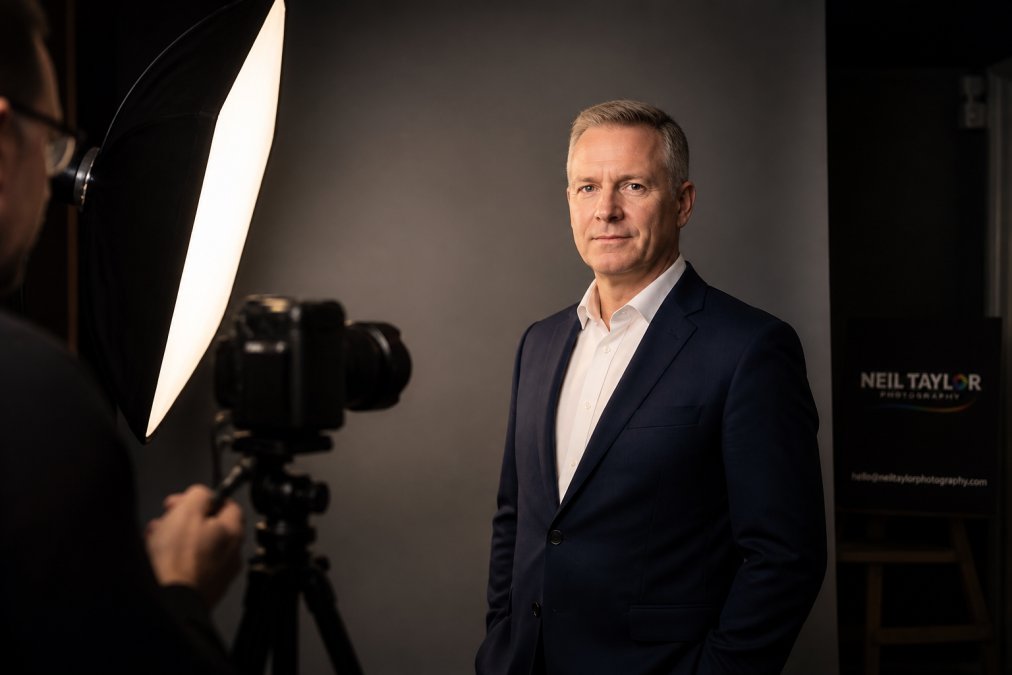
A strong professional headshot isn’t just about looking good; it’s about non-verbal communication. Squared shoulders suggest confidence. A slight head tilt conveys approachability. Eye contact demonstrates engagement. These aren’t subtle details; they’re the visual language that shapes first impressions in milliseconds. For corporate professionals, actors, and entrepreneurs, the stakes are particularly high. A casting director might see your headshot for three seconds before deciding whether to call you in. A potential client might form an opinion about your credibility based entirely on how you’re positioned in that image. The right professional headshot poses can be the difference between standing out and blending in.
The Psychology of Posing: What Your Body Language Communicates
Body language in headshots operates on principles studied for decades. Closed postures, arms crossed tightly, shoulders hunched, signal defensiveness or uncertainty. Open postures communicate confidence and accessibility. The angle of your head, the position of your shoulders, even the direction of your gaze all contribute to the psychological message your image sends.
When you understand these principles, posing becomes intentional rather than awkward. Consider the executive who wants to project leadership: an open chest, squared shoulders, and direct eye contact create an immediate impression of authority. Now consider the entrepreneur seeking to appear approachable and collaborative: a slight head tilt, softer eye contact, and relaxed shoulders communicate warmth without sacrificing professionalism. The same person, posed differently, tells two entirely different stories. This is where professional headshot poses become strategic. The most effective poses align with your industry, your role, and the message you want to convey.
Essential Professional Headshot Poses for Corporate Executives
The following poses form the foundation of effective corporate headshots. Each has been refined through many sessions and works across different industries and personality types.
Pose 1: The Squared Shoulders Authority Stance
Position your shoulders square to the camera with your body weight distributed evenly and your chest open and facing forward. This pose immediately signals confidence and stability, qualities that matter enormously in leadership contexts. Your head should remain level or tilt very slightly forward, creating engagement without appearing aggressive. Avoid tensing shoulders toward the ears, which creates stiffness, or rotating too far to one side, which undermines the authority the pose conveys. The goal is relaxed confidence, not rigid formality.
Pose 2: The Over-the-Shoulder Approachability Frame
Position your body at a slight angle to the camera, typically around 45 degrees, whilst turning your head to look back over your shoulder toward the lens. This creates an approachable yet engaged expression that balances authority with warmth, working beautifully for entrepreneurs, consultants, and anyone whose role requires building trust quickly. The pose naturally creates connection because you’re turning toward the viewer rather than presenting a static frontal view. Position your body at roughly 45 degrees, then rotate your head back to face the camera, keeping shoulders relaxed and your gaze soft but direct.
Pose 3: The Hands-at-Hips Power Position
Position your hands on your hips with elbows bent at roughly 90 degrees. This bold choice projects confidence and readiness, working particularly well for executives in competitive industries. Maintain relaxed shoulders and a neutral or slightly warm facial expression. Your elbows should create a natural frame around your torso rather than jutting outward sharply. This pose requires confidence to pull off effectively and works best for leaders in finance, law, technology, or other fields where decisiveness is valued.
Pose 4: The Arms Crossed Leadership Gesture
Position your arms across your chest with hands resting on opposite arms, keeping your shoulders relaxed and your chest open. Your facial expression should be warm and engaged; a slight smile or neutral expression works better than a stern look. This pose conveys thoughtfulness and confidence rather than closed-off energy, working particularly well for consultants, advisors, and anyone whose expertise is central to their professional brand.
Pose 5: The Seated Executive Confidence Pose
Sit upright in a chair with your back straight but not rigid. Your feet should be flat on the floor or crossed at the ankles, and your hands can rest on your lap or on the arms of the chair. The seated position naturally creates authority and approachability simultaneously. Pay attention to your posture, slouching undermines professional impact, whilst leaning too far forward appears overeager. The goal is relaxed uprightness, present and engaged without appearing tense.
Pose 6: The Head Tilt and Eye Contact Connection
Tilt your head subtly, typically just 15-20 degrees, combined with direct eye contact. The head tilt creates an approachable, engaged expression that research suggests makes people appear more trustworthy and personable. This technique works across virtually all professional headshot contexts. The head tilt should feel natural rather than exaggerated. This technique pairs well with any of the other poses mentioned above, enhancing the approachability and engagement of your professional headshot (peer-reviewed research).
Best Colours for Executive Headshots and Wardrobe Styling
Your wardrobe choice matters as much as your posture in professional headshots. Solid colours photograph better than patterns or busy textures. Dark colours, navy, charcoal, black, create strong contrast and convey authority. Jewel tones like emerald, sapphire, and burgundy add visual interest whilst maintaining professionalism. Avoid colours too close to your skin tone, which can create a washed-out appearance, and steer clear of bright neons that distract from your face.
For corporate environments, classic choices work best: navy blazers, white or light blue shirts, and structured jackets. The fit matters enormously. Clothing should be tailored to your body, not oversized or too tight. A well-fitted jacket immediately elevates your professional appearance and creates clean lines that photograph beautifully. Consider your industry when choosing colours. Tech and creative fields often embrace slightly bolder colour choices, whilst finance and law typically favour more conservative palettes. Neil Taylor Photography can guide you through wardrobe choices that work for your specific professional context.
How to Prepare for a Professional Headshot Session
Preparation before your session directly impacts the quality of your results. Start by thinking about the message you want to convey. Are you emphasising leadership, approachability, creativity, or expertise? This clarity helps you and your photographer align on which professional headshot poses will work best for you.
Get adequate sleep the night before your session. Rest shows in your face; your eyes appear brighter and your skin looks fresher. Avoid heavy meals right before shooting, which can cause bloating or discomfort. Hydrate well in the days leading up to your session. Plan your wardrobe carefully, choosing clothes that fit well and make you feel confident. Bring a few options if possible, different jackets, shirts, or accessories that might work for different poses. Consider your grooming: fresh haircuts, well-maintained facial hair, and polished nails all contribute to a professional appearance. Arrive early to your session to settle in, meet your photographer, and discuss the poses and looks you want to achieve.
Corporate Headshot Photography Tips: Lighting, Composition, and Retouching
The technical elements of professional headshot photography dramatically influence the final result. Even with perfect posing, poor lighting or composition can undermine your image.
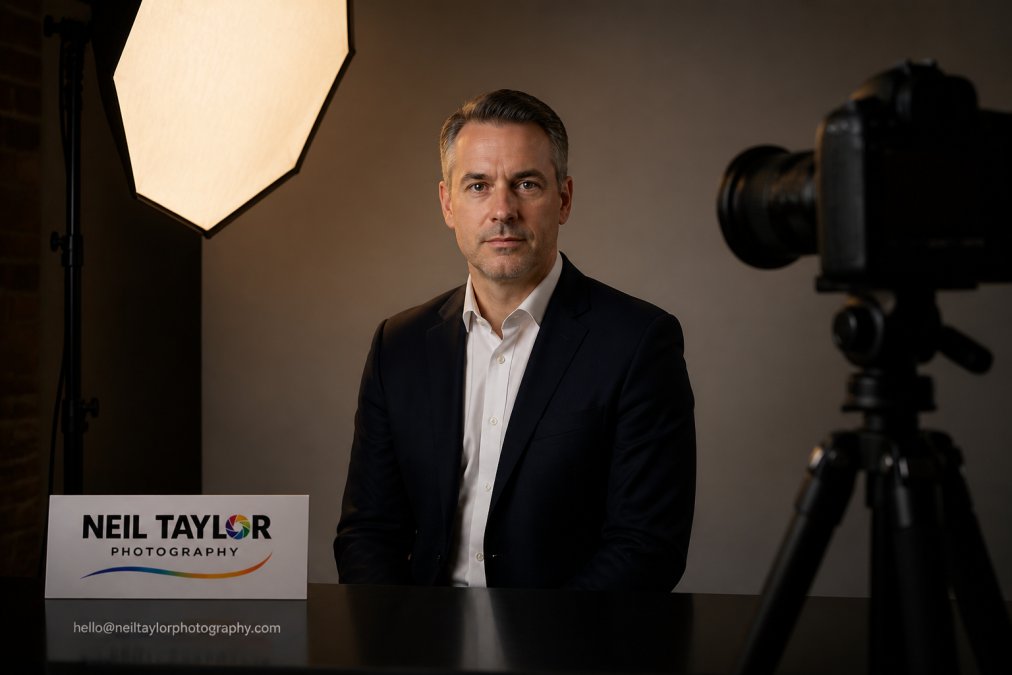
Soft, directional light that flatters your face is essential. Hard, direct light creates harsh shadows and emphasises skin texture unfavourably. Professional photographers typically use softboxes or diffusers to create light that’s bright enough to be flattering but soft enough to be forgiving. Light positioned slightly above eye level and at a 45-degree angle to your face is the industry standard (the American Academy of Dermatology). This angle creates dimension, defines facial features, and creates a natural-looking result.
Composition involves framing your face and body within the image. For corporate headshots, the frame typically includes your head, shoulders, and upper torso. The rule of thirds creates naturally pleasing composition. Your eyes should be sharp and in focus; everything else can be slightly softer. A neutral background keeps the focus on you rather than competing for attention. Solid colours work best.
Retouching is the final step in creating polished professional headshots. Light retouching, smoothing skin, removing temporary blemishes, brightening eyes slightly, enhances your image without making you look unnatural. The goal is to present the best version of yourself, not a digitally altered version that doesn’t resemble you in person.
Posing for Different Industry Archetypes: Tailoring Your Look
Not all professional headshot poses work equally well across industries. Understanding these distinctions helps you choose poses and styling that authentically represent your professional identity.
Technology and Innovation Leaders: Approachable confidence works beautifully. The over-the-shoulder frame or the head tilt with direct eye contact is ideal. Wardrobe can be slightly less formal, and colours can be bolder. The goal is to appear innovative and accessible.
Finance and Law: Authority and trustworthiness are paramount. The squared shoulders authority stance or seated executive confidence pose conveys the stability these industries require. Wardrobe should be conservative, with dark blazers and classic shirts. The message is competence and reliability.
Sales and Business Development: Approachability matters here. The over-the-shoulder frame, the head tilt with eye contact, or the hands-at-hips power position combined with a warm expression works well. Wardrobe can be slightly more relaxed than finance but should still feel polished.
Creative Professionals: Designers, marketers, and other creative roles can embrace slightly bolder choices in both posing and wardrobe. The arms crossed leadership gesture or more dynamic angles work well. Colour choices can be more adventurous.
Healthcare and Education: Trust and approachability are paramount. The over-the-shoulder frame, the head tilt, or the seated pose works beautifully. Wardrobe should feel professional but accessible.
Conclusion
Professional headshot poses are far more than aesthetic choices; they’re strategic decisions about how you present yourself to the world. The right pose communicates confidence, approachability, and credibility. The wrong pose can undermine your professional brand, no matter how polished your wardrobe or how flattering your lighting.
Neil Taylor Photography specialises in creating professional headshots that capture authentic executive presence. Whether you need a corporate portrait for your LinkedIn profile, casting-ready headshots for auditions, or consistent team photography for your business, our studio and on-location sessions deliver polished results designed to help you stand out with confidence.
Your headshot is often the first impression you make. Make it count.
For enquiries, contact hello@neiltaylorphotography.com
Frequently Asked Questions
Q: What are the best poses for corporate headshots to convey leadership?
A: The most effective professional headshot poses for leadership combine squared shoulders, strong posture, and direct eye contact. Hands-at-hips and arms-crossed positions project authority, whilst maintaining a slight head tilt and genuine facial expression prevents appearing unapproachable. The key is balancing confidence with approachability, your body language should communicate that you're both competent and personable. Avoid slouching, turning too far away from the camera, or appearing tense in your shoulders, as these undermine executive presence.
Q: How do I prepare for a professional headshot session to look my best?
A: Preparation begins days before your session. Choose wardrobe colours that complement your skin tone and industry, navy, charcoal, and jewel tones convey professionalism. Get adequate sleep the night before, stay hydrated, and avoid heavy makeup or dramatic styling changes. Arrive with your hair and makeup done to your preference. During the session, focus on relaxed posture rather than rigid stiffness. Think of something that makes you genuinely smile, this creates authentic facial expressions rather than forced grins. Practice your poses beforehand so you feel confident in front of the camera.
Q: Should I stand or sit for my corporate executive headshot?
A: Both work effectively, depending on your industry and personal preference. Standing allows you to demonstrate full body posture and command more visual space, making it ideal for leadership roles. Sitting can feel more approachable and works well for creative or consultancy roles. Many executives choose standing poses with squared shoulders for maximum authority, but seated poses with good posture and angled positioning also convey confidence. Discuss your industry and role with your photographer to determine which best serves your personal brand.
Q: What colours should I wear for a professional headshot to look credible?
A: Navy, charcoal grey, deep burgundy, and forest green are universally flattering for corporate headshots and convey professionalism and trustworthiness. Jewel tones like emerald and sapphire work well for most skin tones. Avoid overly bright whites, pastels, or busy patterns that distract from your face. Consider your industry, finance and law benefit from darker, more conservative colours, whilst creative fields can accommodate slightly bolder choices. Solid colours photograph better than patterns, and ensure your choice complements your skin tone and hair colour. Your photographer can advise on what works best for your specific colouring during your session.
For more information about professional headshot sessions, contact Neil Taylor Photography at hello@neiltaylorphotography.com.
This article was written using GrandRanker