Table of Contents
- Why Your Outfit Matters More Than You Think
- Best Colours for Professional Headshots
- What to Wear for Business Headshots
- How to Prepare for a Professional Headshot Session
- Creating a Natural, Authentic Look
- Dressing for Your Industry and Role
- Frequently Asked Questions
Last Updated: 28 September 2026
Why Your Outfit Matters More Than You Think
Your outfit is the first thing people notice in a headshot, which is why natural headshot outfits matter so much. It sets the tone before anyone reads your name or considers your experience. The right choice builds credibility instantly. The wrong one distracts from your face and message.
This is especially true for casting directors, recruiters, and hiring managers who spend seconds on each image. They’re looking for someone who understands professional presentation. Your clothing communicates whether you take yourself seriously.
The right outfit can transform a headshot from ordinary to memorable. It’s not about wearing something expensive or trendy. It’s about choosing pieces that work with your skin tone, suit your industry, and let your personality shine through without stealing focus.
The goal of any professional headshot is simple: make you look like the best version of yourself. Your outfit should support that goal, not compete with it.
Best Colours for Professional Headshots
Colour is the single most powerful tool in your outfit choice. The right shade enhances your skin tone and makes your eyes pop. The wrong one can wash you out or clash with your background.
Professional headshots work best with colours that complement rather than distract. Jewel tones, earth tones, and rich neutrals tend to photograph beautifully. Bright neons, busy patterns, and very pale shades often underperform.
Colours That Complement Warm Skin Tones
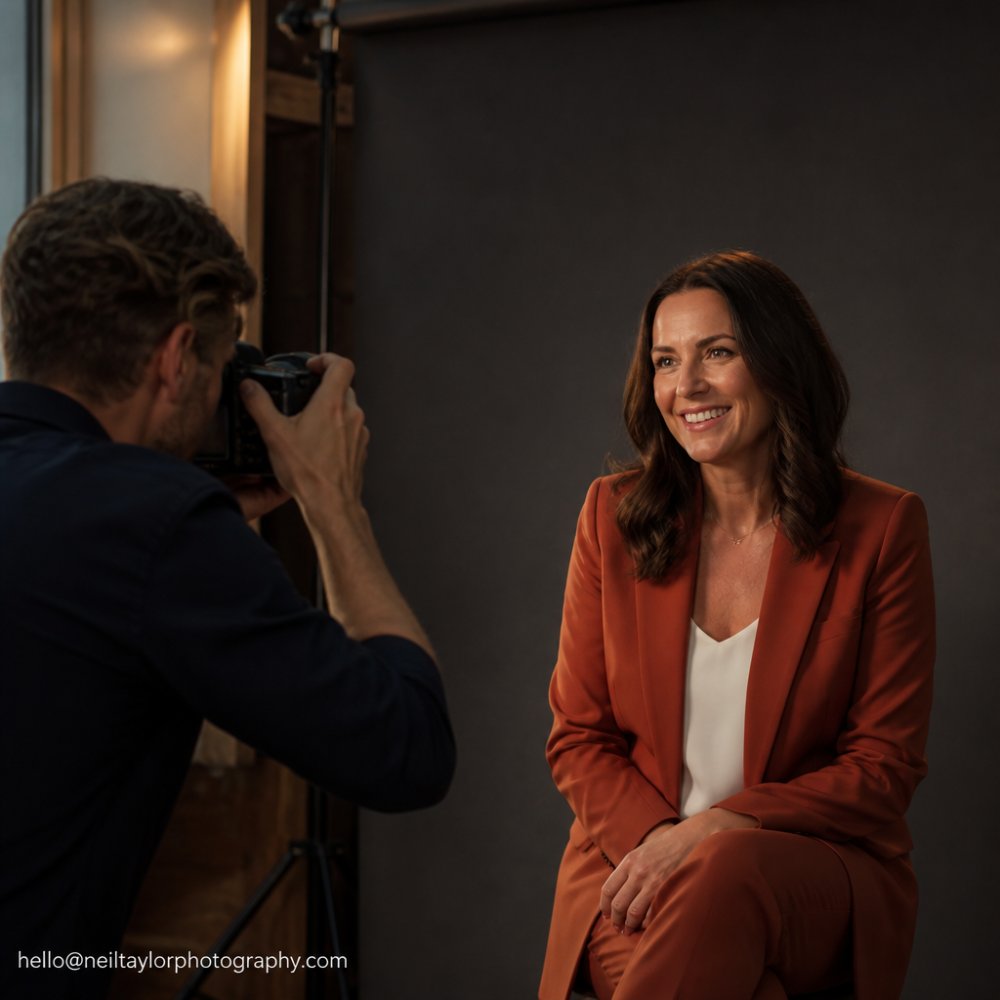
Warm skin tones have golden, peachy, or olive undertones. These tones pair beautifully with warm colours that echo those undertones.
The best colours for warm skin include:
- Warm reds and terracotta shades
- Golden yellows and warm oranges
- Olive greens and warm browns
- Caramel, tan, and bronze tones
- Warm metallics like gold
Avoid cool silvers, icy blues, and very pale pinks, which can make warm skin look sallow in photos.
Colours That Complement Cool Skin Tones
Cool skin tones have pink, red, or bluish undertones. These work best with cooler shades that harmonise with those undertones.
The best colours for cool skin include:
- Jewel tones like sapphire, emerald, and amethyst
- Cool reds and burgundy shades
- Navy, charcoal, and cool greys
- Cool purples and cool pinks
- Silver metallics
Avoid warm golds, oranges, and warm browns, which can clash with cool undertones.
Neutral Tones and Safe Choices
If you’re unsure about your undertones, neutral colours work across most skin types. They also let your face be the focal point.
Safe neutral choices include:
- Charcoal grey and dark grey
- Navy blue
- Black (though can be harsh close to the face)
- Cream and off-white
- Warm or cool white depending on your tone
- Soft taupe and greige
Neutrals are especially smart if you’re auditioning for multiple roles or applying to different industries. They photograph well and won’t date quickly.
What to Wear for Business Headshots
Business headshots require a professional but approachable look. The outfit should match your industry’s expectations while showing personality.
For most corporate roles, a blazer or structured top works well. It conveys competence and polish. The key is choosing one that fits properly and suits your colouring.
Book your headshot session today →
Fabric Types That Photograph Well
Not all fabrics look the same on camera. Some create unflattering shine or texture. Others photograph beautifully and hold their shape.
Fabrics that photograph well include:
- Cotton blends (structured and matte)
- Wool (professional and non-reflective)
- Linen (natural texture, wrinkles can be managed)
- Silk blends (soft drape, less shine than pure silk)
- Quality jersey (smooth finish)
Avoid pure silk (too shiny), satin (reflects light unpredictably), and very thin fabrics (can appear translucent under studio lights).
Matte finishes photograph better than glossy ones. They don’t create distracting highlights or reflections. Texture matters too. A subtle texture adds depth. Heavy texture or bold patterns draw attention away from your face.
Fit and Tailoring Considerations
Fit is everything. An expensive piece that doesn’t fit properly will look worse than a budget-friendly item that fits perfectly.
Key fit points to check:
- Shoulders should sit at your natural shoulder line (not drooping or bunching)
- Sleeves should end at your wrist bone
- Blazers should button comfortably without pulling
- Tops shouldn’t be so loose they hide your shape or so tight they create wrinkles
- Length should be proportional to your frame
If something doesn’t fit perfectly, have it tailored. A modest alteration can improve the fit of clothing and help it photograph more cleanly. Tailoring signals that you care about details.
How to Prepare for a Professional Headshot Session
Preparation before your session makes a real difference. It reduces stress and helps you feel confident in front of the camera.
Planning Your Outfit Selection
Plan your natural headshot outfits at least a week before your session. This gives you time to try options and make adjustments.
Steps to follow:
- Decide on 2-3 outfit options in advance
- Try each one on and photograph yourself in natural light
- Check how the colours look against your skin
- Ensure each piece fits properly
- Iron or steam everything the night before
- Bring backup options to your session (photographers often recommend having choices available)
Bring pieces that complement each other. If you have a blazer you love, bring two different tops to wear under it. This gives you variety without needing completely different outfits.
Grooming and Personal Presentation
Your grooming matters as much as your outfit. A polished appearance shows you’re serious about the headshot.
Before your session:
- Get a haircut or style 3-5 days before (fresh but settled)
- If you colour your hair, do it at least a week before
- Moisturise your face the night before and morning of
- Use sunscreen but avoid heavy makeup base
- For makeup, less is more (it photographs darker than it looks)
- Avoid heavy perfume or cologne
- Wear deodorant but test it won’t show on your clothes
- Get a good night’s sleep the night before
Arrive with clean hair and a clean face. Most photographers can do minor touch-ups, but they work better with a clean canvas.
Creating a Natural, Authentic Look
The best headshots look effortless. They show the real you, not a stiff, posed version.
This is where many people struggle. They worry about looking natural while also looking professional. The secret is choosing clothes that feel comfortable and authentic to who you are.
Avoiding Common Styling Mistakes
Several outfit choices undermine an otherwise great headshot.
Book your headshot session today →
Common mistakes to avoid:
- Wearing all black (can be too harsh; add a lighter layer or choose charcoal instead)
- Choosing something you’d never actually wear (your discomfort shows)
- Wearing horizontal stripes or busy patterns (they distract and can cause moiré effects on camera)
- Wearing something brand new (wear it a few times first so it feels natural)
- Going too trendy (headshots should feel timeless)
- Wearing overly casual clothes (a t-shirt rarely looks professional enough)
- Choosing clothes that are too tight (they restrict movement and show tension)
The goal is to look like yourself on your best day. Not like someone playing a character.
Accessorising Without Overdoing It
Accessories can enhance a headshot, but they’re easy to overdo. The focus should stay on your face.
Smart accessorising:
- Keep jewellery minimal (one statement piece or small studs, not multiple chains)
- Avoid anything that jingles or moves (it’s distracting)
- Skip large dangling earrings (they catch light and distract)
- A simple watch is fine; avoid multiple bracelets
- Necklaces should sit close to the body (long chains get cut off)
- Scarves can work but shouldn’t cover your neckline or shoulders
- Avoid novelty pins or badges
The rule is simple: if you notice the accessory before you notice the person, it’s too much.
Dressing for Your Industry and Role
Different industries have different expectations. An actor’s headshot looks different from a corporate executive’s. Understanding your industry’s norms helps you choose the right outfit.
For actors, casting directors want to see you as you’d appear in roles. This might mean slightly more personality in your clothing. For corporate professionals, polish and formality matter more.
Entrepreneurs often benefit from a look that’s professional but approachable. It shows you’re serious but also accessible. Business owners might choose something that reflects their brand or industry.
The key is researching what successful people in your field wear. Look at LinkedIn profiles of people in similar roles. Notice what colours and styles appear most often. This gives you a template to work from.
Choosing the right outfit for your headshot is about understanding your colouring, your industry, and what makes you feel confident.
For questions, email hello@neiltaylorphotography.com
Frequently Asked Questions
What colours look best for professional headshots?
The best colours depend on your skin tone. Warm skin tones suit earth tones, burnt orange, and warm reds. Cool skin tones work well with jewel tones, blues, and purples. Neutral skin tones can wear almost anything. Avoid very bright neons or colours that match your background, as these can flatten your appearance or create visual confusion in your headshot.
How do I choose natural headshot outfits that don’t look staged?
Select clothes you actually wear and feel confident in. Choose well-fitted pieces that aren’t too loose or tight. Stick to solid colours or subtle patterns rather than busy prints. Avoid anything with large logos or distracting graphics. Wear clothes that reflect your professional role, if you’re a solicitor, business attire works better than casual wear. Comfort translates to confidence in front of the camera.
Should I bring multiple outfit options to my headshot session?
Yes. Bringing 2-3 outfit options gives you variety in your final images and helps you see what works best on camera. Different colours and styles suit different lighting and backgrounds. Having options also means if one outfit doesn’t photograph as well as expected, you have alternatives. Discuss with your photographer beforehand how many outfit changes they recommend for your session length.
What fabrics work best for professional headshots?
Natural fabrics like cotton, linen, and wool photograph well and look professional. Fabrics with a slight sheen, such as silk or silk blends, can enhance your appearance without looking shiny. Avoid very reflective or shiny synthetic materials that create glare under studio lights. Textured fabrics add visual interest, but very thick or bulky materials can make you appear larger on camera. Choose fabrics that drape well and maintain their shape throughout your session.