Table of Contents
- What Casting Directors Actually Look For in Actor Headshots
- What to Wear for Headshots: A Simple Checklist
- How to Choose the Best Headshot Photographer for You
- Preparing for a Headshot Session: What to Do in the Week Before
- How an Actor Headshot Session Actually Runs
- The Types of Actor Headshots Every Actor Needs
- Common Mistakes That Weaken Actor Headshots
- Frequently Asked Questions
Last Updated: September 26, 2026
What Casting Directors Actually Look For in Actor Headshots
Actor headshots are the first audition an actor ever attends. Before a casting director reads a word of your CV, they look at your photo. It either says “bring this person in” or it doesn’t.
This guide from Neil Taylor Photography covers what casting teams actually want, what to wear, how to pick a photographer, and how a session runs from start to finish.
The best actor headshots share three things: they look like you, they show your personality, and they are technically clean. That means sharp focus, even lighting, and a plain background that keeps the attention on your face.
The Five-Second Test
Casting directors spend seconds on each photo. They are scanning for type, age range, and whether you look like your picture.
A common mistake is submitting a photo that is five years old or heavily retouched. If you don’t look like your headshot in the room, you lose the room.
Your photo needs to pass what photographers call the five-second test:
- Can they tell your age range at a glance?
- Is your face clearly visible?
- Does the shot feel current?
- Would you be recognisable in person?
If the answer to any of these is no, it is time for new actor headshots.
What to Wear for Headshots: A Simple Checklist
Choosing what to wear for headshots is simpler than most actors think. The clothes should never compete with your face.
Solid colours work best. Stick to mid-tone shades that contrast with your skin and hair. If you have dark hair, lighter tones help. If you are fair, deeper tones add definition.
Bring two or three options so you have variety on the day. A plain t-shirt, a simple shirt, and one smart-casual layer covers most casting types.
Colours, Necklines and Patterns to Avoid
Some choices quietly ruin a shot. Here is what to leave at home:
- Busy patterns and loud logos
- Pure white, which blows out under studio lights
- Neon or high-saturation colours
- Chunky jewellery that catches light
- High necks that hide your jawline
V-necks and scoops frame the face better. They draw the eye upward, which is exactly where you want it.
Bring your options on hangers, not folded in a bag. Creases show under studio lighting, and a quick steam before you arrive saves retouching time later.
How to Choose the Best Headshot Photographer for You
Knowing how to choose the best headshot photographer comes down to three checks: their portfolio, their specialism, and how they make you feel.
Look for a photographer who shoots actors regularly. Corporate portraits and actor headshots are not the same job. Actors need range, expression, and a look that reads as castable.
Book your headshot session today →
Neil Taylor Photography specialises in actor, professional, and LinkedIn headshots, with both studio and on-location sessions. That mix matters if you want one photographer for casting shots and personal branding.
Questions to Ask Before You Book
Ask these before you commit:
- Can I see a full gallery, not just your best few?
- How long is the session, and how many looks do we shoot?
- Do you guide people who feel awkward on camera?
- What happens if I dislike the final images?
- Is retouching included, and how much is too much?
A good photographer welcomes these questions. If someone dodges them, keep looking.
Preparing for a Headshot Session: What to Do in the Week Before
Preparing for a headshot session starts about a week out. Small habits beat last-minute panic.
Sleep well, drink water, and skip heavy salt and alcohol for a few days. Skin shows everything, and no amount of retouching fixes tired eyes convincingly.
Sort your clothes early. Try each option on in front of a mirror and photograph yourself in natural light. You will spot a bad colour before it costs you a slot in the studio.
A few days before:
- Get a trim, not a brand-new cut
- Tidy brows and facial hair
- Avoid new skincare products that could cause a reaction
- Confirm your session time and travel plan
On the day, arrive with clean, dry hair and a bare or very natural face. Bring your clothes on hangers, plus a light snack and water.
Don’t book a dramatic haircut or colour the day before your shoot. If you dislike it, you are stuck with it in every frame, and reshooting costs you another session.
How an Actor Headshot Session Actually Runs
A session usually runs one to two hours and follows a simple rhythm: chat, warm-up, shoot, review.
It starts with a conversation. Your photographer asks about your casting type, recent roles, and the parts you want to be seen for. This shapes everything that follows.
Then you shoot. Most photographers begin with a few relaxed frames to settle your nerves, then move into directed looks: commercial, theatrical, and a couple of natural in-between moments.
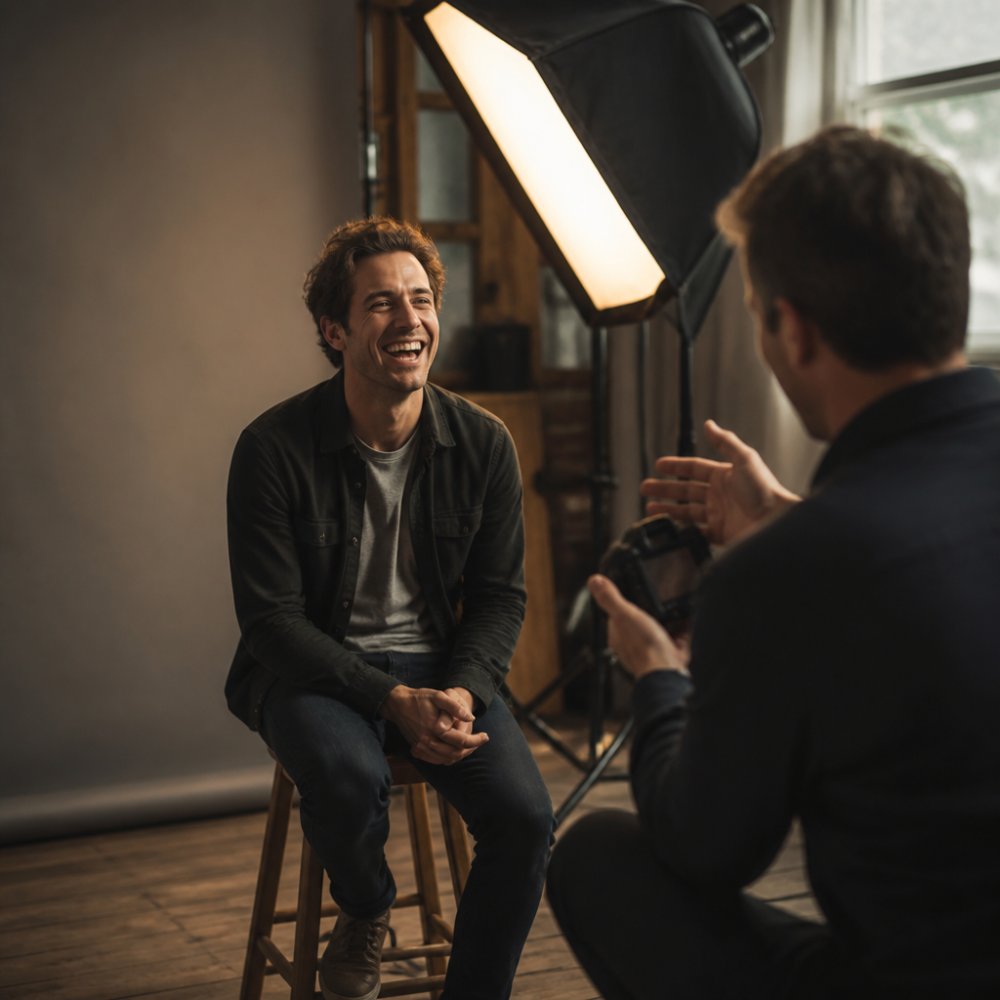
You will change outfits partway through, usually two or three looks. Between setups, you review a few frames on screen so you can adjust before the next round.
Expect direction throughout. Good photographers talk constantly, telling you where to look, how to tilt your chin, and when to drop your shoulders. You are not left to perform alone.
The Types of Actor Headshots Every Actor Needs
Most actors need at least two core shots: a commercial headshot and a theatrical one. They do different jobs and casting teams expect both.
Book your headshot session today →
A commercial headshot is warm, open, and approachable. It suits advertising, TV, and lighter roles. You look like someone people want to meet.
A theatrical headshot is more serious and character-driven. It suits drama, film, and stage. The eyes carry more weight, and the expression is often quieter.
Beyond those two, you may also want:
- A neutral shot for general submissions
- A character shot for a specific type you play well
- A personal branding portrait for your website and socials
Don’t over-order. Two strong, current shots beat six average ones.
Common Mistakes That Weaken Actor Headshots
The same errors show up again and again in submission piles. Avoiding them puts you ahead of most of the competition.
The biggest is using an outdated photo. A headshot that no longer looks like you wastes everyone’s time, including yours.
Other frequent mistakes:
- Over-retouching until the skin looks plastic
- Cropping too tight or leaving too much headroom
- Wearing distracting patterns or bright colours
- Choosing a shot your friends love but casting won’t read
- Using a group photo or a selfie as a stand-in
Your headshot’s only job is to get you seen. If it doesn’t look like you on a normal, good day, it isn’t doing that job.
Choosing the right images can feel overwhelming, especially when you have been using the same shot for years. Neil Taylor Photography helps actors across London and Kent create casting-ready headshots through studio and on-location sessions, with direction throughout so you never feel stiff or unsure. You get polished, authentic images built to make a powerful first impression and elevate your personal brand.
Ready to update your look? Check Availability or email hello@neiltaylorphotography.com to book your session.
Frequently Asked Questions
What should I wear for actor headshots?
Wear a plain top in a solid colour that contrasts with your skin tone and the background, such as navy, grey, olive or a rich jewel tone. Avoid busy patterns, large logos and stark white, which can blow out against studio lighting. Bring two or three options, including one smart-casual and one more neutral, so you can see what reads best on camera. Iron everything beforehand and check necklines sit cleanly, since creases and fussy collars are far more noticeable in a tight headshot crop than in everyday wear.
How often should an actor update their headshots?
Update your actor headshots whenever your appearance changes noticeably: a new haircut, significant weight change, facial hair, or anything else a casting director would spot in the room. Even without a visible change, most actors refresh every 18 months to two years, because styling, framing and what casting briefs ask for shift over time. An eight-year-old photo that no longer matches you wastes everyone’s time at the audition. If you are unsure, compare your current shot against a recent selfie in daylight; if the difference is obvious, rebook.
What makes a good actor headshot?
A good headshot shows your face clearly, captures a genuine expression and tells a casting director something about the roles you could play. Eyes should be sharp and visible, the crop should sit tight around the head and shoulders, and the lighting should flatter without hiding your features. The background should be uncluttered so nothing competes with your face. Most importantly, it should look like you on a good day, not a heavily retouched version of someone else. Authenticity is what gets you called in.
Should actor headshots be in colour or black and white?
Colour is the safer default, since most casting platforms and Spotlight profiles display colour images and casting directors want an accurate sense of how you look. Black and white can work as a secondary shot if it suits your casting type, but it should never replace your main colour headshot. If you are submitting to a specific brief that requests black and white, follow that instruction exactly. Otherwise, keep your primary image in colour and let the photographer advise on whether a monochrome version adds anything to your portfolio.