

Table of Contents
- Why Confidence Matters in Professional Photography
- Best Poses for Professional Headshots
- How to Prepare for a Professional Headshot Session
- Mastering Facial Expressions and Eye Contact
- Tips for Camera-Shy Professionals
- Body Language That Communicates Confidence
- Common Mistakes to Avoid in Professional Photos
- Frequently Asked Questions
Last Updated: September 19, 2026
Why Confidence Matters in Professional Photography
Learning how to look confident in professional photos is the invisible asset in every professional headshot. It can help create a portrait that feels appropriate for your intended professional use. A confident expression can contribute to the overall impression created by a professional portrait.
The thing most people miss is that confidence isn’t about being fearless in front of the camera. It’s about knowing what you’re doing and owning it. A slight adjustment to your posture, a deliberate placement of your hands, a specific way you hold your chin, these small choices signal competence and self-assurance to anyone viewing your image.
Professional headshots work because they capture you at your best. But “best” doesn’t mean smiling the biggest or looking the happiest. It means looking like someone who knows their worth. Someone ready for the opportunity.
At Neil Taylor Photography, we’ve worked with actors, entrepreneurs, and corporate professionals who initially felt uncomfortable in front of the camera. The transformation happens when they understand that confidence in photos is a learnable skill, not something you’re born with.
Best Poses for Professional Headshots
The right pose does the heavy lifting for you. It creates the frame that makes confidence visible. Poor posture undermines everything else, perfect lighting, great makeup, ideal clothing. A strong pose makes those elements work together.
The Power Pose: Shoulders Back and Chin Slightly Forward
This is the foundation of how to look confident in professional photos. Pull your shoulders back and down. This opens your chest and makes you appear more present. Your chin should sit slightly forward, not tucked down and not jutting out aggressively.
The reason this works: it lengthens your neck and defines your jawline. It also naturally straightens your spine, which signals authority.
Common mistake: people tuck their chin down thinking it hides a double chin. It actually creates one. Forward is better than back.
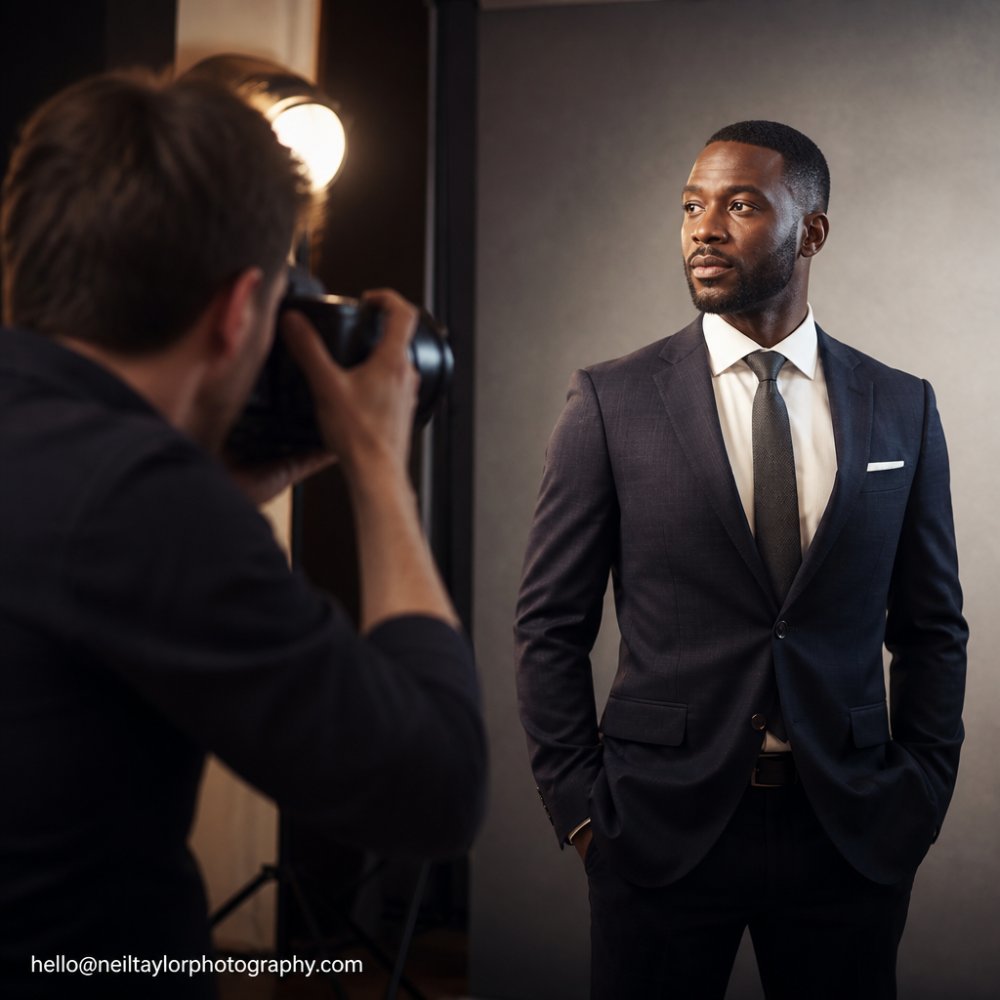
The Angled Stance: Creating Definition and Depth
Turn your body slightly away from the camera, about 45 degrees. Keep your shoulders angled away but turn your head back toward the lens. This creates dimension in your shot and flatters most face shapes.
Why angle works: it’s more dynamic than facing straight on. It also makes you appear slimmer and more three-dimensional. In a headshot, depth matters.
Position your feet shoulder-width apart. This grounds you and prevents that awkward floating feeling some people get in photos.
Hand Placement: Avoiding Awkwardness
Your hands either add to your confidence or undermine it. They’re visible in most professional headshots, so placement matters.
Keep your hands relaxed. Avoid clenching your fists or splaying your fingers. A natural hand position is slightly open, as if you’re mid-conversation.
For seated poses: rest one hand on your lap or your leg. The other can rest on a desk or armrest. Don’t cross your arms, it reads as defensive.
For standing poses: let your arms hang naturally at your sides, or place one hand in your pocket (thumb out). Keep the other arm relaxed.
The rule: if your hands look tense, you look tense.
How to Prepare for a Professional Headshot Session
Preparation is where confidence actually begins. You can’t fake preparation. It shows in your face.
Book your headshot session today →
Clothing Choices That Project Authority
Wear something that makes you feel capable. For corporate professionals, this usually means a blazer or structured jacket. For entrepreneurs and creatives, it might be a well-fitted shirt or sweater in a solid colour.
Avoid busy patterns. Stripes, checks, and small prints distract from your face and create visual noise in the shot. Solid colours work best.
Choose colours that complement your skin tone. Blues, greys, and blacks are safe choices for professional headshots. Jewel tones work well if they suit you. Neutrals are reliable.
Fit matters more than brand. A well-fitted £30 shirt beats an expensive one that doesn’t fit properly. Make sure nothing is too tight or too loose.
Avoid logos, text, or anything that draws attention away from your face. Your face is the subject. Your clothing is the frame.
Hair, Makeup, and Grooming
Your hair should look like the best version of your everyday self. If you never wear your hair down, don’t wear it down for your headshot. If you always have it styled a certain way, keep that consistency.
Get a fresh haircut 1-2 weeks before your session. This gives any new style time to settle and look natural.
For makeup: less is more. The camera picks up everything. A light hand with foundation, a touch of colour on your cheeks, and defined eyes work better than heavy makeup. If you don’t normally wear makeup, don’t start now. Authenticity reads.
For men: a clean shave or well-groomed beard. Facial hair should look intentional, not like you forgot to shave.
Skin prep matters. Moisturise the night before. Avoid new skincare products right before your session, you don’t know how your skin will react.
Mental Preparation Before Your Session
The day before, avoid staying up late. Sleep affects how you look and how you feel. You want to show up rested.
Eat something light before your session. Hunger makes you tense. Avoid heavy meals that make you feel sluggish.
Spend 10 minutes before your session doing something that makes you feel good. Listen to a song that energises you. Do a few stretches. Walk around. Get your energy up.
Remind yourself why you’re doing this. You’re not trying to look like someone else. You’re capturing the best version of yourself. That’s the whole point.
Mastering Facial Expressions and Eye Contact
Your face tells the story. The right expression communicates confidence without you saying a word.
The mistake most people make is overthinking their expression. They hold a smile so hard it looks frozen. They stare at the camera with an intensity that reads as uncomfortable.
The solution: think of something specific. Not “smile naturally”, that’s too vague. Think of a moment that made you proud. A project you completed. A goal you achieved. Something real. That memory will show on your face as genuine confidence, not forced cheerfulness.
Book your headshot session today →
Eye contact with the camera should feel direct but not aggressive. You’re looking at someone you trust, not challenging them. Soften your eyes slightly. This sounds odd, but it works.
Blink normally during the session. Your photographer will take multiple shots. One of them will have your eyes open at exactly the right moment. Don’t hold your eyes open so wide you look surprised.
Your mouth can be slightly parted or closed. Both work. Closed mouths can read as serious; slightly parted can read as approachable. Choose based on the vibe you want to project.
Tips for Camera-Shy Professionals
If you’ve had bad experiences with photos, you’re not alone. Many professionals feel uncomfortable in front of the camera. The good news is that discomfort is fixable.
Working with Your Photographer to Feel Comfortable
Communication before your session sets the tone. Tell your photographer what you’re nervous about. Are you worried about your jawline? Your smile? How you look from certain angles? A good photographer has heard it all and knows how to work with it.
During the session, ask for feedback. “How does this look?” or “Should I adjust anything?” keeps you engaged instead of anxious. It also gives your photographer a chance to guide you toward poses that work.
Take breaks.
Techniques to Calm Nerves and Feel Natural
Before the camera rolls, do a few warm-up shots. These are throwaway photos, but they help you settle into the experience. By the time your photographer starts capturing keepers, you’ve already loosened up.
Body Language That Communicates Confidence
Your body is always communicating, whether you realise it or not. Slouching says you’re unsure. Standing tall says you’re ready.
Common Mistakes to Avoid in Professional Photos
Understanding what doesn’t work helps you know what does.
Over-smiling. A genuine smile involves your eyes. If only your mouth is smiling, it looks forced. Think of something that makes you genuinely happy, not just the instruction to smile.
For enquiries, contact us at hello@neiltaylorphotography.com
Frequently Asked Questions
How do you look natural and confident in professional photos?
Confidence in professional photos comes from three elements: proper posture (shoulders back, chin slightly forward), genuine facial expression (a subtle smile or neutral expression that feels authentic), and eye contact with the lens. Before your session, practise these poses in the mirror and take deep breaths to calm nerves. Work with your photographer to discuss the tone you want to convey, whether that’s approachable, authoritative, or creative, so they can guide you toward expressions that feel natural rather than forced.
What should I wear to look more authoritative in professional photos?
Choose well-fitted clothing in solid colours or subtle patterns that complement your skin tone. Structured blazers, tailored shirts, and professional dresses project authority without distraction. Avoid logos, busy prints, or clothing that feels uncomfortable, as tension shows in your face and posture. Ensure everything fits properly, too tight or too loose undermines confidence. Neutral colours like navy, charcoal, and white are timeless for corporate headshots, whilst colour can work well for creative industries if it reflects your personal brand.
Does eye contact make a professional photo look more confident?
Yes, direct eye contact with the camera is one of the most powerful confidence signals in professional headshots. It creates connection and engagement with viewers. However, the quality of that eye contact matters: aim for a soft, direct gaze rather than an intense stare. Imagine you’re looking at someone you trust just behind the camera. This approach feels natural and projects both confidence and approachability, which is especially valuable for actors, entrepreneurs, and business professionals building their personal brand.
How can I stop feeling awkward in front of the camera?
Awkwardness often stems from overthinking. Before your session, discuss any concerns with your photographer, they’re experienced in helping camera-shy professionals feel at ease. During the shoot, focus on your breathing and the photographer’s direction rather than how you look. Many professionals find it helpful to think of a specific emotion or scenario (confidence, a successful meeting, pride in your work) to anchor your expression. Taking breaks, moving between poses, and receiving feedback from your photographer all help you relax and feel more natural as the session progresses.